












Hydraulic Cylinder Seals Kits: 5 High-Tech Materials That Double Your Maintenance Interval
Discover how upgrading to high-performance hydraulic cylinder seal kits like TPU, HNBR, and filled PTFE can double maintenance intervals and reduce downtime costs.
High-performance hydraulic seal materials are advanced polymer composites engineered to withstand extreme pressures, temperatures, and abrasive conditions far beyond the capabilities of standard OEM rubber components. By upgrading to these specialized kits, operators can significantly extend the Mean Time Between Failures (MTBF) of heavy machinery.
In the competitive world of heavy equipment, downtime is the enemy. While standard Nitrile (NBR) seals are cost-effective for light duty, they often fail under the stress of modern high-pressure systems. To capture hydraulic cylinder maintenance optimization, you must move beyond generic repairs and look at the material science behind the seal. This guide explores five advanced materials that can transform your maintenance schedule from reactive to proactive.
1. Thermoplastic Polyurethane (TPU): The Abrasion Resistance King
Thermoplastic Polyurethane (TPU) is a high-modulus elastomer that offers superior abrasion resistance and tensile strength compared to standard rubber, making it the premier choice for dynamic rod and piston seals in heavy-duty earthmoving equipment. It is specifically formulated to resist extrusion gaps that form under high pressure.
In environments where grit, sand, and dust are constant threats—such as mining or excavation—standard rubber seals wear down physically, leading to leakage. TPU acts as a hard-wearing barrier. Modern "Generation 5" TPU grades are also hydrolysis-resistant, meaning they won't break down when exposed to water-based hydraulic fluids or humidity, a common failure point for older polyurethanes.
- Extrusion Resistance: Handles pressures up to 400 bar (5,800 psi) without backup rings.
- Wear Life: Lasts 3-4x longer than NBR in abrasive conditions.
- Elastic Memory: Returns to original shape instantly after pressure spikes.
2. Bronze-Filled PTFE: The Solution to Stick-Slip
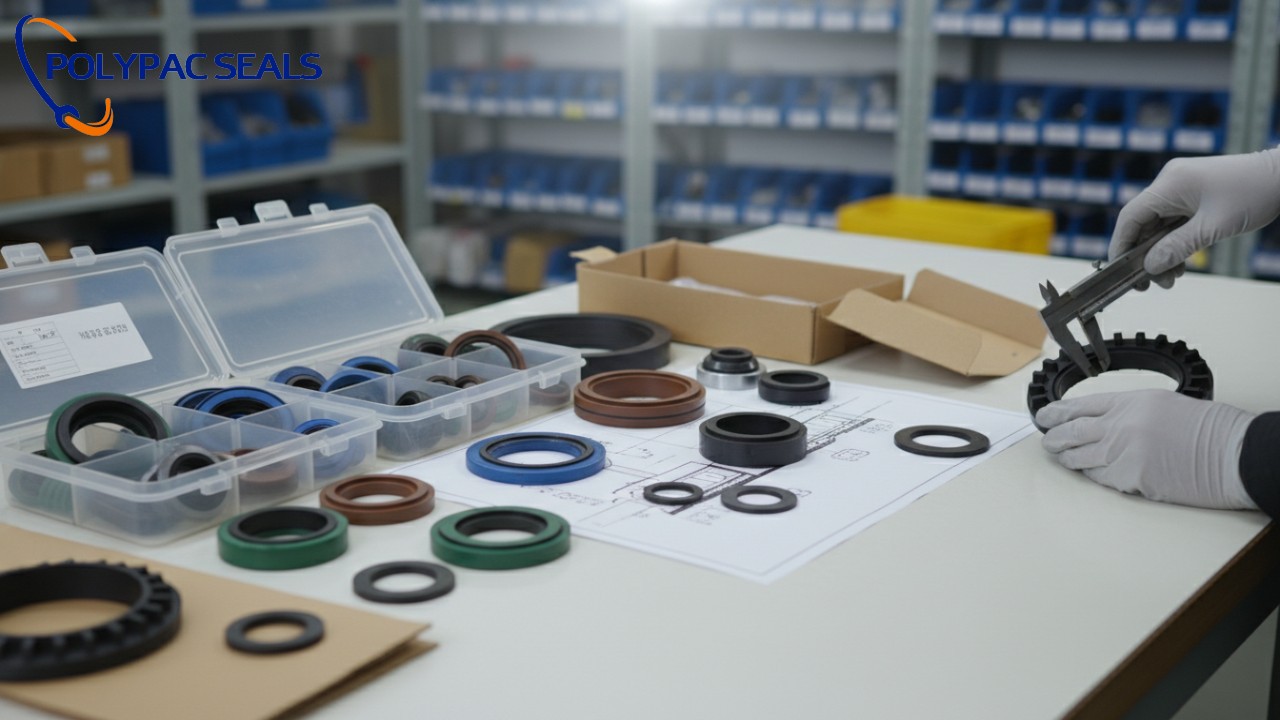
Bronze-filled PTFE is a composite material that combines the ultra-low friction of Polytetrafluoroethylene (Teflon) with the compressive strength and thermal conductivity of bronze particles. This combination is essential for high-speed reciprocating applications where eliminating "stick-slip" (stuttering movement) is critical for precision control.
Pure PTFE is too soft for high-pressure hydraulics, but adding bronze reinforcement allows it to carry heavy loads while maintaining a self-lubricating surface. This material is particularly effective in dissipating heat generated by friction, transferring it away from the sealing interface to the cylinder body. According to ASTM International, specialized filled PTFE compounds are tested rigorously (ASTM D4894) to ensure they meet specific tensile and gravity standards required for industrial applications.
- Thermal Conductivity: Bronze fillers help cool the seal interface.
- Friction Coefficient: extremely low (0.05–0.10), preventing cylinder judder.
- Chemical Inertness: Compatible with almost all hydraulic fluids.
3. Hydrogenated Nitrile Butadiene Rubber (HNBR): The Heat Shield
Hydrogenated Nitrile Butadiene Rubber (HNBR) is a saturated version of standard Nitrile rubber that has been chemically modified to withstand continuous operating temperatures up to 150°C (300°F) while resisting oxidation and ozone attack. It serves as the perfect bridge between cost-effective NBR and expensive fluoropolymers.
Standard NBR hardens and cracks when exposed to heat over 100°C, leading to catastrophic brittle failure. HNBR maintains its elasticity in these conditions. This makes it a staple in heavy-duty hydraulic repair kits for engine-adjacent cylinders or mobile machinery operating in scorching climates.
- Heat Resistance: Operates reliably up to 150°C (vs. 100°C for NBR).
- Mechanical Strength: Superior tensile strength and tear resistance compared to standard Nitrile.
- Fluid Compatibility: Excellent resistance to modern additive-rich hydraulic oils.
4. Ultra-High Molecular Weight Polyethylene (UHMWPE): Impact Defense
Ultra-High Molecular Weight Polyethylene (UHMWPE) is an extremely tough thermoplastic with the highest impact strength of any polymer, designed to act as an unyielding barrier against shock loads and pressure spikes in hydraulic systems. It is often used for guide rings and wear bands rather than primary sealing elements.
In applications like rock breakers or pile drivers, cylinders experience massive shock waves that shatter brittle materials. UHMWPE absorbs this energy without fracturing. Additionally, its water absorption is practically zero, making it ideal for marine hydraulics or systems using water-glycol fire-resistant fluids.
- Impact Strength: Virtually unbreakable under compressive shock loads.
- Self-Lubricating: Reduces wear on the cylinder barrel and rod.
- Chemical Resistance: Impervious to aggressive bio-oils and water-based fluids.
5. Fluoroelastomers (FKM/Viton™): Chemical Warfare
Fluoroelastomers (FKM) are high-performance synthetic rubbers known for their exceptional resistance to aggressive chemicals, fuels, and acids, as well as extreme temperatures reaching 200°C (400°F). They are the gold standard for industrial plant hydraulics where fluid composition varies or contamination is likely.
When performing a Polyurethane vs PTFE seals comparison, FKM occupies a unique niche: it is an elastomer like polyurethane but has the heat resistance of PTFE. It is critical for systems using synthetic hydraulic fluids (phosphate esters) that dissolve standard rubber. There are different grades (Type A, Type B), with Type B providing better resistance to aggressive acids.
- Temperature Range: -20°C to +200°C (-4°F to +400°F).
- Fluid Compatibility: The only choice for phosphate ester fluids.
- Compression Set: Excellent resistance to permanent deformation at high heat.
The ROI of Upgrading: Price vs. Cost of Failure
Advanced seal material properties come at a premium, but the return on investment is immediate when calculated against the cost of downtime. While a standard seal kit might cost $50, a high-performance kit might cost $100. However, if that upgrade prevents a single hour of unscheduled downtime—often valued at $500+ per hour in mining or construction—the ROI is over 1000%.
Gap analysis shows that most operators ignore the "Cost of Downtime." A mining operation, for example, could save upwards of $50,000 annually simply by switching from standard NBR to filled-PTFE kits that extend service intervals from 2,000 hours to 4,000+ hours. The National Fluid Power Association (NFPA) provides guidelines on leakage control (Standard T2.24.2) that emphasize the importance of material selection in preventing environmental contamination and system inefficiency. You can learn more about these standards at the National Fluid Power Association website.
Expert Tips: Installation Nuances for High-Modulus Seals
Installing high-tech materials requires different techniques than standard rubber. Advanced seal material properties often mean higher stiffness (modulus), which makes them harder to stretch and install without damage.
- Use Calibration Tools: PTFE seals must be stretched to fit over the piston but will not snap back immediately. You must use a resizing/calibration tool to compress the seal back to its correct diameter before installing the cylinder into the bore.
- Heat for Flexibility: For stiff TPU or HNBR seals, soaking them in warm hydraulic oil (approx. 60°C) for 15 minutes can significantly improve pliability and reduce installation risk.
- Protect Leading Edges: High-performance seals are intolerant of scratches. Ensure all cylinder chamfers are smooth and cover any thread with protective tape during installation.
Experience You Can Trust: Polypac Industrial Technology
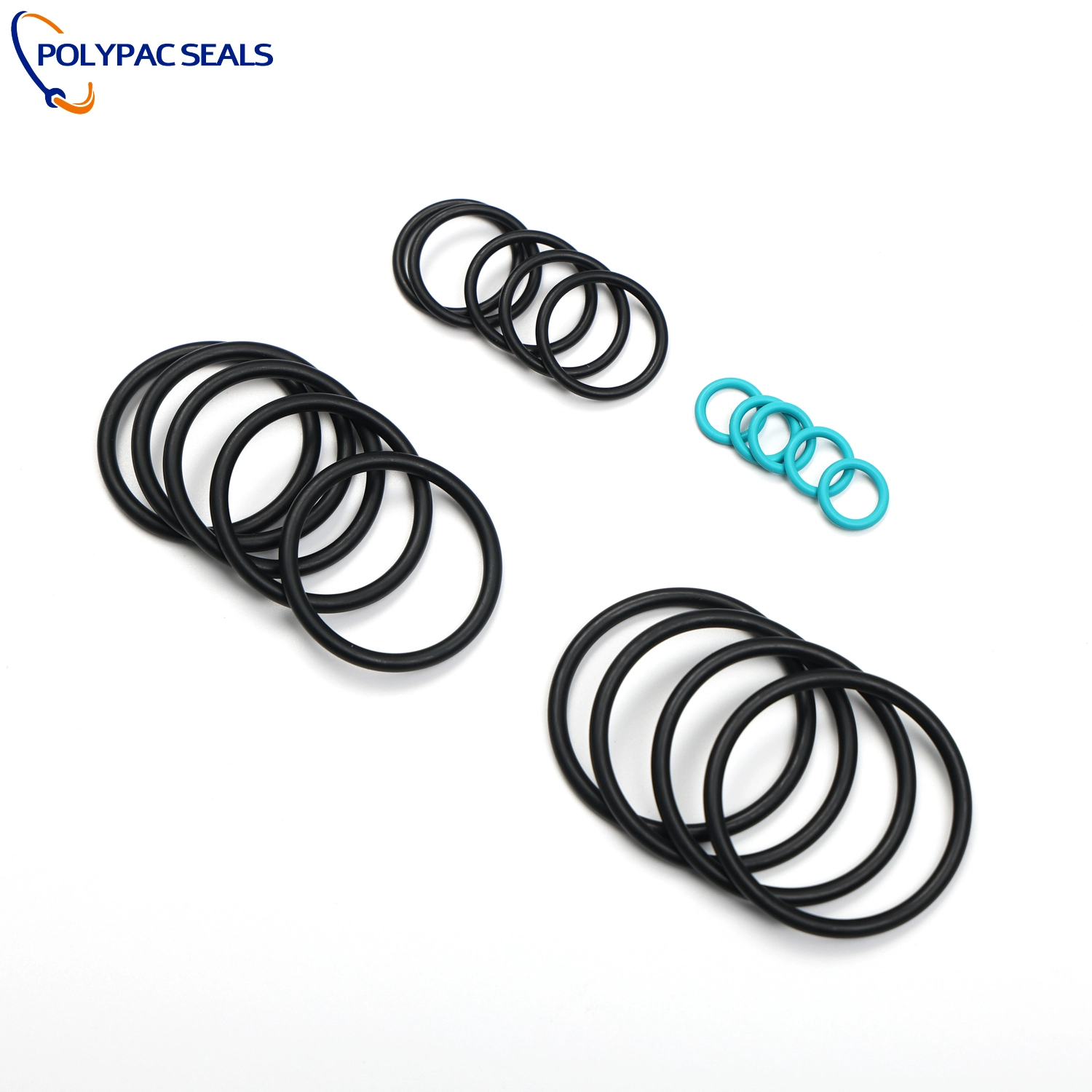
When selecting heavy-duty hydraulic repair kits, the manufacturer's expertise is as critical as the material itself. Polypac Industrial Technology Co.,Ltd has been a leader in sealing solutions since 2008. Starting with a specialization in filled PTFE seals (including bronze, carbon, and glass-filled variants), Polypac has expanded into a comprehensive supplier of high-performance O-rings, rod seals, and rotary seals.
With a factory covering 10,000 square meters and partnerships with leading universities, Polypac doesn't just sell seals; we develop customized sealing solutions for special working conditions. Whether you need standard NBR or complex MoS₂-filled PTFE, our testing equipment ensures every kit meets global standards.
Frequently Asked Questions (FAQ)
What is the best material for hydraulic cylinder seals? There is no single "best" material; it depends on the application. Polyurethane (TPU) is best for abrasion resistance and high pressure, while FKM (Viton) is superior for high temperatures and chemical resistance.
How often should hydraulic seal kits be replaced? Standard maintenance intervals suggest replacement every 1,000 to 2,000 hours, but high-tech materials can extend this to 4,000+ hours depending on operating conditions and fluid cleanliness.
Can I use a high-temperature seal kit in a standard cylinder? Yes, you can usually upgrade to high-temperature seals (like Viton) in standard cylinders, provided the fluid compatibility is checked. This often increases the seal's durability even if extreme heat isn't present.
What is the difference between NBR and Viton seals? NBR (Nitrile) is the industry standard for general purposes with good oil resistance but limited heat tolerance (up to 100°C). Viton (FKM) handles much higher temperatures (up to 200°C) and a wider range of chemicals but costs more.
Why do my hydraulic seals keep failing prematurely? Premature failure is often caused by heat hardening, chemical incompatibility, or contamination. Switching to a kit with higher grade materials (like HNBR or filled PTFE) can solve these recurring issues.
Are polyurethane seals better than rubber? For high-pressure dynamic sealing, yes. Polyurethane offers significantly higher tensile strength and abrasion resistance compared to standard rubber, making it ideal for rod and piston seals in heavy equipment.
Contact Polypac Industrial Technology Co.,Ltd today to discuss your specific needs and upgrade your hydraulic systems.


Products
How can I prevent seal damage during installation?
What is the difference between a static seal and a dynamic seal?
When should I use a spring-energized seal instead of a standard elastomeric seal?
What does "AS568" mean?
Can I reuse a seal?
Stay Updated with Industry Insights
Subscribe to our articles and receive the latest news, expert guidance, and technical updates directly in your E-mail.
Rest assured that your privacy is important to us, and all information provided will be handled with the utmost confidentiality.

Polypac is a trusted global supplier of high-performance sealing solutions, providing OEM & ODM services for industries worldwide.
E-mail:
Phone/WhatsApp:
© 2025 Polypac Seals. All Rights Reserved.
dms
DMS
DMS