












High-Performance Pneumatic Piston Seals: How to Achieve Zero-Leakage Efficiency
In the world of industrial automation, pneumatic cylinder efficiency is often the dividing line between profitable uptime and costly energy waste. A single leaking seal can drop system pressure, force compressors to work overtime, and introduce erratic movement into precision machinery. Achieving "zero-leakage" isn't just about blocking air; it is about balancing friction, wear life, and sealing force.
At Polypac Industrial Technology Co., Ltd., we have spent over 15 years refining this balance. From our 10,000 square meter facility, we develop customized sealing solutions that push the boundaries of what pneumatic systems can achieve.
What is a Pneumatic Piston Seal, and Why is Efficiency Critical?
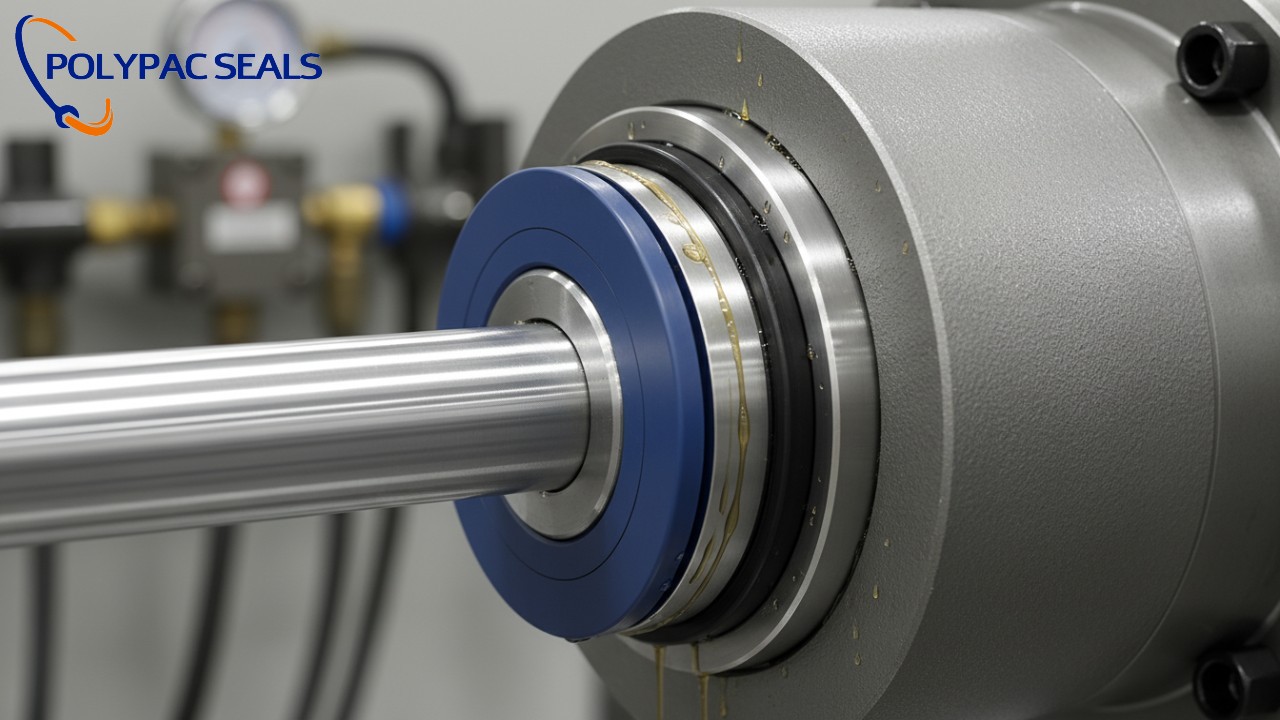
A pneumatic piston seal is a dynamic sealing component typically mounted on the cylinder piston to prevent air bypass, ensuring maximum pressure transfer for linear motion. Unlike hydraulic seals, which manage high-pressure fluids, pneumatic seals must maintain a tight seal against lower-pressure gases (typically air) while operating at much higher speeds.
Efficiency in this context is defined by the seal's ability to maintain differential pressure across the piston head without generating excessive friction.
The Zero-Leakage Standard
While "zero-leakage" is the ultimate goal, international standards like ISO 15552 help define acceptable performance limits for pneumatic cylinders. High-performance seals aim to surpass these standards by:
- Reducing Air Consumption: Minimizing the volume of compressed air lost during static holds.
- Improving Actuator Precision: Eliminating "stick-slip" (stiction) for smooth, predictable movement.
- Extending Component Life: Preventing metal-to-metal contact between the piston and the bore.
Anatomy of a High-Performance Seal: Materials & Geometry
The anatomy of a seal dictates its ability to react to pressure changes. A high-performance seal combines a flexible sealing lip with a robust body to resist extrusion.
Critical Design Elements
- Asymmetrical Lips: A shorter, stronger static lip holds the seal in the groove, while a longer, flexible dynamic lip tracks the cylinder bore variations.
- Ventilation Channels: Small notches that prevent pressure traps (back-pressure) from dislodging the seal.
- Rounded Contact Edges: Designed to retain a microscopic film of lubricant (or transfer material) to reduce friction.
At Polypac, our R&D team collaborates with universities to optimize these geometries. Whether using Carboxylated Nitrile (XNBR) for abrasion resistance or proprietary PTFE blends, the geometry must match the material's modulus.
Materials Science: The Battle Against Friction
Selecting the right material is the single most important factor in preventing low-friction piston seals from failing. The choice often comes down to a trade-off between friction coefficients and wear resistance.
1. Polytetrafluoroethylene (PTFE)
PTFE is the gold standard for low-friction applications. According to tribological data, PTFE seals exhibit a coefficient of friction as low as 0.04, whereas polyurethane can range from 0.5 to 1.0. This massive difference makes PTFE ideal for "dry air" (oil-free) environments where no external lubrication is present.
- Pros: ultra-low friction, broad chemical resistance, high-speed capability (>15 m/s).
- Cons: Lower elasticity (requires an expander ring usually).
2. Polyurethane (PU)
Modern TPUs (thermoplastic polyurethanes) are the workhorses of the industry. They offer exceptional abrasion resistance and tensile strength.
- Pros: extreme wear resistance, easy installation (snap-in), lower cost.
- Cons: Higher friction, susceptible to hydrolysis in hot, humid environments.
3. NBR (Nitrile Rubber)
While traditional, NBR is now mostly reserved for low-duty or specific temperature applications. Polypac has expanded beyond basic NBR to high-grade FKM and FFKM for specialized working conditions.
Selecting the Right Profile: Single-Acting vs. Double-Acting
The choice between seal profiles depends entirely on the cylinder's force application. Double-acting piston seal types are the most common in automation, but understanding the distinction is vital.
Single-Acting Seals
Single-acting seals are designed to hold pressure from one direction only. The piston is returned by a spring or gravity.
- Best for: Clamping applications, simple lifters.
- Risk: If pressure is applied from the wrong side, the seal will collapse and leak instantly.
Double-Acting Seals
Double-acting seals are capable of handling pressure from both sides, enabling the cylinder to extend and retract with force.
- Best for: Robotics, pick-and-place units, reciprocating engines.
- Design Note: Many modern double-acting pistons use a compact "Z-seal" or a multi-component assembly (PTFE ring + O-ring energizer) to save space.
The Enemy of Efficiency: Friction, Wear, and Stiction
Stiction (static friction) is the force required to initiate movement from a dead stop. In pneumatic systems, high stiction causes the cylinder to "jump" rather than glide smoothly, which is disastrous for precision positioning.
Managing Tribology
Tribology is the study of friction, wear, and lubrication. A seal must ride on a surface finish that is "just right."
- Too Smooth (<0.1 µm Ra): The surface cannot retain lubrication, leading to high friction and heat.
- Too Rough (>0.6 µm Ra): The surface acts like sandpaper, shredding the seal lip.
Industry standards generally recommend a surface finish of 0.2 to 0.4 µm Ra for optimal dynamic sealing materials performance. Advanced coatings on the cylinder bore, such as hard anodized aluminum, can further reduce stiction when paired with Polypac's specialized PTFE-filled materials (bronze, carbon, or MoS₂ filled).
Expert Tips: Pneumatic Seal Troubleshooting
Diagnosing a failure correctly is the first step toward a permanent fix. Pneumatic seal troubleshooting requires looking at the failed part to read the "evidence" left behind.
Common Failure Modes & Solutions
-
Extrusion (Nibbling)
- Symptom: The non-pressure side of the seal looks chewed or ragged.
- Cause: Excessive gap between piston and bore, or pressure spikes.
- Solution: Use backup rings or a harder seal material (e.g., upgrade from 70 Shore A to 90 Shore A).
-
Heat Hardening (Cracking)
- Symptom: Seal is brittle and cracks when bent; lip has lost flexibility.
- Cause: High-speed friction or proximity to heat sources.
- Solution: Switch to FKM (Viton) or high-temp PTFE composites.
-
Vertical Scratches
- Symptom: Grooves running parallel to the direction of motion.
- Cause: Contamination in the airline (metal shavings, rust).
- Solution: Install better air filtration and replace the seal.
Future-Proofing Your Systems: Trends for 2026
As industries move toward Industry 4.0, pneumatic components are evolving. The next generation of seals focuses on sustainability and intelligence.
Emerging Technologies
- Self-Lubricating Compounds: As environmental regulations tighten, "oil-free" compressed air is becoming mandatory. New elastomer formulations internally bleed lubricants (like wax or MoS₂) over their lifespan to function without external oil mist.
- Smart Sensing Integration: Pistons are being designed with integrated magnets and sensor slots to provide real-time data on cycle speed and wear, allowing for predictive maintenance.
FAQ: Common Questions about Pneumatic Piston Seals
What causes pneumatic piston seals to fail prematurely?
Premature failure is most commonly caused by contamination in the air supply (moisture, rust, or oil sludge), improper installation that nicks the seal lip, or operating the cylinder beyond its rated speed limits, which generates excessive frictional heat.
Can I use hydraulic seals in a pneumatic cylinder?
Generally, no. Hydraulic seals are designed for high-pressure oil environments and have high radial loads (friction). Using them in low-pressure pneumatic systems often results in high stiction, jerky movement, and failure to seal at low pressures.
How often should pneumatic piston seals be replaced?
Replacement intervals depend on the cycle count and environment. However, in high-duty applications, it is standard practice to replace seals whenever the cylinder is serviced or if audible leakage (hissing) is detected.
What is the best material for oil-free air?
Filled PTFE or specially formulated carboxylated nitrile (XNBR) is best for oil-free air. According to machinerylubrication.com, maintaining a proper lubrication film is critical, so self-lubricating materials are essential when system air is dry.
Conclusion
Achieving zero-leakage efficiency in pneumatic cylinders is a precise science that requires the right combination of profile, material, and installation care. Whether you are battling high friction in a robotics application or dealing with aggressive chemicals, the seal is the heart of the system.
Founded in 2008, Polypac has the advanced testing equipment and material expertise—from bronze-filled PTFE to complex EPDM geometries—to ensure your machinery operates at peak performance.
Contact Polypac today to discuss your specific sealing needs and request a custom solution.


Products
What is the difference between a static seal and a dynamic seal?
How important is surface finish on the metal parts that contact the seal?
Can I reuse a seal?
Why did my O-ring fail prematurely?
What does "AS568" mean?
Stay Updated with Industry Insights
Subscribe to our articles and receive the latest news, expert guidance, and technical updates directly in your E-mail.
Rest assured that your privacy is important to us, and all information provided will be handled with the utmost confidentiality.

Polypac is a trusted global supplier of high-performance sealing solutions, providing OEM & ODM services for industries worldwide.
E-mail:
Phone/WhatsApp:
© 2025 Polypac Seals. All Rights Reserved.
dms
DMS
DMS