










How to Choose the Perfect Hydraulic Jack Seals: A Comprehensive Material & Performance Comparison
A comprehensive guide on selecting the right hydraulic jack seals. Compare nitrile vs. polyurethane, understand pressure ratings, and avoid common failure causes like contamination.
Hydraulic jacks are the muscle behind heavy lifting, but they are only as strong as their weakest component: the seal. A single failed O-ring can turn a powerful 20-ton jack into a dangerous safety hazard. For maintenance professionals and engineers, mastering hydraulic jack seal kit selection is not just about measuring dimensions—it is about understanding material science and operating environments.
What are the critical factors for choosing hydraulic jack seals?
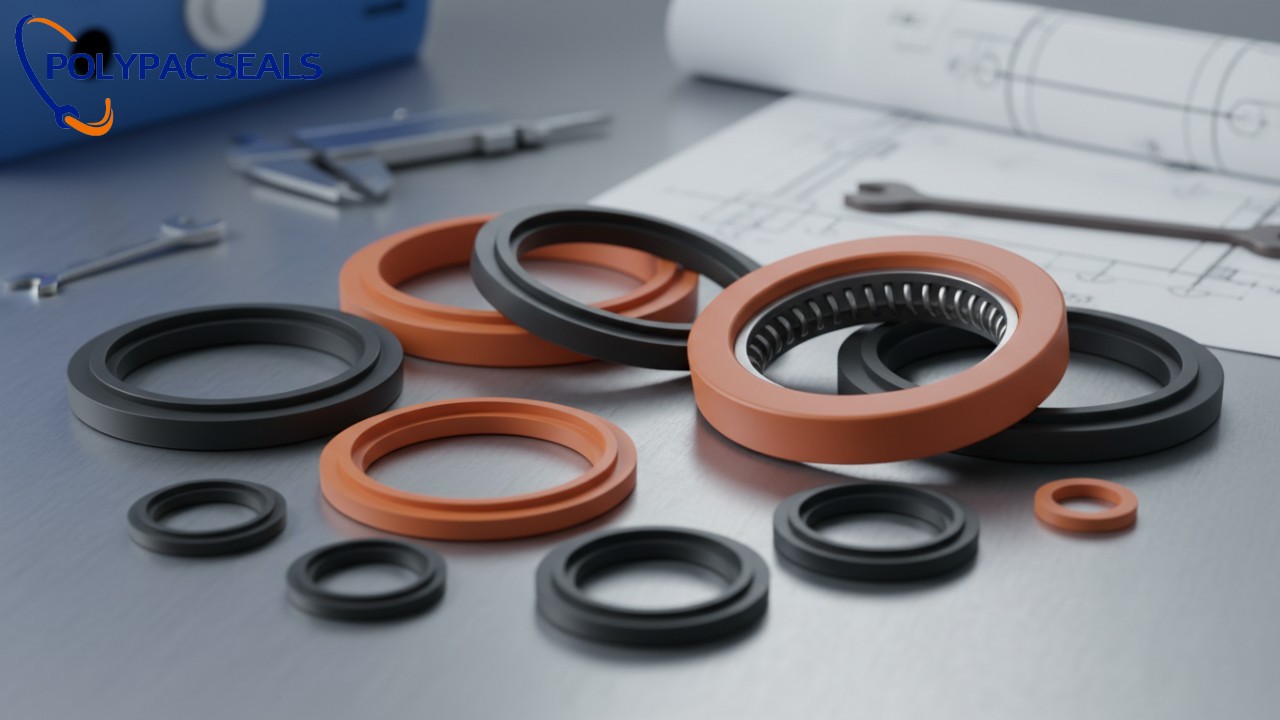
To choose the perfect hydraulic jack seal, you must evaluate three primary metrics: Operating Pressure (Bar/PSI), Temperature Range, and Fluid Compatibility. Selecting a seal based solely on dimension without considering these factors leads to immediate extrusion, chemical swelling, and catastrophic load failure.
Most generic seals are designed for static, low-pressure environments. Hydraulic jacks, however, are dynamic systems that experience massive pressure spikes. When you select a seal, you are balancing the hardness (durometer) against the elasticity required to maintain a seal during rod movement. If the material is too soft, it extrudes into the gap; if it is too hard, it fails to seal at low pressures.
The "Big Three" Selection Criteria:
- Operating Pressure: High-tonnage jacks often exceed 5,000 PSI. You need materials with high extrusion resistance.
- Temperature Range: Outdoor jacks face freezing cold (-40°F), while industrial jacks face high heat (+200°F).
- Fluid Compatibility: Standard rubber dissolves in synthetic fire-resistant fluids. Matching the polymer to the oil is non-negotiable.
Anatomy of a Hydraulic Jack: Knowing What You Need
A hydraulic jack relies on four distinct seal types: rod seals to prevent external leaks, piston seals to hold the load, wiper seals to exclude debris, and guide rings to prevent metal-to-metal contact. Identifying the correct type is the first step in successful refurbishment.
Many DIY repair kits confuse these functions, offering generic O-rings where specialized U-cups are required. Understanding the anatomy ensures you don't just stop a leak but restore the jack's full lifting capacity.
Essential Seal Components:
- Rod Seals: The primary barrier preventing fluid from leaking out of the cylinder. These must have high wear resistance.
- Piston Seals: The critical seal responsible for maintaining pressure. If this fails, the jack will "drift" or slowly lower under load.
- Wiper/Scraper Seals: Installed at the top of the cylinder, these scrape dirt off the rod as it retracts, protecting the internal system.
- Guide Rings: Often overlooked, these rings support the piston and rod, preventing side-loading damage and scoring.
Material Showdown: Nitrile vs Polyurethane Hydraulic Seals
For hydraulic jacks, polyurethane (PU) is superior to nitrile (NBR) due to its exceptional abrasion resistance and ability to handle high pressure spikes without extrusion. While nitrile is cost-effective for static uses, polyurethane is the industry standard for dynamic jack applications.
This comparison is often the deciding factor in seal longevity. The debate of nitrile vs. polyurethane hydraulic seals usually ends with PU winning for heavy-duty applications, while Viton and PTFE have their own specific niches.
Material Properties Breakdown:
- Nitrile (NBR): The standard choice. Excellent oil resistance and low cost, but suffers from high friction and poor ozone resistance.
- Polyurethane (PU): The "Heavy Lifter." It offers roughly 4x the abrasion resistance of rubber and resists extrusion gaps significantly better.
- Viton (FKM): The high-temp specialist. Essential for environments above 250°F or when using aggressive synthetic fluids.
- PTFE (Teflon): Used for low-friction needs. It has zero stick-slip but requires an energizer (O-ring) to maintain static sealing.
According to ASTM International, materials like polyurethane are tested rigorously (e.g., ASTM D1630) to ensure they withstand the abrasive wear typical in reciprocating hydraulic cycles.
Performance Metrics: Matching Seals to Workload
Performance is defined by a seal’s ability to maintain contact stress under varying high-pressure hydraulic seal types and temperature extremes. A seal that works at 1,000 PSI may physically shred at 5,000 PSI if it lacks the correct Shore A hardness.
Engineers must calculate the "extrusion gap"—the space between the piston and the cylinder wall. As pressure rises, the seal tries to push into this gap. High-performance seals use backup rings or harder materials (like 95 Shore A PU) to prevent this.
Key Performance Indicators:
- Pressure Ratings: Standard O-rings fail above 1,500 PSI without backup rings. U-Cups can handle up to 5,000+ PSI.
- Temperature Dynamics: Cold snaps cause seals to harden and crack; heat causes them to soften and extrude.
- Dynamic vs. Static: Jacks require seals that excel in "static holding" to keep heavy loads suspended safely for hours.
Common Mistakes & Why Seals Fail Prematurely
The leading causes of seal failure are installation damage, fluid contamination, and chemical incompatibility, often resulting in immediate leakage or pressure loss. Even the most expensive seal will fail if installed over a sharp thread or into dirty oil.
Contamination is particularly insidious. Microscopic particles suspended in the hydraulic fluid act like sandpaper, scoring the cylinder wall and cutting the seal lip. According to the International Organization for Standardization (ISO), specifically ISO 4406 standards, maintaining fluid cleanliness is the single most effective way to extend component life.
Top Hydraulic Seal Failure Causes:
- Installation Damage: Forcing a seal over threads without a protective sleeve creates micro-cuts.
- Contamination: Dirt entering through a worn wiper seal destroys the primary rod seal.
- Diesel Effect (Aeration): Air bubbles in the fluid compress under load, creating mini-explosions that burn the seal.
- Chemical Attack: Using brake fluid or incompatible grease causes rubber seals to swell and disintegrate.
U-Cup vs. O-Ring Performance: Which is Better?
U-cups are vastly superior to O-rings for dynamic jack sealing because their lip design uses internal system pressure to strengthen the seal against the wall. O-rings are designed primarily for static sealing and are prone to rolling or spiraling during dynamic movement.
In the debate of U-cup vs. O-ring performance, the mechanics are clear. A U-cup is "pressure energized." As the pressure in the jack increases, it pushes the lips of the U-cup tighter against the surfaces, creating a better seal. An O-ring, by contrast, relies solely on initial compression (squeeze), which degrades over time.
Why U-Cups Win for Jacks:
- Dynamic Stability: They do not roll or twist in the groove like O-rings.
- Pressure Response: Sealing force increases linearly with hydraulic pressure.
- Leak Prevention: The wiping action of the lip prevents fluid bypass better than the round profile of an O-ring.
Future-Proofing: Innovations in Sealing Technology (2026+)
The future of hydraulic sealing lies in self-lubricating polymer blends and smart-seal technologies that can detect wear before catastrophic failure. As environmental regulations tighten, the industry is also shifting toward biodegradable-friendly materials.
Looking ahead to 2026 standards, we see a move away from generic rubber toward engineered thermoplastics that offer longer shelf life and lower friction coefficients.
Emerging Trends:
- Self-Lubricating Materials: reducing the need for external grease and minimizing stick-slip.
- Eco-Friendly Polymers: Materials designed to resist degradation from new biodegradable hydraulic fluids.
- Shelf-Life Awareness: Unlike competitors who ignore storage, we emphasize that proper storage (UV-free, cool) can extend seal life by 10+ years.
Industry Solutions: High-Performance Seal Kits from Polypac
At Polypac Industrial Technology Co., Ltd., we engineer seal kits specifically for high-stress hydraulic jack applications, leveraging over 15 years of manufacturing expertise. Founded in 2008, our 10,000-square-meter facility is dedicated to developing customized sealing solutions that outperform standard OEM parts.
We don't just sell seals; we develop the material science behind them. From our origins in filled PTFE seals (bronze, carbon, and glass-filled) to our modern custom rubber blending, we ensure every kit meets precise hardness and durability standards. We maintain long-term cooperation with research universities to keep our production equipment among the most advanced in the industry.
The Polypac Advantage:
- Custom Engineering: We match the Shore A hardness to your specific pressure requirements.
- Advanced Materials: Our filled PTFE and FKM seals handle environments that destroy standard rubber.
- Proven Reliability: One of China's largest dedicated seal manufacturers, serving global industries.
Conclusion
Selecting the right hydraulic jack seal is not just about size; it is about material science and environmental matching. By prioritizing polyurethane for load-bearing and Viton for heat, you ensure safety and longevity. Proper installation and regular fluid maintenance will prevent 90% of common failures.
Contact Polypac today to discuss your specific needs and let our engineers help you select the perfect sealing solution.


Products
How do I choose the right material for my sealing application?
What is the difference between NBR and FKM materials?
How important is surface finish on the metal parts that contact the seal?
When should I use a spring-energized seal instead of a standard elastomeric seal?
What does "AS568" mean?
Stay Updated with Industry Insights
Subscribe to our articles and receive the latest news, expert guidance, and technical updates directly in your E-mail.
Rest assured that your privacy is important to us, and all information provided will be handled with the utmost confidentiality.
Polypac is a trusted global supplier of high-performance sealing solutions, providing OEM & ODM services for industries worldwide.
E-mail:
Phone/WhatsApp:
© 2025 Polypac Seals. All Rights Reserved.
dms
DMS
DMS