Mastering O-Ring Gland Design: The Complete Guide for Perfect Sealing Performance

Friday, February 6, 2026
Discover expert insights on O Ring Gland Design with Polypac’s complete guide. Learn essential tips for O Ring Groove Design and Seal Gland Design to ensure perfect sealing performance in your applications. Optimize reliability and durability with our trusted solutions.

The Critical Link Between Gland Design and O-Ring Success

In the world of sealing technology, the O-ring often receives the most attention for its simple yet effective design. However, even the highest quality O-ring will fail prematurely if installed in a poorly designed gland. The gland—the groove or cavity that houses the O-ring—is the unsung hero of sealing systems, directly determining the seal's performance, reliability, and lifespan. At Polypac, our experience as a scientific and technical seals manufacturer has shown us that proper gland design is not optional—it's fundamental to achieving leak-free operation.

This comprehensive guide explores the essential principles of O-ring gland design, covering everything from basic calculations and standards to advanced considerations for challenging applications. Whether you're designing new equipment or troubleshooting existing systems, understanding these principles will help you optimize your sealing performance.

Understanding the O-Ring Gland: More Than Just a Groove

A gland is the precisely machined space where an O-ring sits and performs its sealing function. It consists of several critical dimensions that must work in harmony with the O-ring's properties:

  • Gland Width: The space where the O-ring rests laterally

  • Gland Depth: Determines the amount of O-ring compression

  • Clearance Gap: The space between mating metal parts where extrusion can occur

  • Surface Finish: The texture of gland surfaces that affects sealing capability

  • Radii and Corners: Critical for preventing stress concentration points

Proper gland design ensures the O-ring can:

  1. Maintain adequate compression for initial sealing

  2. Accommodate volumetric changes from temperature fluctuations

  3. Resist extrusion under system pressure

  4. Minimize friction in dynamic applications

  5. Extend service life through optimal stress distribution

Key Design Standards and Specifications

Before designing any gland, it's essential to understand the industry standards that guide proper dimensions:

AS568 Standard (SAE)

The most common standard in North America, specifying O-ring sizes for aerospace and industrial applications. It provides detailed gland dimensions for various pressure ranges and seal types.

ISO 3601 Standard

The international standard widely used in Europe and globally, offering metric dimensions and comprehensive design guidance for static and dynamic applications.

Military Standards (MIL-STD and MS)

Specific standards for defense and aerospace applications with stringent requirements for reliability under extreme conditions.

At Polypac, we follow and support all major standards while offering custom design assistance for non-standard applications through our custom engineering services.

Fundamental Gland Design Calculations

1. Compression Percentage

The most critical parameter in gland design is the O-ring compression percentage—the amount the O-ring is squeezed when installed.

Calculation:
Compression % = [(O-ring cross-section diameter - Gland depth) / O-ring cross-section diameter] × 100

Recommended Compression Ranges:

  • Static Seals: 15-30% compression

  • Dynamic Seals: 10-20% compression (lower to reduce friction)

2. Gland Volume vs. O-Ring Volume

A properly designed gland must have more volume than the O-ring to accommodate thermal expansion:

Gland Fill Ratio = (O-ring volume / Gland volume) × 100

Optimal Range: 70-90% fill ratio (10-30% free space for expansion)

3. Clearance Gap Limitations

The gap between metal parts where extrusion can occur must be carefully controlled based on system pressure and O-ring material hardness:


System Pressure Recommended Max Clearance (Nitrile) Recommended Max Clearance (FKM)
0-500 psi 0.005 in (0.127 mm) 0.004 in (0.102 mm)
500-1500 psi 0.003 in (0.076 mm) 0.002 in (0.051 mm)
1500-3000 psi 0.0015 in (0.038 mm) 0.001 in (0.025 mm)
3000+ psi Anti-extrusion ring required Anti-extrusion ring required

Static vs. Dynamic Gland Designs

Static Gland Design

For applications with no relative motion between sealing surfaces:

  • Face Seal Glands: Used between flat surfaces (flanges, covers)

  • Radial Seal Glands: Used between cylindrical surfaces (piston/housing)

  • Key Considerations: Higher compression acceptable, simpler geometry, focus on volume calculations

Dynamic Gland Design

For applications with reciprocating, rotating, or oscillating motion:

  • Reciprocating Seals: Require careful clearance control and lubrication considerations

  • Rotary Seals: Need special attention to friction and heat generation

  • Key Considerations: Lower compression preferred, critical surface finish requirements (8-16 μin Ra), installation ease

Material-Specific Design Considerations

Different O-ring materials require specific gland design adjustments:

Nitrile (NBR) Applications

  • Standard gland designs generally apply

  • Good resilience allows for standard compression ranges

  • Consider volume expansion with petroleum-based fluids

Fluorocarbon (FKM/Viton®) Applications

  • Lower compression may be needed due to higher modulus

  • Excellent extrusion resistance allows for slightly larger clearances

  • Consider thermal expansion characteristics at high temperatures

Silicone (VMQ) Applications

  • Requires generous gland volume due to high thermal expansion

  • Low tear strength necessitates generous radii (minimum 0.015 in/0.38 mm)

  • Avoid sharp corners completely

Polyurethane (PU) Applications

  • Can handle higher compression with minimal set

  • Excellent abrasion resistance benefits dynamic applications

  • Consider hydrolytic stability in design

Advanced Design Considerations

Anti-Extrusion Rings

For high-pressure applications (>1500 psi for soft materials, >3000 psi for hard materials), anti-extrusion rings are essential:

  • Materials: Typically PTFE, filled PTFE, or polyimide

  • Design: Should fill 70-80% of clearance gap

  • Installation: Always placed on the low-pressure side of the O-ring

Surface Finish Optimization

  • Gland Surfaces: 16-32 μin Ra (0.4-0.8 μm) for optimal sealing

  • Dynamic Surfaces: 8-16 μin Ra (0.2-0.4 μm) to minimize friction and wear

  • Avoid Directional Finishes: Use non-directional (random) finishes to prevent leak paths

Thermal Considerations

  • Thermal Expansion: Calculate gland volume for worst-case temperature

  • Different Materials: Account for different thermal expansion rates of metals and elastomers

  • Cyclic Temperatures: Design for movement during temperature cycling

Common Gland Design Errors and Solutions


Error Type Consequences Solution
Excessive Compression High friction, rapid wear, spiral failure Reduce gland depth, follow standard compression ranges
Insufficient Compression Initial leakage, poor low-pressure sealing Increase gland depth, verify O-ring size
Inadequate Gland Volume Extrusion, compression set, premature failure Increase gland width, verify fill ratio
Sharp Corners Cutting, nicking during installation, stress points Apply minimum radii (0.010-0.020 in / 0.25-0.5 mm)
Poor Surface Finish Leak paths, increased wear Specify proper surface finish, avoid tool marks
Excessive Clearance Extrusion, nibbling, seal failure Reduce clearance, add anti-extrusion rings

Special Application Designs

Vacuum Applications

  • Minimal compression (10-15%) to minimize outgassing

  • Special material selection (low outgassing compounds)

  • Careful attention to surface finish and cleanliness

High-Pressure Applications

  • Progressive gland designs with multiple rings

  • Strategic use of anti-extrusion devices

  • Material selection for low compression set

Extreme Temperature Applications

  • Allowance for significant thermal expansion/contraction

  • Material-specific gland volume adjustments

  • Consideration of different thermal coefficients

The Polypac Advantage in Gland Design Support

At Polypac, we offer more than just quality O-rings—we provide comprehensive gland design support:

1. Technical Consultation

Our engineers provide expert guidance on gland design for both standard and special working conditions.

2. Design Verification

We review customer designs against industry standards and best practices, offering optimization suggestions.

3. Prototyping Support

For critical applications, we can supply prototype O-rings for testing and design validation.

4. Custom Solutions

When standard designs won't suffice, our custom engineering team develops optimized gland designs for unique applications.

5. Educational Resources

We provide detailed technical documentation, including our O-ring gland design guide with formulas, tables, and examples.

Step-by-Step Gland Design Process

  1. Define Application Parameters: Pressure, temperature, media, motion type, life expectancy

  2. Select O-Ring Material: Based on chemical compatibility and temperature requirements

  3. Choose O-Ring Size: From standard sizes (AS568 or ISO 3601) or consider custom sizing

  4. Calculate Initial Dimensions: Using standard formulas for compression and fill ratio

  5. Apply Application Adjustments: For dynamic motion, high pressure, extreme temperatures

  6. Specify Tolerances: Based on manufacturing capabilities and application criticality

  7. Define Surface Requirements: Finish, texture, and geometric tolerances

  8. Review and Optimize: Check for common errors, optimize for manufacturability

  9. Prototype and Test: Validate design with functional testing

  10. Finalize Documentation: Create complete specifications for production

Future Trends in Gland Design

The field of gland design continues to evolve with:

  • Simulation Software: Advanced FEA tools for predicting O-ring performance under various conditions

  • Additive Manufacturing: Enabling complex gland geometries previously impossible to machine

  • Smart Sealing Systems: Integrated sensors in glands for condition monitoring

  • Sustainable Designs: Optimizing for minimal material usage and energy efficiency

Conclusion: Designing for Sealing Excellence

Proper O-ring gland design is both a science and an art—requiring understanding of material properties, mechanical principles, and practical manufacturing considerations. By following established standards while considering your specific application requirements, you can design glands that maximize O-ring performance and system reliability.

At Polypac, we combine decades of sealing experience with technical expertise to help customers achieve optimal sealing solutions. Whether you need standard O-rings for conventional applications or custom-engineered solutions for challenging environments, we have the knowledge and capabilities to support your success.

Ready to Optimize Your Sealing Design?
Contact our technical team today for gland design consultation, material selection guidance, or custom sealing solutions tailored to your specific needs.




Recommended for you
piston guide ring - Polypac
PTFE vs. Composite: Choosing the Best Piston Guide Ring Material for High-Pressure Systems
hydraulic rotary seals - Polypac
How to Select the Perfect Hydraulic Rotary Seal: A Data-Driven Decision Matrix
back up o ring - Polypac
Advanced Back-Up Ring Materials: Beyond PTFE for Extreme Temperature Environments
ptfe scraper seal - Polypac
PTFE vs. Urethane Scrapers: Which Material Truly Prevents Contamination?
FAQ
Products
How important is surface finish on the metal parts that contact the seal?
Extremely important. A rough surface will abrade and wear out the seal quickly, causing leaks. A finish that is too smooth can prevent a lubricating film from forming. A typical recommended surface finish for dynamic applications is 0.2 to 0.8 μm (8-32 μin) Ra.
How can I prevent seal damage during installation?
Use Tools: Always use dedicated installation tools (e.g., picks, cones, guides). Lubricate: Always lubricate the seal and the contact surface. Protect Sharp Edges: Cover sharp threads and edges with tape or use an installation sleeve. Check the Groove: Ensure the installation groove is clean, deburred, and undamaged.
Can I reuse a seal?
We strongly recommend never reusing seals. Once compressed and used, a seal takes a "set" and its elastic properties are degraded. Reusing it almost always results in a leak. Always install a new seal during any maintenance or repair.
What does "AS568" mean?
AS568 is the Aerospace Standard that defines the dimensions for over 360 standard O-ring sizes. It is the most widely accepted sizing system in North America and globally. An AS568 number (e.g., AS568-214) specifies a precise inside diameter and cross-section.
When should I use a spring-energized seal instead of a standard elastomeric seal?
Consider a spring-energized seal (e.g., GSF, SPN types) for demanding applications involving: Extreme Temperatures (below -30°C or above +200°C) Aggressive Chemicals that elastomers can't handle Very Low Leakage or "Zero Leakage" requirements Poor Lubricity or dry running conditions The internal spring maintains constant sealing force, compensating for wear and system variables.
You may also like
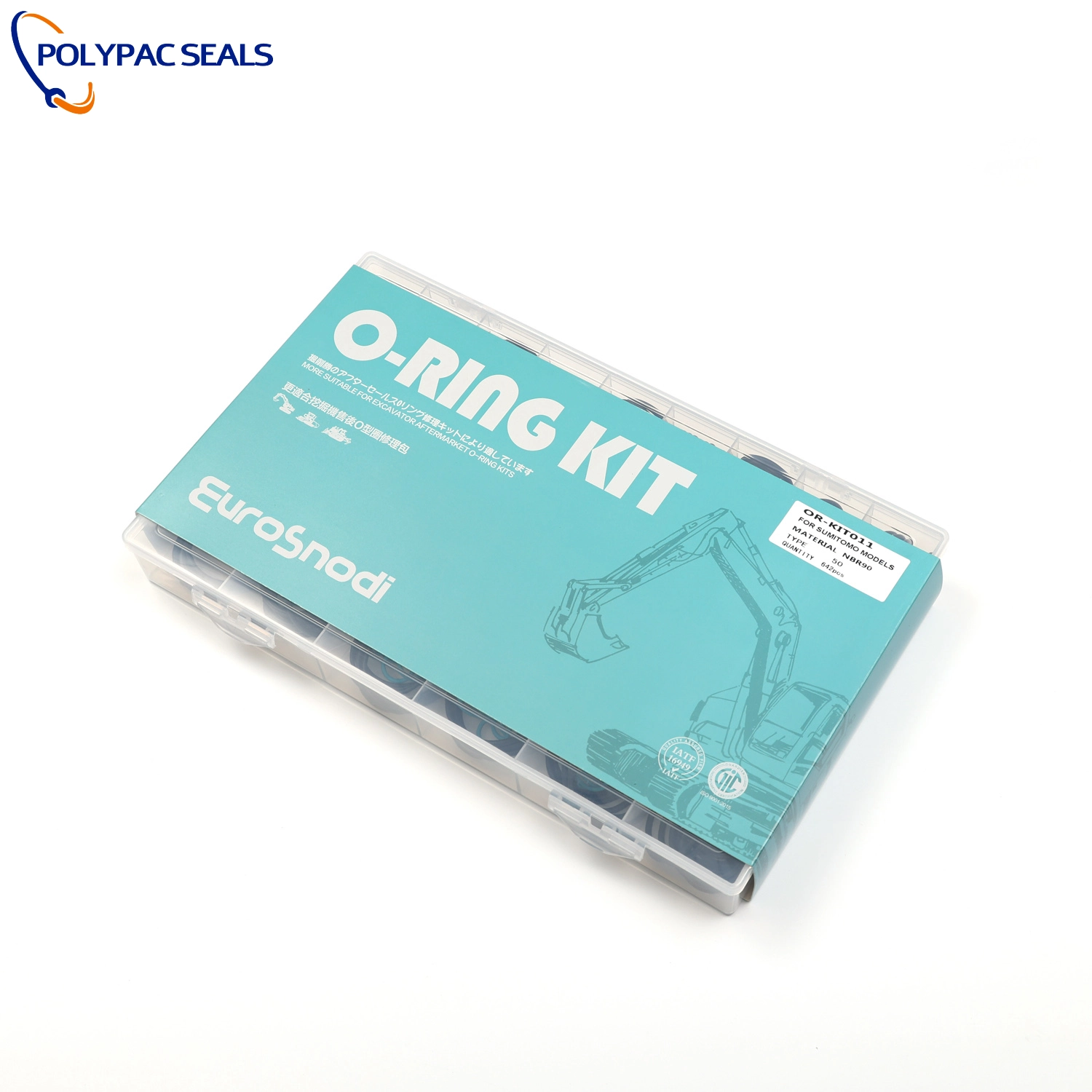
ORing-Kit 011Sumt ou - Polypac
Mini O-Ring Kits-011 SUMITOM | Compact Assortments for Electronics, RC Models & Small Appliances
Polypac Mini O-Ring Kits-011 SUMITOM offer compact assortments of high temperature, chemical resistant O-rings. Ideal for electronics, RC models, and small appliances, these durable kits ensure reliable sealing performance in demanding environments. Perfect for precision repairs and maintenance.
Mini O-Ring Kits-011 SUMITOM | Compact Assortments for Electronics, RC Models & Small Appliances
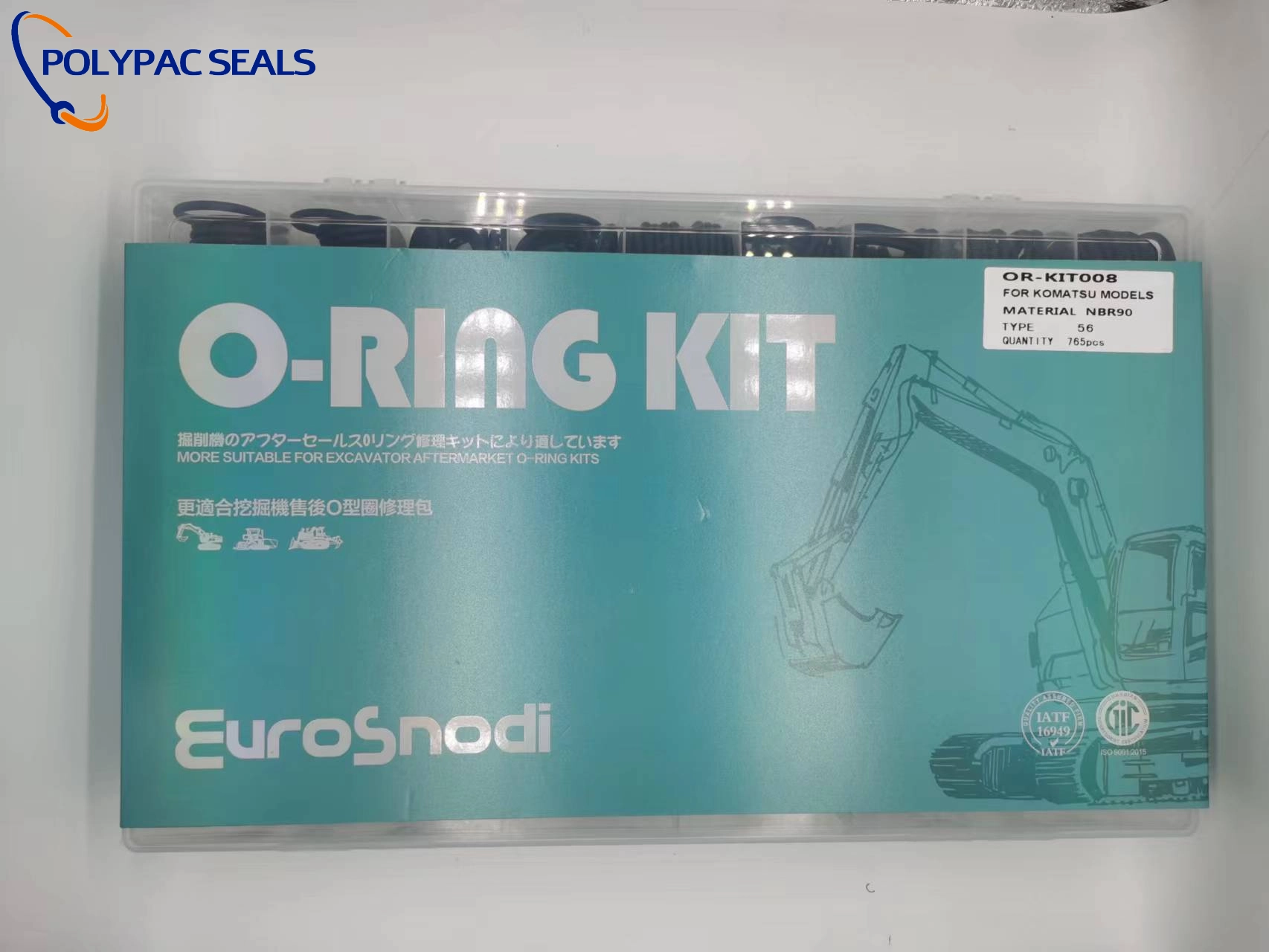
Kit008 - Polypac
Buna-N (Nitrile) O-Ring Kits-008 KOMATSU | Oil Resistant Seal Assortments for General Purpose Use
Polypac Buna-N (Nitrile) O-Ring Kits-008 KOMATSU offer durable, oil-resistant seals ideal for hydraulic and pneumatic applications. These versatile O-ring assortments ensure reliable sealing performance for general-purpose use, enhancing equipment efficiency and longevity.
Buna-N (Nitrile) O-Ring Kits-008 KOMATSU | Oil Resistant Seal Assortments for General Purpose Use
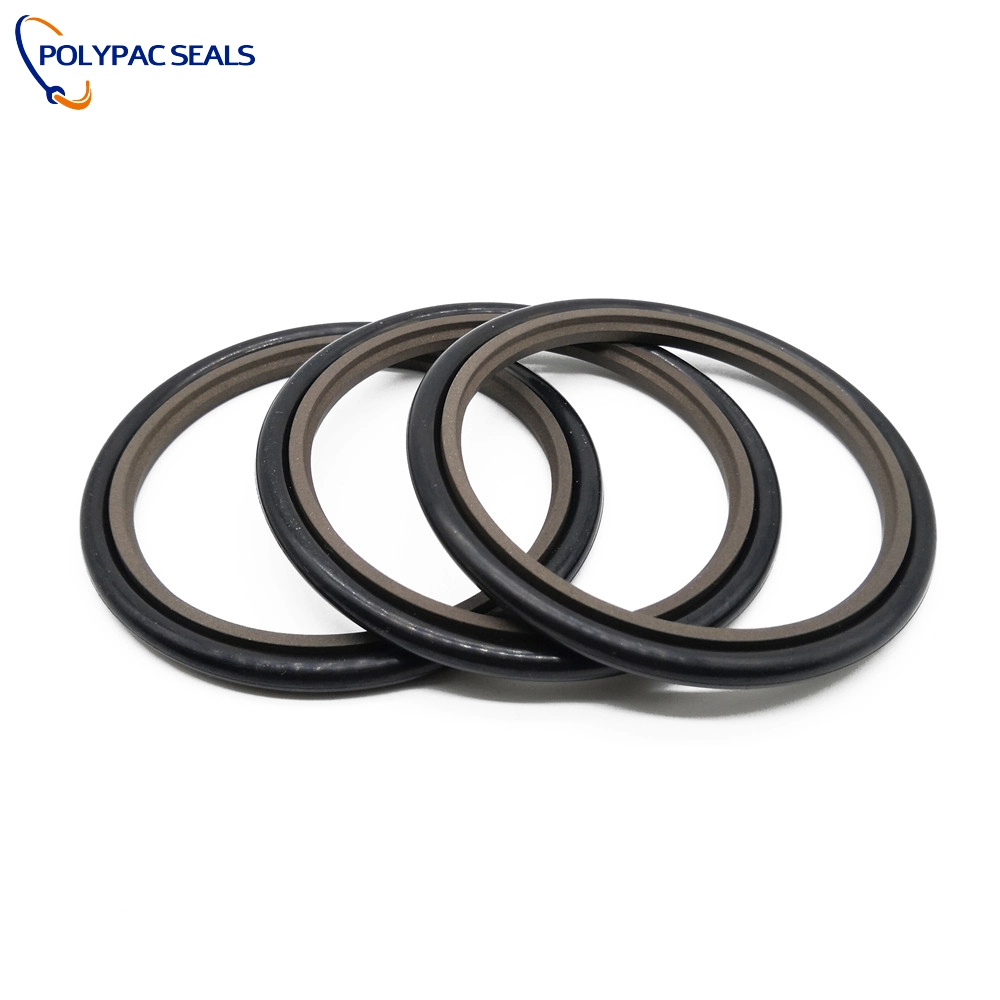
GSJ-801 - Polypac
GSJ-801 Rod Seal | High-Performance Piston Rod Seal for Exact OEM Replacement
The Polypac GSJ-801 Rod Seal is a high-performance piston rod seal designed for exact OEM replacement. Ideal for cylinder seal kit components and pump rod seals, it ensures superior durability and leak prevention, enhancing hydraulic system efficiency in industrial applications. Trust Polypac quality.
GSJ-801 Rod Seal | High-Performance Piston Rod Seal for Exact OEM Replacement
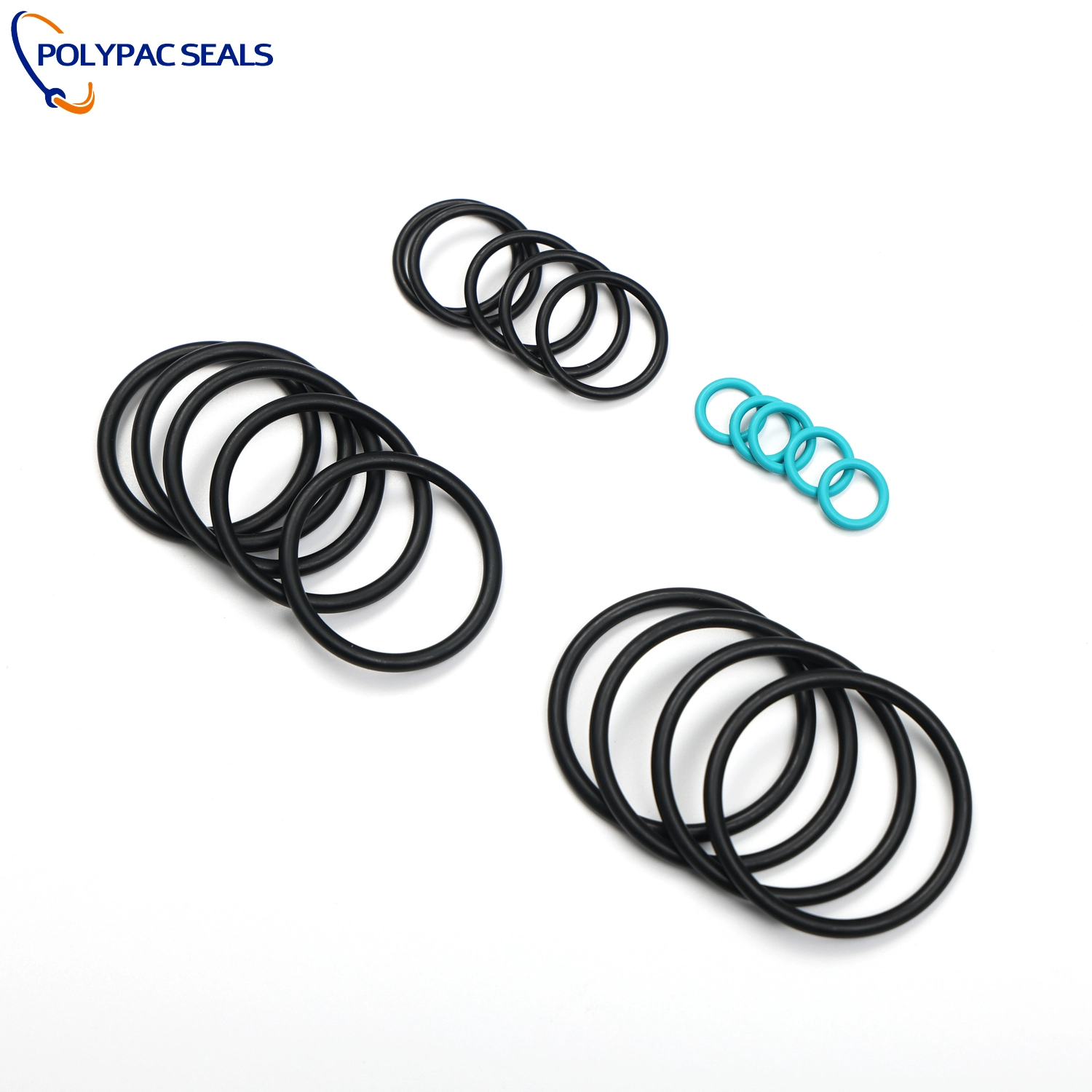
ORing-Kit 012 Hita sp - Polypac
Plumbing & HVAC O-Ring Kits012 HITACHI | Assortments for Water, Refrigerant & Gas Connections
Polypac Plumbing & HVAC O-Ring Kits012 HITACHI offer High Quality vacuum and FDA-grade O-Ring assortments for water, refrigerant, and gas connections. Trusted for durability and leak-proof sealing, ideal for plumbing and HVAC systems requiring reliable, high-performance seals.
Plumbing & HVAC O-Ring Kits012 HITACHI | Assortments for Water, Refrigerant & Gas Connections

Stay Updated with Industry Insights

Subscribe to our articles and receive the latest news, expert guidance, and technical updates directly in your E-mail.

Please enter your name not exceed 100 characters
The email format is not correct or exceed 100 characters, Please reenter!
Please enter a valid phone number!
Please enter your field_1188 not exceed 150 characters
Please enter your content not exceed 3000 characters

Rest assured that your privacy is important to us, and all information provided will be handled with the utmost confidentiality.

Contact customer service
×
Please enter your name not exceed 100 characters
The email format is not correct or exceed 100 characters, Please reenter!
Please enter a valid phone number!
Please enter your field_1188 not exceed 150 characters
Please enter your content not exceed 3000 characters

Request Your Custom Sealing Solution

Fill in your requirements and our team will provide a tailored solution with a quick response.

Your privacy matters to us. We handle your data securely, in compliance with international quality and safety certifications.

With over 10 years of sealing expertise, we are ready to provide you with reliable solutions.

×

Request Your Custom Sealing Solution

Fill in your requirements and our team will provide a tailored solution with a quick response.

Please enter your name not exceed 100 characters
The email format is not correct or exceed 100 characters, Please reenter!
Please enter a valid phone number!
Please enter your field_1188 not exceed 150 characters
Please enter your content not exceed 3000 characters

Your privacy matters to us. We handle your data securely, in compliance with international quality and safety certifications.

With over 10 years of sealing expertise, we are ready to provide you with reliable solutions.

×
Please enter your name not exceed 100 characters
The email format is not correct or exceed 100 characters, Please reenter!
Please enter a valid phone number!
Please enter your field_1188 not exceed 150 characters
Please enter your content not exceed 3000 characters

How Can We Help You?

Whether you need product details, technical support, or a custom solution, we’re here to assist.

Your privacy matters to us. We handle your data securely, in compliance with international quality and safety certifications.

With over 10 years of sealing expertise, we are ready to provide you with reliable solutions.

×

How Can We Help You?

Whether you need product details, technical support, or a custom solution, we’re here to assist.

Please enter your name not exceed 100 characters
The email format is not correct or exceed 100 characters, Please reenter!
Please enter a valid phone number!
Please enter your field_1188 not exceed 150 characters
Please enter your content not exceed 3000 characters

Your privacy matters to us. We handle your data securely, in compliance with international quality and safety certifications.

With over 10 years of sealing expertise, we are ready to provide you with reliable solutions.

×

📩 Looking for sealing solutions?

Start a chat and get quick answers.

Have questions about our products or services? Let’s chat and find the best solution for you.

Please enter your name not exceed 100 characters
The email format is not correct or exceed 100 characters, Please reenter!
Please enter a valid phone number!
Please enter your field_1188 not exceed 150 characters
Please enter your content not exceed 3000 characters

Your privacy matters to us. We handle your data securely, in compliance with international quality and safety certifications.

With over 10 years of sealing expertise, we are ready to provide you with reliable solutions.