












O-Ring Kit Guide: 2026 Edition - Selection, Standards, and Performance Mastery
In the high-stakes world of industrial maintenance, a simple elastomer seal often stands between seamless operation and catastrophic system failure. With the global industrial seals market valued at approximately $15.05 billion in 2024 and projected to grow steadily, the demand for precision sealing solutions has never been higher. Whether you are managing High-Pressure Hydraulic O-Rings in heavy machinery or precision instruments in a lab, having the right kit on hand is non-negotiable.
Key Takeaways for Quick Selection
Best for General Use: NBR (Nitrile) 70 Shore A is the industry standard for hydraulic oils and fuels.
- Materials: Choose NBR for oil, Viton for heat/chemicals, and EPDM for outdoor/weathering.
- Standards: AS568 Standard Sizes are the US aerospace benchmark; ISO 3601 is the international metric standard.
- Hardness: Shore A 70 is the universal standard for most dynamic and static applications; Shore A 90 is for high pressure.
- Storage: Keep kits in cool, dark environments to prevent UV-induced ozone cracking.
What is an O-Ring Kit and Why is it Essential?

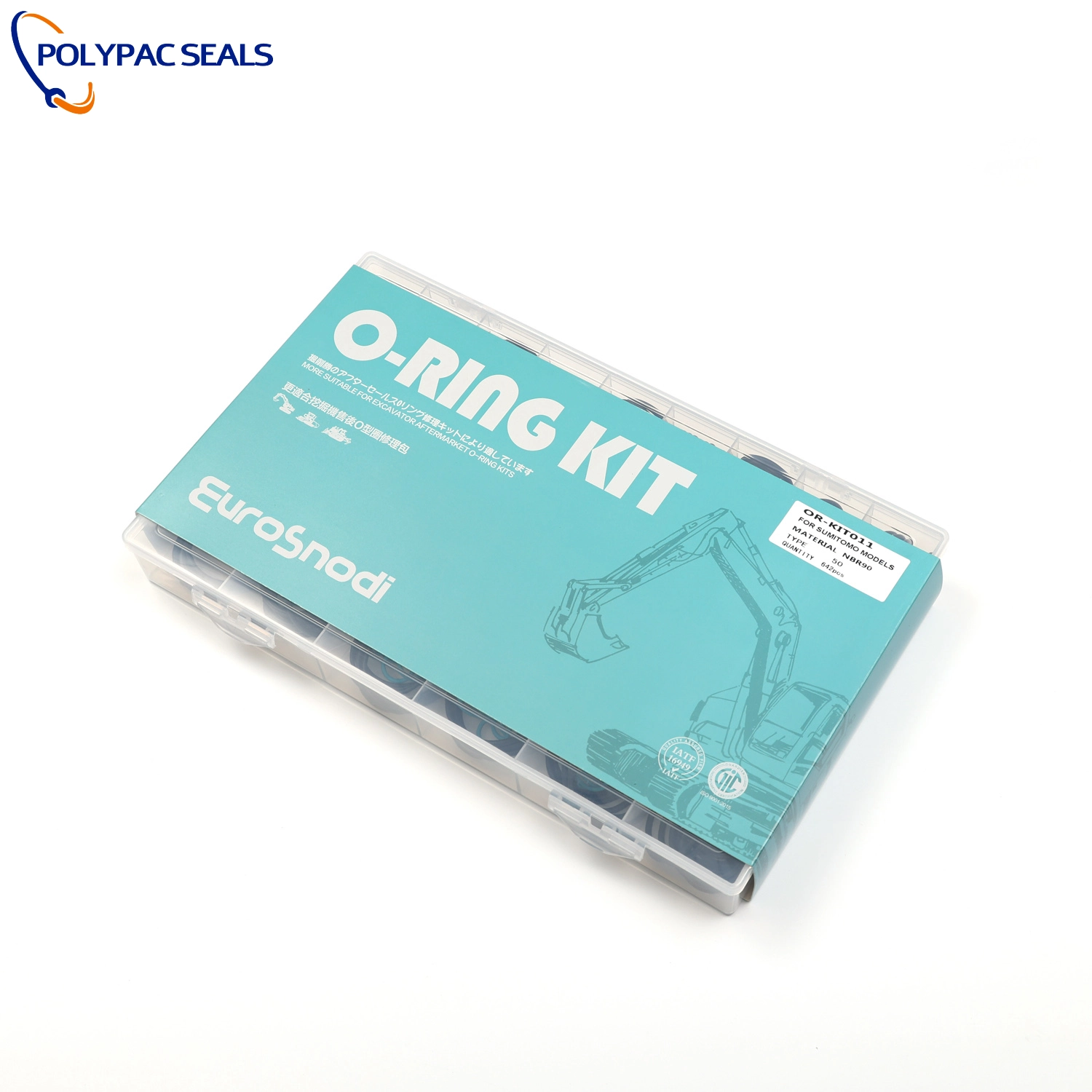
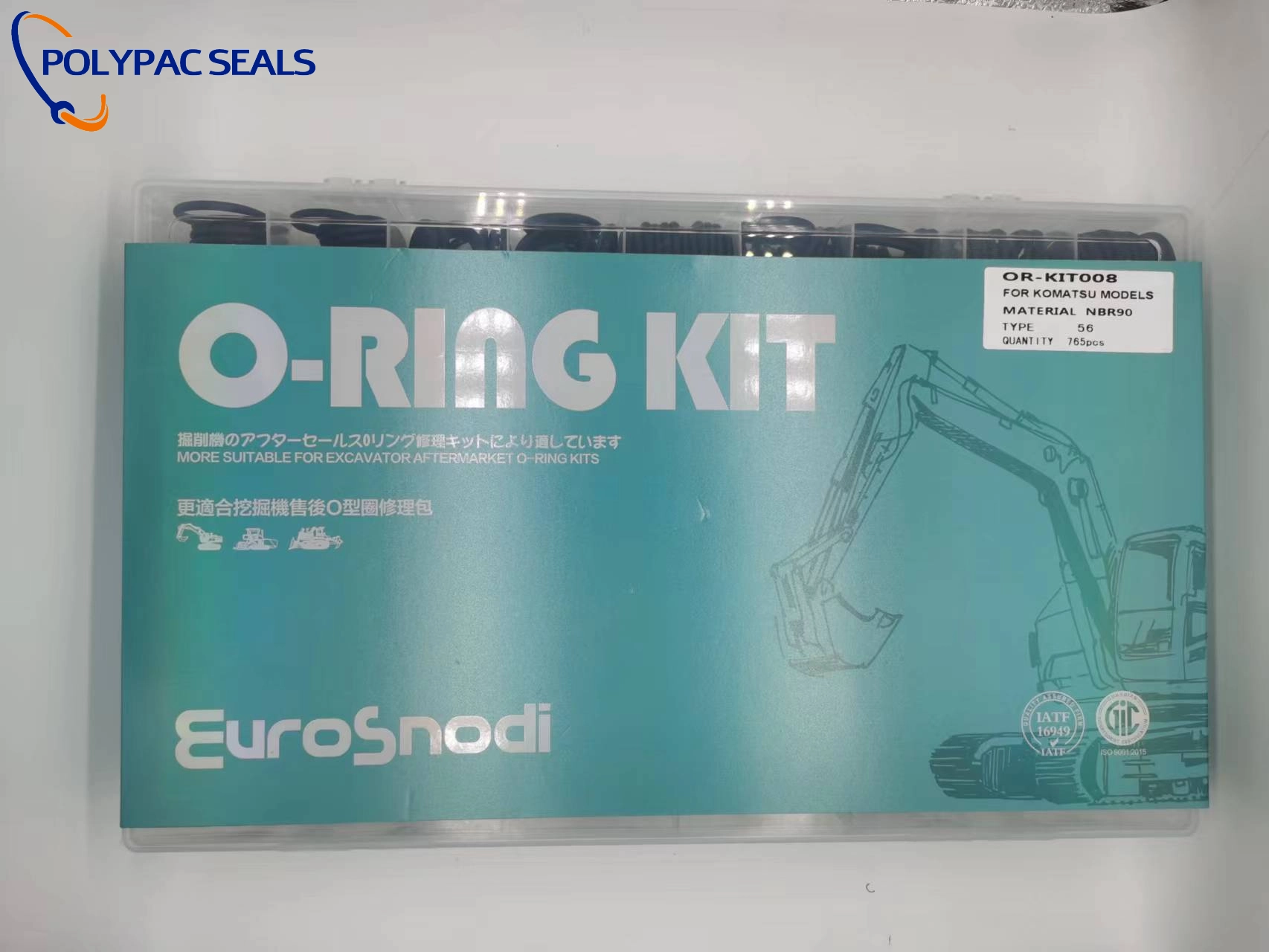
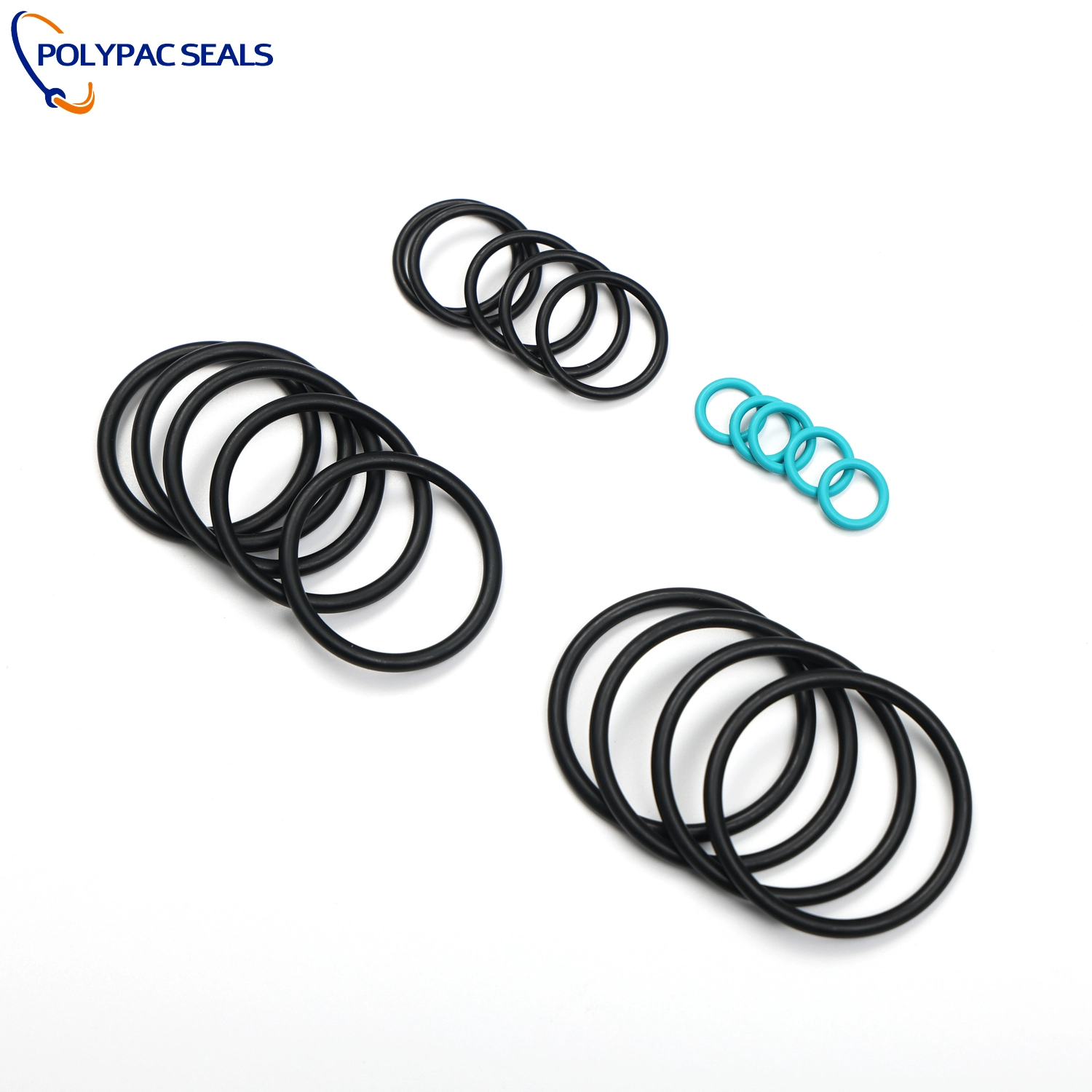
An O-ring kit is a pre-sorted collection of toroidal elastomeric seals, organized by cross-section and inside diameter, designed to provide immediate replacement solutions for maintenance and repair operations.
For facility managers, these kits are not just spare parts—they are insurance against downtime. In a hydraulic system, a single failed seal can halt a production line costing thousands per hour.
Why Industrial Leaders Stock Kits:
- Reduced Downtime: Immediate access to AS568 Standard Sizes eliminates the lead time of ordering individual seals.
- Cost Efficiency: Purchasing a kit is significantly cheaper per unit than buying individual seals ad-hoc.
- Versatility: A standard kit covers 80% of routine maintenance needs in pneumatic and hydraulic workshops.
- Organization: Quick identification of missing sizes ensures inventory levels are visible at a glance.
At Polypac Industrial Technology Co.,Ltd, we have observed that clients who maintain organized inventory kits reduce their emergency maintenance windows by up to 40%. Since founding our 10,000-square-meter factory in 2008, we have expanded from PTFE seals to comprehensive O-ring solutions to meet this exact need.
The Science of Seal Materials: NBR, Viton, and EPDM
Selecting the correct polymer is the single most critical factor in seal longevity. The debate often centers on Buna-N vs Viton Compatibility, but the answer depends entirely on the operating environment.
1. Nitrile (Buna-N / NBR)
- Primary Use: The "workhorse" of the industry. Excellent resistance to petroleum-based oils, hydraulic fluids, and water.
- Temperature Range: -40°F to 250°F (-40°C to 120°C).
- Limitations: Poor resistance to ozone, sunlight, and weathering. Do not use outdoors.
2. Viton (FKM)
- Primary Use: High-performance sealing. Superior resistance to high temperatures, harsh chemicals, and compression set.
- Temperature Range: -15°F to 400°F (-26°C to 204°C).
- Best For: Applications involving biodiesel, aggressive chemicals, or extreme heat.
3. EPDM (Ethylene Propylene)
- Primary Use: Outdoor and steam applications. Outstanding resistance to ozone, sunlight, and brake fluids.
- Limitations: Never use with petroleum oils or fuels (causes immediate swelling and failure).
4. Silicone (VMQ)
- Primary Use: Static seals in extreme temperatures (hot or cold) and food-grade applications.
- Limitations: Low tear strength and poor abrasion resistance; not suitable for dynamic sealing.
Identifying Standards: AS568 vs. Metric ISO 3601
AS568 Standard Sizes represent the Aerospace Size Standard for O-rings used across the US, defining 369 distinct sizes by Inside Diameter (ID) and Cross-Section (CS).
Understanding the "Dash Number" system is crucial for accurate selection:
- 000 Series: 1/16" (1.78mm) Cross-Section
- 100 Series: 3/32" (2.62mm) Cross-Section
- 200 Series: 1/8" (3.53mm) Cross-Section
- 300 Series: 3/16" (5.33mm) Cross-Section
- 400 Series: 1/4" (6.99mm) Cross-Section
When to use Metric (ISO 3601): If you are servicing equipment manufactured in Europe or Asia (e.g., Komatsu, Bosch Rexroth), you will likely require metric sizes. Forcing an AS568 inch seal into a metric gland can lead to under-compression (leaks) or over-compression (extrusion).
Expert Maintenance: 5 Tips to Prevent Seal Failure
Seal failure is rarely an accident; it is usually a result of improper installation or Mechanical Seal Gland Design errors. Based on our extensive testing at Polypac’s R&D center, here is how to prevent common failures.
1. Verify Gland Cleanliness
Microscopic debris in the groove can create a "leak path" even with a perfect seal. Always clean the gland with a lint-free cloth and compatible solvent before installation.
2. Use Proper Lubrication
A dry O-ring installed into a tight gland can suffer from "spiral failure" or abrasion. Coat the O-ring lightly with a lubricant compatible with the system fluid (e.g., use silicone grease for EPDM, but never for Silicone O-rings).
3. Avoid Sharp Tools
Never use metal screwdrivers to remove or install O-rings. Scratches on the gland surface are permanent leak paths. Use soft plastic or brass picks.
4. Control the Stretch
When installing a seal over a piston, do not stretch it more than 5% beyond its elastic limit. Over-stretching causes the material to lose its recovery properties (memory), leading to a loose fit.
5. Check for Extrusion Risks
In high-pressure applications, the gap between mating metal parts (clearance gap) must be minimal. If the gap is too large, the O-ring will extrude into it, looking like it has been "nibbled" away.
Future Trends 2026: Smart Monitoring and Sustainability
The sealing industry is evolving rapidly. According to recent data from Fortune Business Insights, the market is shifting toward intelligent and sustainable solutions.
Emerging Technologies:
- Smart Seals: Integration of RFID or embedded sensors to monitor wear, temperature, and pressure in real-time, allowing for predictive maintenance rather than reactive repair.
- Sustainable Elastomers: A major push toward bio-based elastomers (derived from sources like dandelion rubber) and recyclable Thermoplastic Elastomers (TPEs) to reduce the carbon footprint.
- Digital Inventory: Automated vending systems for O-ring kits that track usage and auto-reorder, ensuring critical stock is never depleted.
At Polypac, we are aligning our production with these trends, collaborating with universities to develop next-generation materials that meet stricter environmental regulations without compromising performance.
Common Selection Mistakes (And How to Avoid Them)
Even experienced technicians make avoidable errors. Watch out for these pitfalls regarding High-Pressure Hydraulic O-Rings and general selection.
1. Ignoring Chemical Compatibility Using NBR for brake fluid applications is a classic mistake. The seal will swell to twice its size and degrade within hours. Always check the Material Safety Data Sheet (MSDS) of your fluid.
2. Overlooking Shelf Life "New" seals from an old kit can be dangerous. NBR has a shelf life of roughly 15 years, while Polyurethane may degrade in just 5-10 years. If a seal shows "blooming" (white powder) it is usually fine, but cracks when bent indicate expiration.
3. Incorrect Sizing Strategy Do not guess. A 1/16" cross-section is not the same as a 1.5mm metric section. The difference of 0.08mm is enough to cause a leak in high-pressure systems. Use a digital caliper for measurement.
4. Neglecting Durometer (Hardness) Using a standard 70 durometer seal in a 3000 PSI system without backup rings will result in extrusion. For high pressure, upgrade to Elastomer Shore A Hardness of 90.
FAQ: Mastering O-Ring Selection
How do I identify the material of an O-ring in my kit?
Look for color coding and perform a specific gravity test. While black is the standard color for NBR, EPDM, and Viton, many manufacturers use color dots (e.g., brown/green for Viton). If unsure, a "bounce test" can help: Viton has a low rebound resilience (doesn't bounce high), whereas NBR bounces well.
What does the AS568 standard actually represent?
It is the Aerospace Size Standard for O-rings established by the SAE. This standard simplifies sourcing by assigning a 3-digit "dash number" to specific dimensions (ID and Cross-Section), ensuring that a -210 O-ring purchased from any supplier will fit the same gland.
Can I reuse an O-ring once it has been removed?
No, reusing O-rings is generally discouraged. Once compressed, an elastomer takes a "compression set" (permanent deformation). Reinstalling it means it may not seal effectively against the gland walls again. Given the low cost of seals versus the high cost of failure, replacement is always the safer option.
What is the best way to measure an O-ring accurately?
Measure the Cross-Section (CS) and Inside Diameter (ID) with a caliper. Avoid measuring the Outside Diameter (OD) as flexible materials can ovalize, giving false readings. For quick field checks, drop the O-ring onto a sizing cone to find the closest AS568 match.
How long do O-ring kits last in storage?
NBR kits last ~15 years; Viton/Silicone can last 20+ years. Store them away from direct sunlight (UV rays), ozone sources (electric motors), and extreme heat. If the rubber feels hard or cracks when stretched, discard it.
What is the difference between Viton and Nitrile O-rings?
Viton handles higher heat and chemicals; Nitrile is cheaper and better for general oil. Nitrile (NBR) works up to 250°F and is ideal for standard hydraulics. Viton (FKM) works up to 400°F and resists aggressive solvents that would dissolve NBR.
What are the common signs of O-ring failure?
Compression set (flattening) and extrusion (nibbling) are most common. If the O-ring comes out looking like a square instead of a round torus, it suffered compression set. If the edges look chewed, it suffered extrusion due to high pressure or large gaps.
What should a basic workshop O-ring kit include?
A range of AS568 sizes in NBR 70 Durometer. A standard "382-piece" kit covering dash numbers -006 to -327 is the industry baseline. This covers the vast majority of static and dynamic sealing needs for pumps, valves, and cylinders.
References


Products
What is the difference between a static seal and a dynamic seal?
How important is surface finish on the metal parts that contact the seal?
What does "AS568" mean?
When should I use a spring-energized seal instead of a standard elastomeric seal?
What is the difference between NBR and FKM materials?
Stay Updated with Industry Insights
Subscribe to our articles and receive the latest news, expert guidance, and technical updates directly in your E-mail.
Rest assured that your privacy is important to us, and all information provided will be handled with the utmost confidentiality.

Polypac is a trusted global supplier of high-performance sealing solutions, providing OEM & ODM services for industries worldwide.
E-mail:
sales2@dmsseals.com
Phone/WhatsApp:
© 2025 Polypac Seals. All Rights Reserved.
dms
DMS
DMS