











O-Ring Piston Seals vs. U-Cups: Choosing the Right Seal for High-Pressure Hydraulics
A technical comparison of O-ring piston seals and U-cups in high-pressure hydraulic systems. This guide covers failure modes like spiral failure, extrusion gaps, and why U-Cups are often the superior choice for dynamic applications.
Key Takeaways: Quick Summary for Engineers
What is the best seal for high-pressure hydraulics? While O-rings are versatile and cost-effective, U-Cups are the superior choice for dynamic high-pressure piston sealing due to their pressure-energized lip design and resistance to rolling.
- O-Rings: Best for static applications or low-duty dynamic cycles; prone to O-ring spiral failure in long-stroke cylinders.
- U-Cups: Standard for reciprocating hydraulics; the "U" shape expands with system pressure to maintain a tight seal.
- Extrusion Risk: High pressure (>1500 PSI) requires backup rings for O-rings, whereas high-modulus U-cups naturally resist gap extrusion.
- Material Science: Modern Polyurethane (PU) U-cups offer significantly better abrasion resistance than standard NBR O-rings.
What is the Difference Between O-Ring Piston Seals and U-Cups?
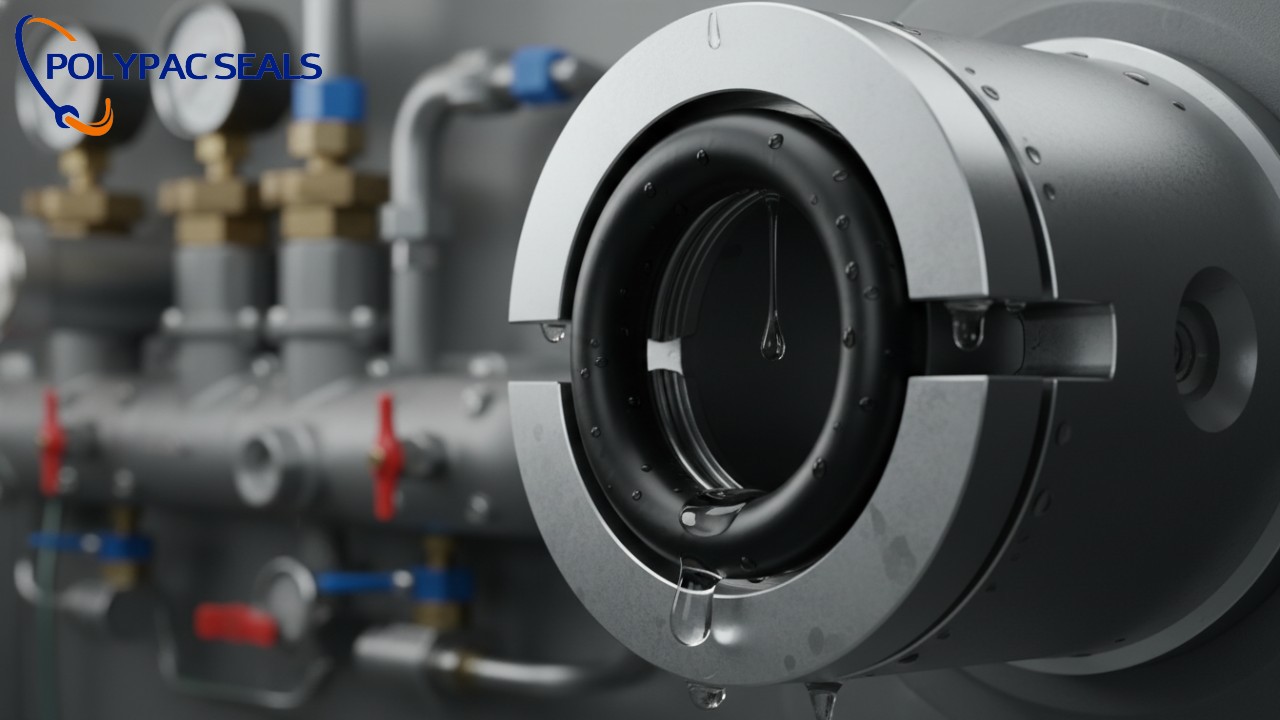
The fundamental difference lies in how they create a sealing force: O-rings rely on initial compression (squeeze), while U-cups rely on system pressure to energize their sealing lips.
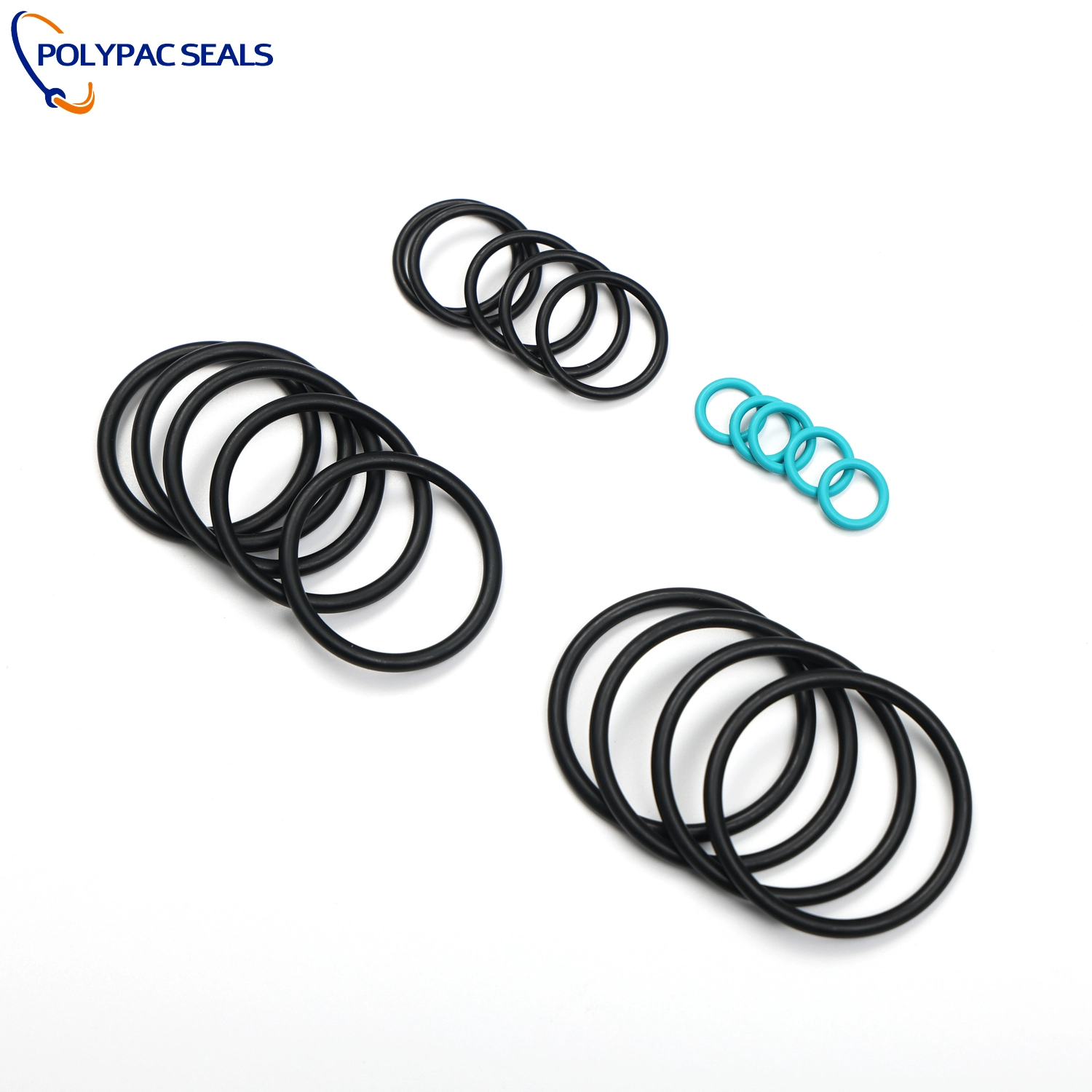
An O-ring is a bi-directional seal with a circular cross-section. To function, it must be mechanically compressed between the piston groove and the cylinder bore. As pressure rises, the O-ring is pushed against the groove wall, creating a barrier. However, this reliance on squeeze makes them susceptible to friction and wear in dynamic applications.
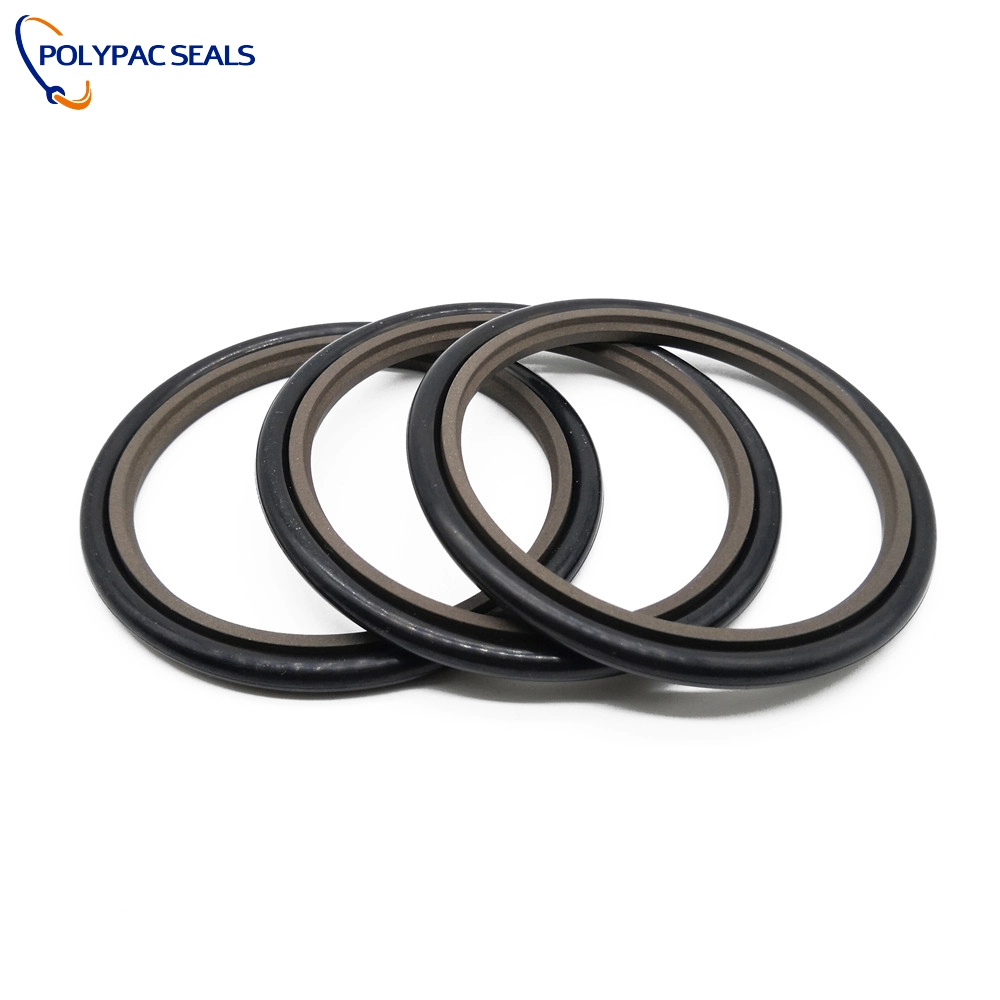
A hydraulic u-cup seal (or lip seal) features a U-shaped profile with a static lip (against the groove) and a dynamic lip (against the cylinder wall). They are "pressure-energized," meaning that as hydraulic pressure increases, it fills the cavity between the lips, forcing them tighter against the mating surfaces. This automatic compensation makes them ideal for dynamic piston sealing.
Key Structural Differences:
- Geometry: O-rings are toroidal (round); U-cups are rectangular with a U-channel.
- Directionality: O-rings seal in both directions (bi-directional); standard U-cups are uni-directional (single-acting).
- Friction: U-cups typically generate less friction at low pressures compared to highly squeezed O-rings.
Deep Dive: O-Rings in Dynamic Piston Applications
O-rings are generally not recommended for primary dynamic sealing in high-pressure cylinders due to their tendency to roll and twist during reciprocating motion.
While O-rings are excellent for static seals (like flange connections), using them on a moving piston introduces complex failure modes. The most catastrophic is O-ring spiral failure. This occurs when one part of the O-ring slides smoothly while another part sticks to the cylinder wall (due to friction or lack of lubrication).
According to major seal manufacturers like Parker Hannifin, spiral failure results in a series of deep, 45-degree spiral cuts across the seal surface, eventually severing the O-ring and causing massive hydraulic fluid bypass.
When to Use O-Rings on Pistons:
- Short Strokes: Where the travel distance is too short to induce rolling.
- Low Pressure: Below 1500 PSI (unless backup rings are used).
- Space Constraints: O-ring glands (grooves) are significantly smaller than U-cup glands.
- Static Holding: Applications where the piston rarely moves.
Deep Dive: U-Cups for High-Pressure Hydraulics
U-Cups are the industry standard for linear actuators because their lip geometry actively compensates for wear, thermal expansion, and pressure spikes.
The profile of a U-cup provides stability. Unlike an O-ring, which can roll, the rectangular base of a U-cup keeps it seated firmly in the groove. This stability is critical for high-pressure hydraulic seals operating above 3000 PSI (200 Bar).
Why U-Cups Outperform in Dynamic Systems:
- Seal Extrusion Resistance: The square heel of the U-cup resists being pushed into the clearance gap (E-gap) between the piston and the bore.
- Lip Flexibility: The flexible lips can accommodate slight hardware misalignments and "ballooning" of the cylinder tube under pressure.
- Material Versatility: Most modern U-cups are manufactured from high-performance polyurethanes (PU) rather than simple rubber. PU offers superior tensile strength and tear resistance.
For proper housing dimensions, engineers should refer to ISO 5597, which establishes the preferred range of dimensions for hydraulic cylinder rod and piston seal housings.
Comparison Matrix: O-Rings vs. U-Cups
Selecting the right profile requires balancing the Total Cost of Ownership (TCO) against performance requirements.
| Feature | O-Ring Piston Seal | U-Cup Piston Seal |
|---|---|---|
| Pressure Handling | Low to Medium (requires backups >1500 PSI) | High to Extreme (5000+ PSI standard) |
| Dynamic Stability | Poor (prone to rolling/spiral failure) | Excellent (stable rectangular base) |
| Friction | High breakout friction due to squeeze | Lower breakout, increases with pressure |
| Leakage Control | Allows thin film (weepage) | "Dry rod" sealing capabilities |
| Installation | Easy, stretchable | Requires installation tools for deep grooves |
| Cost | Low initial cost | Higher initial cost, lower maintenance cost |
Expert Tips: Preventing Failure in High-Pressure Zones
The primary cause of leakage in high-pressure systems is not always the seal itself, but the extrusion gap (E-gap) exceeding the seal's material limits.
Seal extrusion resistance is the ability of the material to resist flowing into the gap between the piston and the cylinder wall. As pressure rises, the seal behaves like a high-viscosity fluid. If the gap is too large, the seal nibbles and eventually fails.
Steps to Prevent Extrusion:
- Calculate the E-Gap: Measure the clearance between the piston OD and bore ID at maximum tolerance conditions.
- Upgrade Material: Switch from NBR (Nitrile) to 90 Durometer Polyurethane or H-PU.
- Use Anti-Extrusion Rings: For U-cups, look for profiles with integrated Acetal (POM) back-up rings.
- Check Surface Finish: Dynamic surfaces for U-cups typically require a finish of Ra 0.4 µm (16 µin). Surfaces that are too smooth cause lubrication failure; too rough causes abrasion.
As noted by the Machinery Lubrication Institute, contamination is another leading cause of failure; U-cups are generally more forgiving of small contaminants than O-rings due to the wiping action of the lip.
Industry Solutions: Advanced Sealing Profiles from Polypac
At Polypac Industrial Technology Co., Ltd., we bridge the gap between standard O-rings and high-performance U-cups using proprietary material science.
Founded in 2008, Polypac has grown into a leading scientific hydraulic seal manufacturer with a factory covering over 10,000 square meters. Our expertise isn't just in manufacturing; it's in development. We maintain long-term cooperation with domestic and international universities to push the boundaries of sealing materials, including filled PTFE (bronze, carbon, and MoS₂) and advanced polyurethanes.
Polypac Solutions for Piston Sealing:
- Custom U-Cup Profiles: We design seals that fit into existing O-ring grooves but offer the dynamic stability of a U-cup.
- Material Testing: Our on-site lab tests for chemical compatibility and extrusion resistance to ensure your seals last in harsh environments.
- Rapid Prototyping: With 8,000 square meters of factory space dedicated to production, we can prototype non-standard seals for unique cylinder dimensions.
Whether you need standard rod seals or complex end face spring seals, our rigorous quality control ensures reliable performance in the field.
FAQ: Common Questions on Piston Seals
Can I replace an O-ring with a U-cup in a piston application? It depends on the groove dimensions. U-cups often require deeper or wider grooves than standard O-rings. However, Polypac can engineer custom U-cups to fit specific O-ring grooves to solve spiral failure issues.
What is the maximum pressure for an O-ring piston seal? Standard O-rings are typically rated for up to 1500 PSI. With the addition of backup rings and high-durometer materials, they can handle pressures up to 5000 PSI, but dynamic wear remains a concern.
Why do O-rings fail in hydraulic pistons? The most common cause is spiral failure, where the O-ring twists during reciprocating motion. Extrusion into the clearance gap due to high pressure is another frequent failure mode.
How do I choose the right material for a piston seal? Consider fluid compatibility, operating temperature range, and system pressure. Polyurethane is common for high-pressure wear resistance, while FKM is better for high temperatures.
Conclusion
Choosing between an O-ring and a U-cup determines the reliability of your hydraulic system. While O-rings have their place in static sealing, U-cups are the definitive choice for high-pressure, dynamic piston applications due to their extrusion resistance and stability. Don't let seal failure compromise your machinery's uptime.
Contact Polypac Industrial Technology Co., Ltd. today to discuss your specific needs and request a free consultation.


Products
How do I choose the right material for my sealing application?
How important is surface finish on the metal parts that contact the seal?
Can I reuse a seal?
What is the difference between a static seal and a dynamic seal?
What is the difference between NBR and FKM materials?
Stay Updated with Industry Insights
Subscribe to our articles and receive the latest news, expert guidance, and technical updates directly in your E-mail.
Rest assured that your privacy is important to us, and all information provided will be handled with the utmost confidentiality.
Polypac is a trusted global supplier of high-performance sealing solutions, providing OEM & ODM services for industries worldwide.
E-mail:
sales2@dmsseals.com
Phone/WhatsApp:
© 2025 Polypac Seals. All Rights Reserved.
dms
DMS
DMS