












Polyurethane vs. PTFE: How to Choose the Perfect Piston Seal Material for High-Pressure Hydraulics
Executive Summary: Key Takeaways for Engineers
PTFE vs. polyurethane seals: The choice defines your hydraulic system's efficiency and longevity. Polyurethane (TPU) is the industry standard for durability and load-holding in heavy-duty machinery, while PTFE (Polytetrafluoroethylene) is essential for high-speed, low-friction precision applications. While TPU offers superior extrusion resistance at a lower cost, PTFE's ability to handle aggressive chemicals and extreme temperatures makes it indispensable for specialized environments.
What is a hydraulic piston seal, and why is material selection critical?
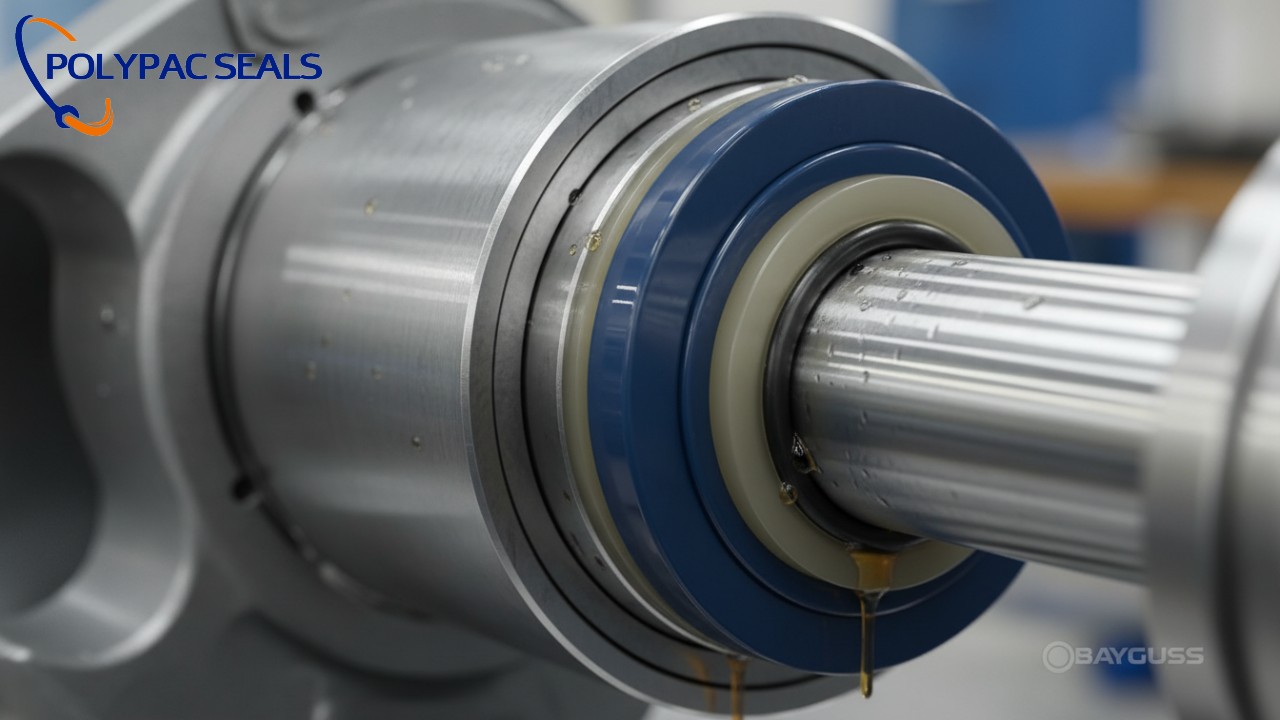
A hydraulic piston seal is a dynamic sealing component seated on the cylinder head that creates a barrier between the bore and the piston, preventing fluid bypass to maintain system pressure. Without an effective seal, hydraulic fluid leaks across the piston, causing "cylinder drift" (loss of holding capability) and significant power loss.
The Engineering Impact of Material Choice
Selecting the correct material is not just about preventing leaks; it is about matching the seal's physical properties to the cylinder's duty cycle. The piston seal material selection guide revolves around three critical variables:
- Extrusion Gap (E-gap): The clearance between the piston and bore that expands under pressure. The material must resist flowing into this gap.
- Tribology (Friction): High friction generates heat, degrading the seal and oil.
- Fluid Compatibility: The material must not swell or shrink in contact with the hydraulic media.
Failure to address these factors results in downtime. For instance, using a standard TPU seal in a high-speed application (>0.5 m/s) often leads to heat fractures due to friction, whereas a PTFE seal would function flawlessly.
The Contender: Polyurethane (TPU)—The High-Pressure Workhorse
Polyurethane (TPU) is a thermoplastic elastomer widely regarded as the superior choice for heavy-duty, high-pressure cylinder sealing due to its exceptional tensile strength and abrasion resistance. It acts as the backbone of the mobile hydraulics industry and is found in excavators, mining equipment, and presses.
Why Engineers Choose TPU
- Hydraulic Seal Extrusion Resistance: TPU has a high modulus of elasticity, meaning it resists being pushed into the extrusion gap even at pressures exceeding 400 bar (5,800 psi). This eliminates the need for backup rings in many standard applications.
- Leakage Control: Due to its elastic memory, TPU provides an aggressive static seal, ensuring zero drift when the cylinder is holding a load.
- Durability: It is highly resistant to nibbling and wear caused by bore surface imperfections.
However, TPU has limitations. It generally has a higher coefficient of friction than PTFE, leading to heat generation in high-frequency applications. It is also susceptible to hydrolysis (chemical breakdown) in water-based fluids unless specialized hydrolysis-resistant grades are selected.
The Challenger: PTFE (Polytetrafluoroethylene)—The Low-Friction Specialist
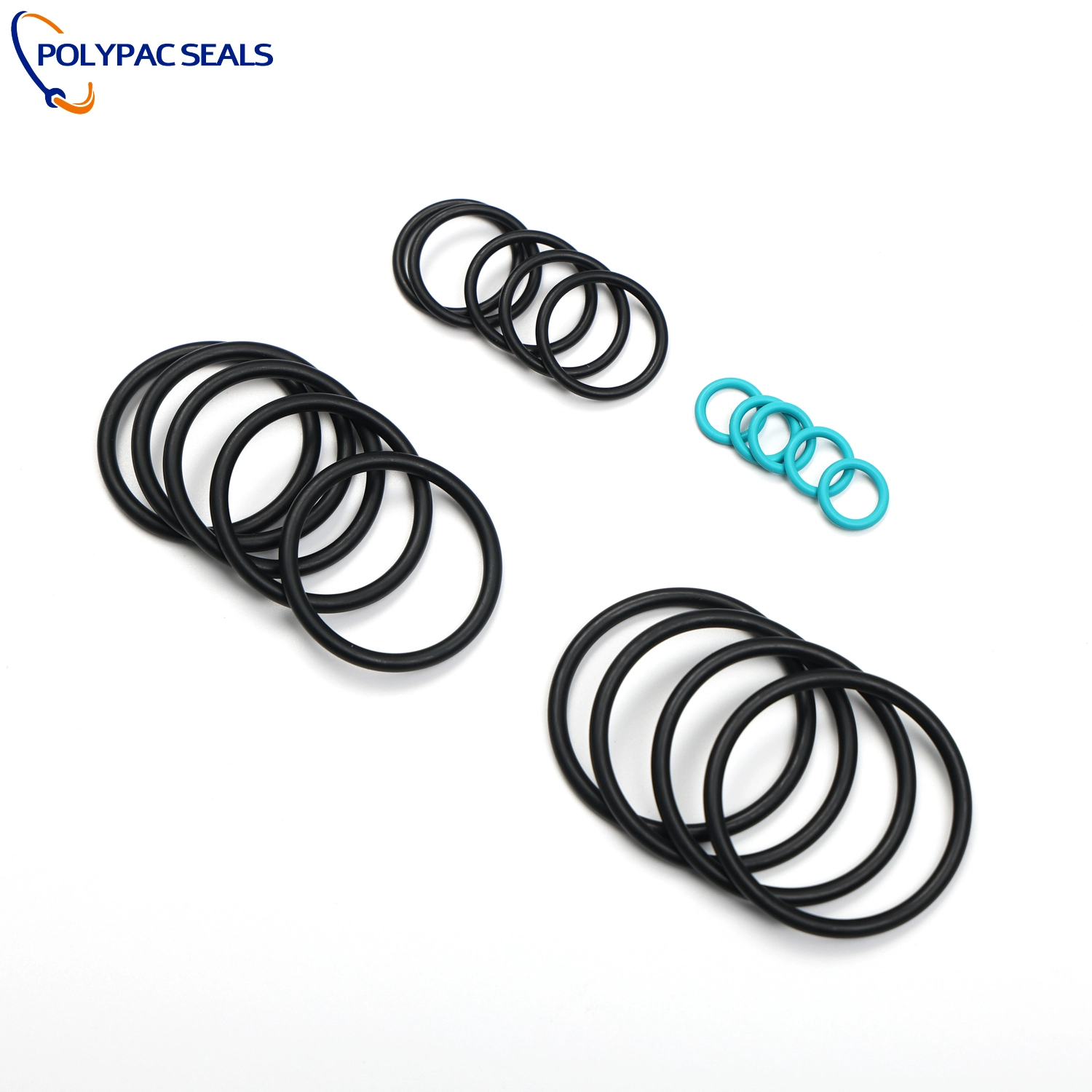
PTFE, commonly known as Teflon®, is a fluoropolymer plastic celebrated for having one of the lowest coefficients of friction of any solid material. Unlike rubber or TPU, PTFE has no elastic memory, so it is almost always energized by an elastomer O-ring to maintain contact with the cylinder wall.
Why Engineers Choose PTFE
- Stick-Slip Prevention: Stick-slip is the jerky motion that occurs at the start of a cylinder stroke. According to the Engineering ToolBox, PTFE's kinetic friction coefficient can be as low as 0.04, compared to 0.5 or higher for polyurethane. This ensures smooth, precise movement critical for robotics and servo-hydraulics.
- Chemical Inertness: PTFE is compatible with virtually all hydraulic fluids, including aggressive phosphate esters and biodegradable fluids.
- Speed Capabilities: PTFE seals can operate at linear speeds up to 15 m/s, far outpacing TPU's typical limit of 0.5 m/s.
At Polypac Industrial Technology Co., Ltd., we understand the nuance of PTFE manufacturing. Founded in 2008, Polypac began by specializing in filled PTFE seals—incorporating bronze, carbon, and glass fibers to enhance the material's compressive strength. This heritage allows us to engineer PTFE profiles that withstand high pressures without cold-flow deformation.
Polyurethane vs. PTFE: Head-to-Head Performance Comparison
To simplify the decision-making process, we compare these materials across four critical performance metrics.
| Feature | Polyurethane (TPU) | PTFE (Bronze/Carbon Filled) |
|---|---|---|
| Friction & Stick-Slip | High breakout friction; prone to stick-slip at low speeds. | Extremely low friction; smooth operation (no stick-slip). |
| Extrusion Resistance | Superior. Resists gap extrusion naturally up to 400 bar. | Moderate. Requires fillers (bronze) and tight tolerances to resist flow. |
| Leakage Control | Excellent static sealing (zero drift). | Good dynamic sealing; may allow a microscopic hydrodynamic film. |
| Installation | Difficult. Requires deformation tools (kidney shape) to fit groove. | Moderate. Requires resizing tools to compress the seal after stretching. |
Common Mistakes in Piston Seal Selection (Expert Tips)
Choosing the wrong seal is the leading cause of premature cylinder failure. Avoid these common engineering pitfalls:
- Ignoring Surface Finish (Roughness): PTFE requires a smoother surface finish (Ra 0.05–0.3 µm) compared to TPU (Ra 0.4 µm). If the bore is too rough, the PTFE will wear rapidly; if too smooth, TPU may stick and hydroplane. Standardization bodies like ISO provide specific roughness guidelines in standards such as ISO 4287.
- Overlooking the Expansion Gap: High pressure balloons the cylinder tube. If you do not calculate the total expansion (E-gap) and select a material with adequate hydraulic seal extrusion resistance, the seal will shear off at the heel.
- Temperature Miscalculation: Standard TPU fails above 110°C (230°F). For applications near engine compartments or furnaces, PTFE (rated to 200°C+) is mandatory.
Future Trends 2026: The Next Generation of Sealing
As we approach 2026, environmental regulations and efficiency targets are reshaping the sealing industry. The focus is shifting toward sustainability and "smart" hydraulic systems.
1. Biodegradable Fluid Compatibility
New environmental mandates require heavy machinery to use biodegradable fluids (HEES/HETG). Standard TPU degrades rapidly in these ester-based fluids. Engineers must consult a hydraulic fluid compatibility chart carefully. In 2026, expect a shift toward biocompatible TPU grades or a total switch to PTFE for eco-sensitive zones.
2. Hybrid Material Technology
Manufacturers are developing hybrid seals that fuse the elasticity of TPU with the lubricity of PTFE. These next-gen materials aim to offer the "best of both worlds"—high load holding with reduced friction.
3. Integrated Sensing
The future of hydraulics involves predictive maintenance. Smart seals with embedded sensors will soon monitor wear and temperature in real-time, alerting operators before a failure occurs. Polypac is actively collaborating with research institutions to stay at the forefront of these material developments.
Conclusion & Call to Action
Selecting the perfect piston seal requires balancing pressure, speed, and fluid compatibility. For heavy loads and rugged durability, polyurethane is the clear winner. For high speeds, high temperatures, and precision control, PTFE is unrivaled.
At Polypac, we bridge the gap between these technologies. With an 8,000 square meter factory and a product line expanding from our original filled-PTFE solutions to advanced TPU and O-ring materials, we deliver custom sealing solutions for the world's most demanding applications.
Contact Polypac Industrial Technology Co., Ltd. today to discuss your specific needs and let our engineers optimize your cylinder performance.


Products
What is the purpose of the metal spring in a rotary shaft seal?
Why did my O-ring fail prematurely?
When should I use a spring-energized seal instead of a standard elastomeric seal?
What is the difference between a static seal and a dynamic seal?
What is the difference between NBR and FKM materials?
Stay Updated with Industry Insights
Subscribe to our articles and receive the latest news, expert guidance, and technical updates directly in your E-mail.
Rest assured that your privacy is important to us, and all information provided will be handled with the utmost confidentiality.

Polypac is a trusted global supplier of high-performance sealing solutions, providing OEM & ODM services for industries worldwide.
E-mail:
Phone/WhatsApp:
© 2025 Polypac Seals. All Rights Reserved.
dms
DMS
DMS