












PTFE Oil Seals: The Definitive Guide to High-Performance Sealing for 2026
A comprehensive industry guide on PTFE oil seals, detailing their superior chemical resistance, temperature tolerance, and low-friction properties compared to traditional elastomers. Includes 2026 market trends, installation techniques, and maintenance tips.
What is a PTFE Oil Seal?
A PTFE (polytetrafluoroethylene) oil seal is a high-performance rotary sealing component specifically engineered to prevent lubricant leakage and exclude contaminants in applications where extreme conditions render standard rubber seals ineffective. Unlike traditional elastomers, these seals utilize a rigid, fluoropolymer lip that provides exceptionally low friction and chemical inertness.
While conventional rotary shaft seal materials like NBR or FKM rely on elasticity to seal, PTFE uses a wide contact area and memory effect to maintain a seal against the shaft. This structural difference allows them to operate in environments that would destroy standard seals, such as dry-running conditions or exposure to aggressive solvents. As industries push for higher efficiency and longer service intervals in 2026, the adoption of PTFE allows for reduced power loss and extended machinery lifespan.
Key Takeaways: Quick Guide to PTFE Oil Seals
· Material Superiority: Offers unmatched chemical and thermal resistance compared to standard rubber.
· Efficiency: Significantly lower friction coefficient (~0.05–0.2) enables dry-running and reduces energy loss.
· Durability: Extended operational lifespan due to excellent wear resistance against abrasive media.
· Versatility: Critical for automotive, aerospace, and chemical processing sectors.
· Installation Requirement: Requires specialized tools and a "bedding-in" process; cannot be installed like a flexible rubber seal.
Unveiling the Superior Properties of PTFE Oil Seals
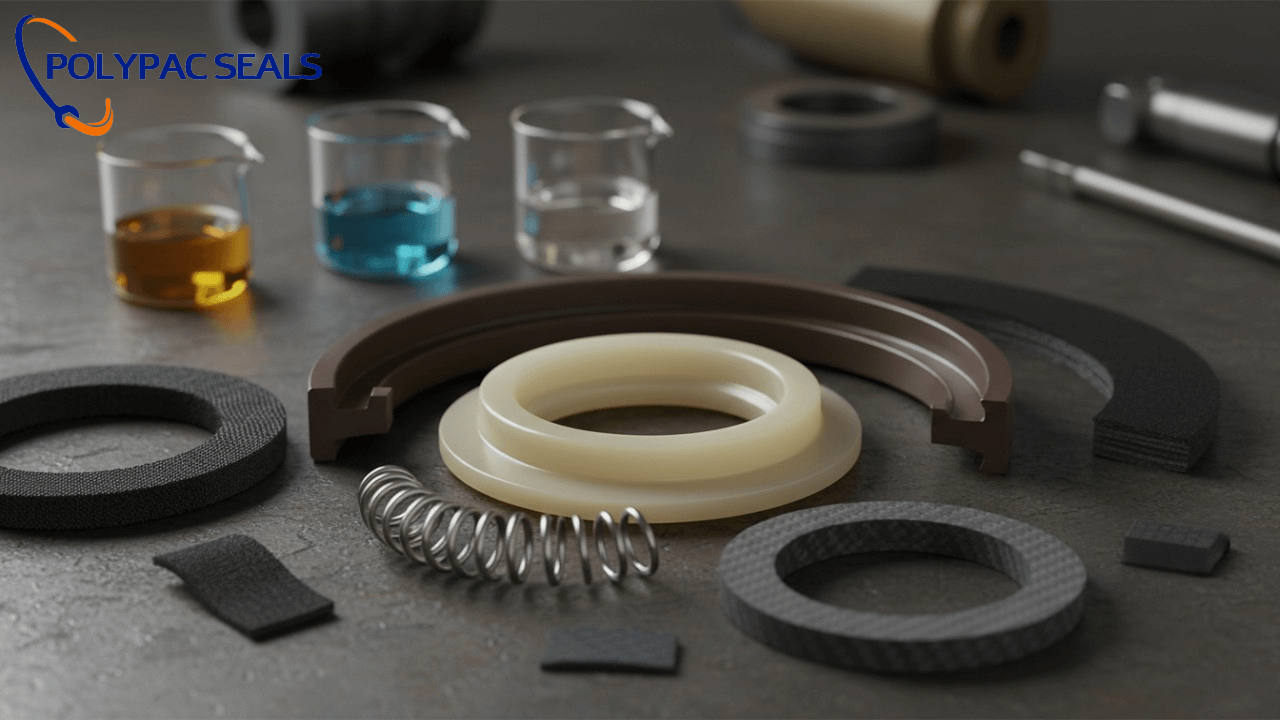
PTFE lip seal advantages stem from the material's unique molecular structure, which provides a shield against the most demanding industrial variables.
· Exceptional Chemical Resistance: PTFE is chemically inert to nearly all industrial chemicals, acids, bases, and solvents (pH 0-14), making it the gold standard for aggressive media.
· Wide Temperature Range: It maintains stable performance from cryogenic temperatures (-200°C) up to 260°C (500°F). This capability is vital for high-temperature PTFE seals used in modern combustion engines and industrial ovens.
· Ultra-Low Friction: With a dynamic coefficient of friction as low as 0.05, PTFE minimizes heat generation and power consumption, a critical factor for electric vehicle (EV) drivetrains.
· High Pressure Capability: When reinforced with fillers, these seals can withstand significantly higher pressure differentials than unsupported elastomer lips.
· Non-Aging and UV Resistant: Unlike rubber, which cracks under UV exposure or ozone, PTFE does not degrade, harden, or become brittle over time.
PTFE Oil Seals vs. Traditional Elastomer Seals: A Comparative Analysis
Choosing the right seal often requires a direct comparison between PTFE seal chemical compatibility and the limitations of elastomers like Nitrile (NBR) or Fluoroelastomers (FKM).
According to 2025 industry data, while elastomers serve well in static or low-stress environments, PTFE dominates in dynamic, high-stress applications.
· Chemical Compatibility:
o PTFE: Universal resistance to almost all fluids.
o Elastomers: Specific (e.g., NBR fails with ozone; FKM fails with ketones).
· Temperature Range:
o PTFE: Handles extremes (-200°C to +260°C).
o Elastomers: Narrower limits (NBR max ~120°C; FKM max ~200°C).
· Friction & Wear:
o PTFE: Self-lubricating properties allow for dry running and reduced shaft wear over long periods.
o Elastomers: High friction (coefficient 0.2–0.6) leads to heat buildup and requires constant lubrication.
· Shaft Surface Requirements:
o PTFE: Requires a harder, smoother shaft finish (typically Ra 0.2–0.4 µm) to function correctly.
o Elastomers: More forgiving of rougher surfaces and shaft imperfections.
· Cost & ROI:
o PTFE: Higher initial cost but superior ROI in critical applications due to reduced downtime.
o Elastomers: Lower initial cost, but higher frequency of replacement in harsh conditions.
Types and Designs of PTFE Oil Seals
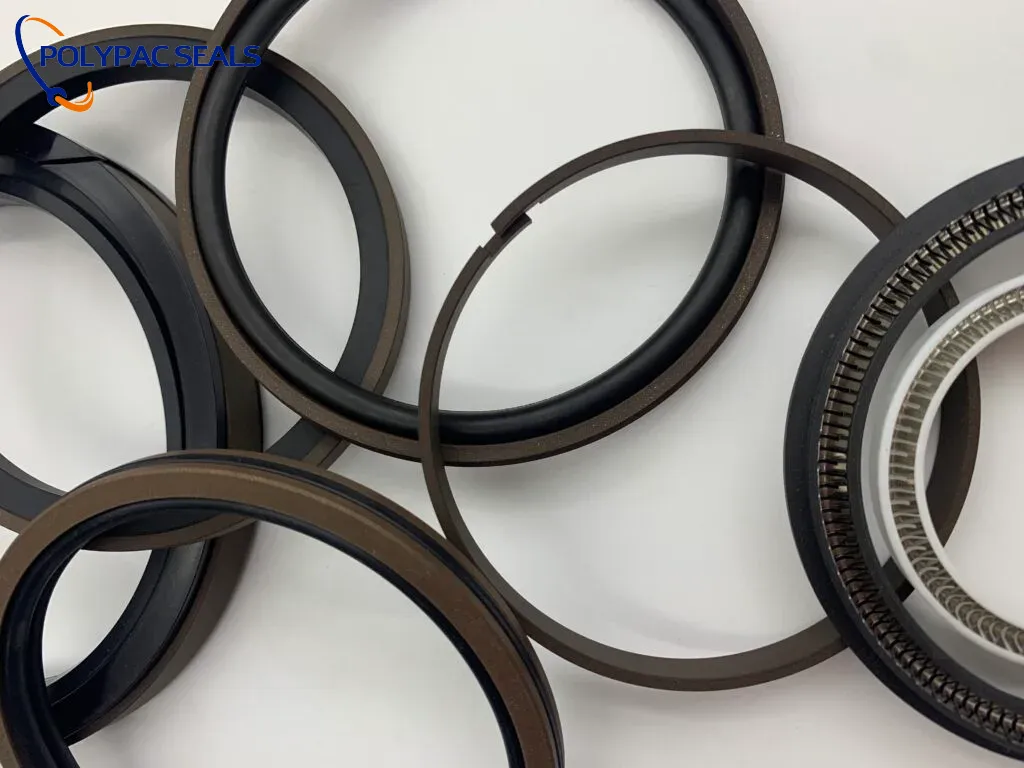
Engineers select specific designs based on the direction of rotation and the nature of the media being sealed.
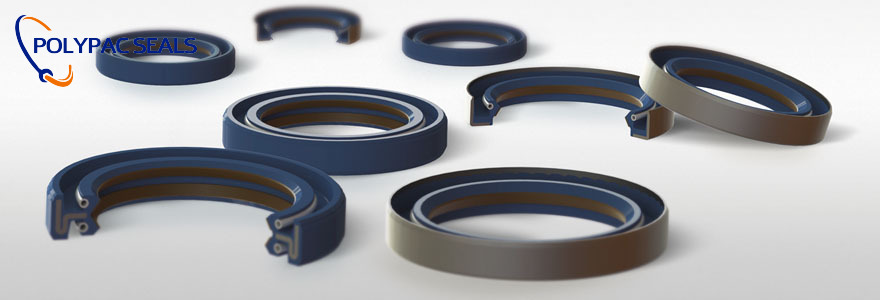
1. Single Lip Seals: The standard design for retaining lubricant or excluding dust in one direction.
2. Double Lip Seals: Features a secondary dust lip to provide enhanced exclusion of external contaminants like water or grit.
3. Two Opposite Lips: Designed to separate two different media (e.g., oil and coolant) or seal pressure from both directions.
4. Integrated Design: Combines the PTFE seal with a metal housing or wear sleeve, simplifying the assembly process.
5. Filled PTFE Composites: Virgin PTFE is often too soft for high-load applications. Manufacturers add fillers to enhance properties:
o Carbon/Graphite: Improves wear resistance and thermal conductivity.
o Glass Fiber: Increases resistance to "creep" (deformation under load).
o Bronze: Adds hardness for high-pressure applications.
Critical Applications of PTFE Oil Seals Across Industries
As of 2025, the global market for PTFE seals is valued at over $2.6 billion, driven by demand in sectors requiring zero-failure reliability.
· Automotive: Essential for crankshafts, camshafts, and transmission systems, particularly in EVs where high RPMs generate significant heat.
· Industrial Machinery: Used in screw compressors, mixers, and robotic gearboxes where maintenance access is difficult.
· Aerospace: Landing gear struts and turbine engine components rely on PTFE for its lightweight and non-flammable properties.
· Chemical Processing: Reactors and agitators handling aggressive acids utilize PTFE to prevent catastrophic seal failure.
· Food & Pharmaceutical: FDA-compliant PTFE grades provide non-contaminating sealing for mixers and conveyors.
Selecting the Right PTFE Oil Seal: Key Considerations
Selection is not just about size; it involves matching the rotary shaft seal materials to the operating environment.
· Operating Environment: Define the exact chemical media, temperature peaks, and system pressure.
· Shaft Surface Finish: Ensure the shaft is hardened (min 45 HRC recommended) and ground to the specific roughness required for PTFE.
· Seal Design & Profile: Use a double-lip design if environmental dust is a major concern.
· Material Composition: Select glass-filled for creep resistance or carbon-filled for dry-running applications.
· Installation Space: PTFE seals often require different housing tolerances than rubber seals; verify dimensions carefully.
Installation Mastery: Techniques for PTFE Oil Seals
Improper installation is the leading cause of premature failure. Unlike rubber, PTFE has "plastic memory" and is not elastic.
1. Preparation is Key: The shaft must be free of nicks, burrs, or spiral machining marks that could pump oil out.
2. Use an Installation Cone: You must use a tapered installation sleeve (cone) to stretch the PTFE lip over the shaft without damaging it. Never push it over a sharp keyway.
3. Dry Installation: In many cases, PTFE seals should be installed dry (without grease) to allow the transfer film to form on the shaft. Check manufacturer specifics.
4. Bedding-in Process: PTFE seals require a run-in period. They may leak slightly for the first few minutes of operation until the lip warms up and conforms to the shaft geometry.
5. Concentricity: Ensure the seal housing and shaft are perfectly aligned; PTFE is less forgiving of misalignment than rubber.
Troubleshooting Common PTFE Oil Seal Issues
Diagnosing failure modes early prevents costly system damage.
· Premature Leakage: often caused by handling damage (nicks on the lip) or installing without a cone.
· Rapid Wear: Usually indicates a shaft surface that is too rough or soft, acting like a file against the seal.
· Squealing Noise: Suggests a lack of lubrication (if not designed for dry run) or excessive shaft speed for the chosen filler.
· Seal Deformation: Caused by excessive pressure or thermal expansion if the housing fit is too tight.
Maintaining PTFE Oil Seals for Extended Lifespan
· Regular Inspection: Check for "weeping" leaks which may indicate the end of the useful life.
· System Cleanliness: PTFE is tough, but abrasive particles in the oil will scour the shaft. Keep oil filtered.
· Shaft Condition: When replacing a seal, always inspect the shaft groove. If a groove has worn in, use a repair sleeve or machine the shaft.
· Proper Storage: Store seals flat in a UV-protected bag. While PTFE doesn't age, the metal housing can corrode.
The Future of Sealing: PTFE Innovations for 2026 and Beyond
Research indicates the PTFE seal market will grow at a CAGR of 5.5% through 2034, driven by technological leaps.
· Advanced Material Composites: New "nanocomposite" PTFE blends are being developed to offer 50% better wear resistance than current carbon-filled grades.
· Smart Seals: Integration of IoT micro-sensors within the seal housing to monitor temperature and lip wear in real-time, enabling predictive maintenance.
· Sustainable Manufacturing: A shift toward closed-loop recycling of PTFE scrap and eco-friendly production methods to reduce the carbon footprint.
· Miniaturization: As devices shrink, micro-molded PTFE seals are becoming essential for medical robotics and drones.
Expert Tips for Optimal PTFE Oil Seal Performance
· Precision Installation is Paramount: The most common error is touching the sealing lip with dirty fingers or forcing it. Treat it like a precision instrument.
· Respect the Run-In: Do not pressurize the system to max load immediately. Allow the seal to generate its own heat and seat itself.
· Surface Finish is Non-Negotiable: If you use a rough shaft, the seal will fail in hours. Adhere to the Ra 0.2–0.4 µm standard.
· Consult the Manufacturer: For applications exceeding 10,000 RPM or 20 bar pressure, standard catalog items may fail. Custom engineered geometry is required.


Products
Why did my O-ring fail prematurely?
What does "AS568" mean?
Can I reuse a seal?
What is the purpose of the metal spring in a rotary shaft seal?
How important is surface finish on the metal parts that contact the seal?
Stay Updated with Industry Insights
Subscribe to our articles and receive the latest news, expert guidance, and technical updates directly in your E-mail.
Rest assured that your privacy is important to us, and all information provided will be handled with the utmost confidentiality.

Polypac is a trusted global supplier of high-performance sealing solutions, providing OEM & ODM services for industries worldwide.
E-mail:
Phone/WhatsApp:
© 2025 Polypac Seals. All Rights Reserved.
dms
DMS
DMS