












PTFE vs. Composite: Choosing the Best Piston Guide Ring Material for High-Pressure Systems
A definitive guide comparing PTFE and composite piston guide rings. Learn which material prevents cylinder scoring, handles high radial loads, and ensures seal longevity in 2026.
Selecting the correct piston guide ring (wear band) is the single most critical factor in preventing metal-to-metal contact within hydraulic cylinders. In 2026, as hydraulic systems push toward higher pressures (>400 bar) and faster reciprocating speeds, the choice between polytetrafluoroethylene (PTFE) and fabric-reinforced composite (phenolic) is no longer just about cost—it is about cylinder survival.
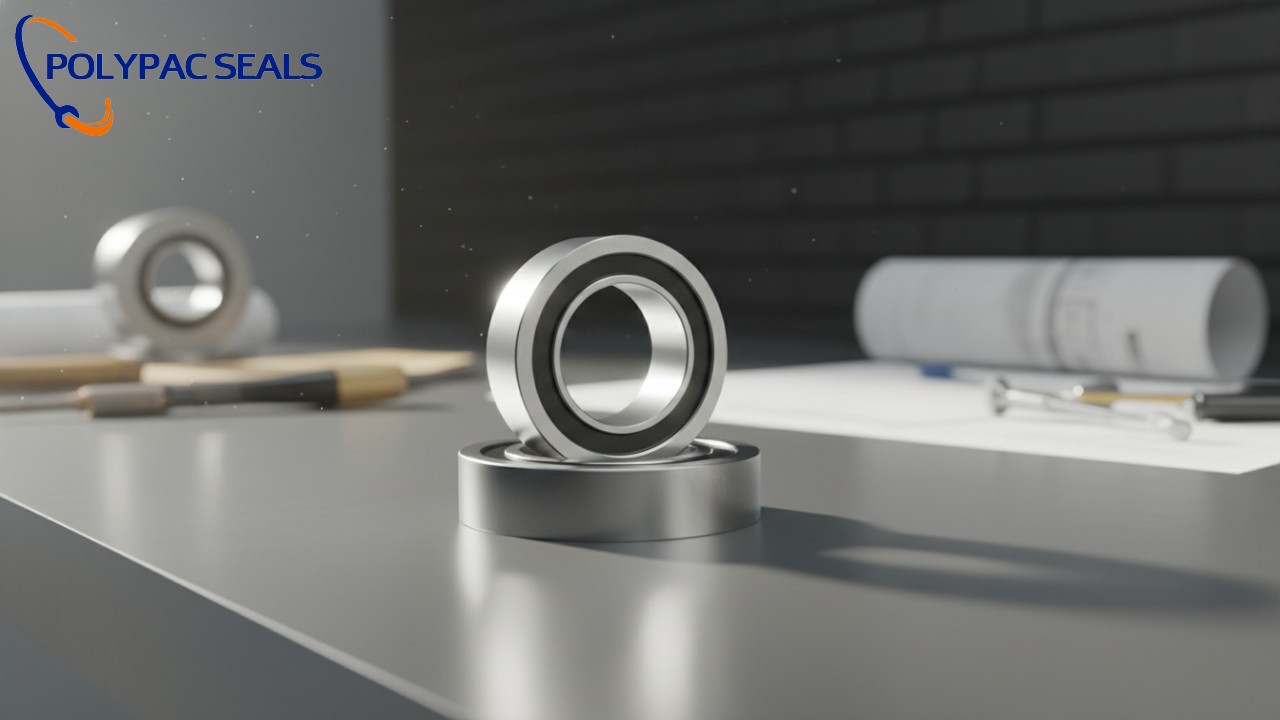
This guide breaks down the technical differences, load calculations, and selection criteria to help engineers optimize their bearing tape materials and prevent premature failure.
Key Takeaways: Quick Summary for Engineers
- PTFE (Bronze/Carbon Filled): Best for low friction, high speeds (>5 m/s), and applications requiring precise positioning (low stick-slip).
- Composite (Phenolic/Fabric): The superior choice for extreme radial loads, shock loading (mobile hydraulics), and abrasive environments.
- Failure Mode: Wrong selection leads to "diesel effect" damage, extrusion, and cylinder bore scoring.
- Cost vs. ROI: While composites may have a higher initial cost, their rigidity significantly extends the life of the primary seal.
What is a piston guide ring?
A piston guide ring is a sacrificial, non-metallic bearing element installed on a hydraulic piston to prevent contact between the piston and the cylinder bore.
Function & Standards: Unlike primary seals that hold pressure, the guide ring's sole purpose is to absorb transverse (side) forces and maintain concentricity. According to ISO 10766, which specifies housing dimensions for rectangular-section-cut bearing rings, the precise fit of these components is essential for maintaining the extrusion gap of the primary seal. If the guide ring compresses too much, the seal gap widens, leading to seal extrusion.
- Concentricity: Keeps the piston centered.
- Protection: Sacrifices itself to save the expensive cylinder tube.
- Load Distribution: Distributes radial forces over a calculated surface area.
The Contenders: Material Composition & Properties
1. PTFE (Bronze or Carbon Filled)
PTFE is a thermoplastic known for its incredibly low coefficient of friction. However, virgin PTFE is too soft for guiding duties. Manufacturers add fillers to enhance its compressive strength.
- Bronze-Filled: The industry standard for hydraulic wear bands. Bronze increases thermal conductivity and hardness, reducing cold flow (creep) under load.
- Carbon-Filled: Used in water-based fluids or where bronze might react chemically. It offers excellent dry-running capabilities.
2. Composite (Fabric Reinforced/Phenolic Resin)
Composites consist of a synthetic fabric (cotton or polyester) impregnated with thermosetting resins (phenolic or polyester) and cured under high heat.
- Structure: The fabric reinforcement acts like rebar in concrete, providing immense structural rigidity.
- Lubrication: The fabric texture retains microscopic amounts of fluid, aiding lubrication, though not to the level of PTFE.
Head-to-Head: Performance in High-Pressure Systems
1. Load Bearing Capacity
Winner: Composite
In high-pressure applications, the radial load calculation is paramount. Composites can withstand compressive loads exceeding 340 MPa (dynamic), whereas filled PTFE typically yields around 15-25 MPa before significant deformation occurs.
- High-Load Guide Strips: For excavators or mining equipment experiencing shock loads, composites effectively resist "mushrooming."
- PTFE Limits: Under heavy side loads, PTFE may creep, causing the piston to tilt and score the bore.
2. Friction & Stick-Slip
Winner: PTFE
For precision robotics or simulators, friction control is key. PTFE exhibits a static coefficient of friction nearly identical to its dynamic coefficient.
- No Stick-Slip: PTFE eliminates the "stutter" movement seen in slow-moving cylinders.
- Efficiency: Generates less heat at high sliding speeds.
3. Extrusion Resistance
Winner: Composite
As defined by tribological studies on ResearchGate, rigid polymer composites maintain their shape even when the extrusion gap increases due to cylinder ballooning (breathing). PTFE, being a plastic, is more prone to extruding into the gap if the hardware expands under pressure.
Selection Framework: When to Choose Which?
Use this logic gate to select the right material for your cylinder:
Choose Bronze Filled PTFE vs Phenolic (PTFE) When:
- Speed is High: Velocity exceeds 4.0 m/s.
- Friction is critical: applications require smooth, jitter-free movement (e.g., flight simulators).
- Media is Corrosive: PTFE has superior chemical resistance to aggressive fluids.
- Soft Mating Surface: The cylinder bore is made of softer alloys (aluminum/bronze) that abrasive composites might damage.
Choose Composite When:
- Heavy Side Loads: Mobile hydraulics (cranes, earthmovers) where the rod is fully extended at an angle.
- Shock Loads: Systems subject to sudden pressure spikes.
- Contaminated Oil: Composites can embed small foreign particles better than hard bronze-filled PTFE, preventing scoring.
- Temperature: Standard phenolics handle up to 120°C; specialized resins go higher.
Future Outlook: 2026 Trends in Guide Ring Technology
The landscape of sealing technology is evolving. At Polypac Industrial Technology Co., Ltd., we are observing several key trends for the coming years:
- Eco-Tribology: A shift toward bio-based resins in composites to meet global sustainability goals.
- Smart Wear Rings: Prototypes now exist with embedded conductive layers that trigger a sensor when the guide ring wears down to a critical thickness, enabling predictive maintenance.
- 3D Printed Geometries: Rapid prototyping of custom guide ring profiles for non-standard groove dimensions.
Expert Tips & Common Selection Mistakes
Mistake 1: Ignoring the "Swelling Effect"
Composites, especially cotton-phenolic types, can absorb water and swell. In water-glycol fluids, this swelling can lock the piston.
- Tip: Use synthetic fiber composites (polyester) for water-based fluids to maintain dimensional stability.
Mistake 2: Incorrect Width Calculation
Engineers often undersize the guide ring width, leading to yield point failure.
- Formula:
Width = Radial Load / (Piston Diameter × Permissible Surface Pressure) - Tip: Always apply a safety factor of 2.0 to the permissible pressure.
Mistake 3: Wrong Cut Type
- Angle Cut (Scarf): Standard for reciprocating pistons to protect the seal from fluid pressure traps.
- Butt Cut: Rarely used in hydraulics due to thermal expansion risks.
- Step Cut: Used only when leakage across the guide ring must be minimized (rare for guides, common for piston rings).
Experience & Manufacturing Excellence
Quality manufacturing is just as important as material selection. Polypac Industrial Technology Co., Ltd. has been a leader in this field since 2008. Operating from a 10,000-square-meter facility with advanced testing equipment, we specialize in filled PTFE seals—including bronze, carbon, and glass-filled variants—as well as modern composite solutions.
Our collaboration with domestic and international universities ensures that our material blends meet the rigorous demands of modern hydraulics. Whether you need standard hydraulic wear bands or customized high-load guide strips, our engineering team can simulate your application conditions to recommend the perfect fit.
Conclusion
Choosing between PTFE and composite is a trade-off between friction management and load handling. PTFE offers unmatched smoothness and speed, while composites deliver the brute strength required for heavy-duty machinery. By understanding the radial load calculation and environmental factors, you can prevent costly downtime.
Contact Polypac today to discuss your specific needs and request a custom material selection guide.


Products
What is the purpose of the metal spring in a rotary shaft seal?
How important is surface finish on the metal parts that contact the seal?
How can I prevent seal damage during installation?
Why did my O-ring fail prematurely?
When should I use a spring-energized seal instead of a standard elastomeric seal?
Stay Updated with Industry Insights
Subscribe to our articles and receive the latest news, expert guidance, and technical updates directly in your E-mail.
Rest assured that your privacy is important to us, and all information provided will be handled with the utmost confidentiality.

Polypac is a trusted global supplier of high-performance sealing solutions, providing OEM & ODM services for industries worldwide.
E-mail:
Phone/WhatsApp:
© 2025 Polypac Seals. All Rights Reserved.
dms
DMS
DMS