












PTFE vs. Urethane Scrapers: Which Material Truly Prevents Contamination?
A comprehensive comparison of PTFE and urethane scraper seals, focusing on friction coefficients, chemical resistance, and the engineering behind preventing hydraulic contamination.
Key Takeaways: Quick Comparison Guide
- PTFE offers superior chemical resistance and lower friction than urethane.
- Urethane typically excels in high-abrasion, heavy-duty scraping where elasticity is key.
- Spring-energized PTFE is the solution for zero-leakage requirements in varying temperatures.
- Choosing the wrong material can lead to rod scoring and system contamination.
What is the Main Difference Between PTFE and Urethane Scraper Seals?
A PTFE scraper seal is a rigid, low-friction excluder designed for high speeds, chemical aggression, and extreme temperatures, whereas urethane wipers are elastomeric seals used primarily for heavy-duty dirt exclusion in moderate environments. While urethane relies on interference fit and material memory to scrape the rod, PTFE relies on precise geometry and auxiliary energizers to maintain contact.
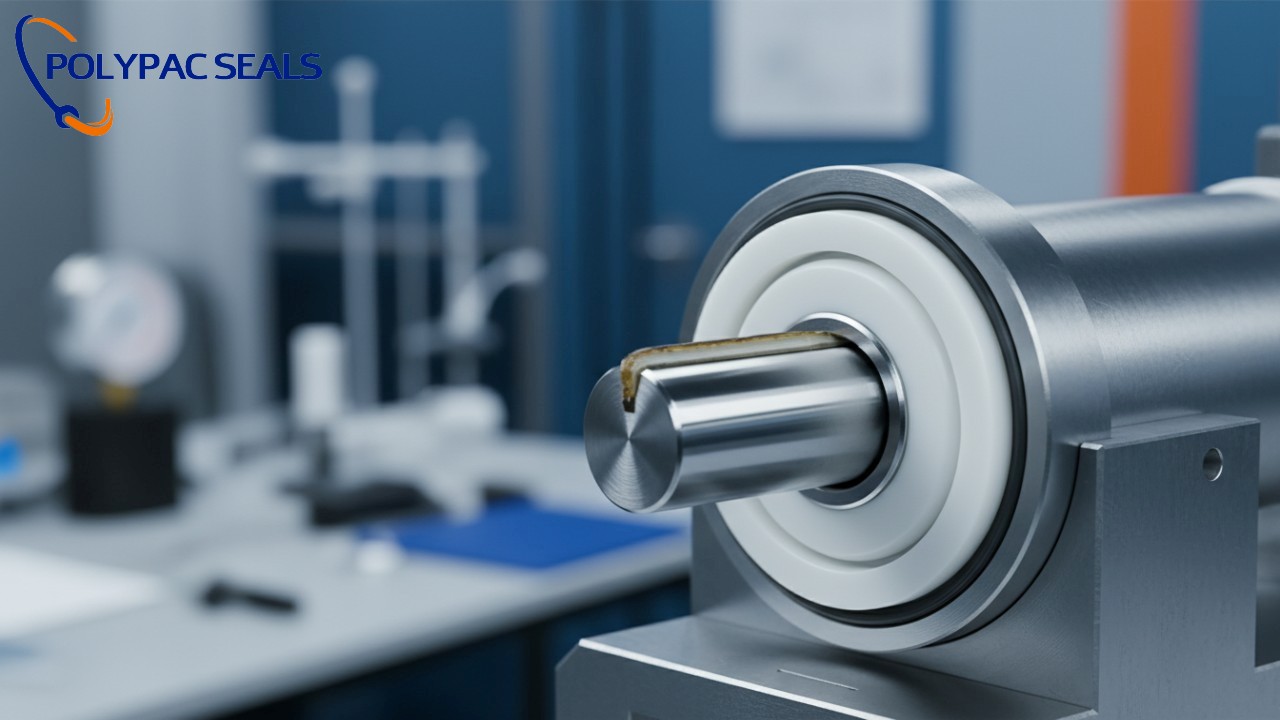
The core trade-off is elasticity vs. friction. Urethane is tough and elastic but generates higher friction and heat. PTFE is slick and chemically inert but requires specialized design to track rod runout effectively. For critical hydraulic cylinder exclusion, understanding this fundamental material difference is the first step in preventing catastrophic system failure.
Chemical Resistance and Temperature: When Urethane Fails
Standard urethane seals are susceptible to hydrolysis in hot water or steam and can degrade rapidly when exposed to aggressive hydraulic fluids like Skydrol. In contrast, polytetrafluoroethylene (PTFE) is chemically inert to almost all industrial media, making it the superior choice for chemical processing, food safety, and wash-down environments.
Temperature Limitations:
- Urethane: Generally limited to -30°C to +100°C. It becomes brittle in extreme cold and loses tensile strength in high heat.
- PTFE: Capable of handling -200°C to +260°C. This wide range makes it indispensable for aerospace and cryogenic applications.
Engineers often rely on chemical compatibility chart seals to make this decision. If your application involves non-petroleum-based fluids or extreme thermal cycling, urethane is likely to fail, leading to fluid bypass and contamination.
Friction and the 'Stick-Slip' Phenomenon
Stick-slip is the jerky motion caused when static friction significantly exceeds dynamic friction, a common issue with urethane seals at low speeds. PTFE eliminates this issue because its static coefficient of friction is nearly equal to its dynamic coefficient.
According to Wikipedia, the stick-slip phenomenon can generate vibration and noise, which accelerates wear on mechanical components. In high-precision hydraulic systems, this vibration can compromise control accuracy.
Benefits of Low Friction PTFE:
- Energy Efficiency: Reduced power consumption in the hydraulic system.
- Heat Reduction: Less heat generation at the scraping lip, preserving seal life.
- Hardware Protection: Stick-slip effect prevention ensures smooth operation, protecting the rod surface from the micro-chatter marks often associated with high-friction elastomers.
Addressing the Gap: Spring-Energized Scraper Design
Virgin PTFE lacks the "memory" of urethane; once deformed, it does not naturally bounce back to its original shape. To solve this, manufacturers use a spring-energized scraper design, integrating a metal spring (cantilever or helical) or an O-ring energizer to maintain constant lip pressure against the rod.
How It Works:
- The Energizer: The spring provides a permanent elastic force that compensates for the material's lack of memory.
- Runout Compensation: This design allows the rigid PTFE to follow shaft misalignment and wear much better than a solid ring.
- Low Pressure Sealing: The spring ensures the lip remains in contact with the rod even when system pressure is low or nonexistent (vacuum conditions).
At Polypac Industrial Technology, we have specialized in these solutions since our founding in 2008. Starting with filled PTFE seals (including bronze, carbon, and glass-filled), we recognized early on that standard materials couldn't meet every need. Our 10,000-square-meter facility is equipped to test these specific energizer loads, ensuring that our spring-energized designs provide consistent linear actuator protection without excessive drag.
Expert Tips: Preventing Failure During Installation
Even the best material will fail if installed incorrectly. PTFE is less forgiving than urethane during assembly.
Common Installation Errors:
- Sizing Mistakes: Installing PTFE scrapers without sizing tools can damage the lip before operation begins.
- Expert Tip: Always use a tapered calibration sleeve to stretch and resize the PTFE ring into the groove.
- Groove Finish: PTFE requires a specific surface finish (Ra) to seal effectively.
- Expert Tip: Ensure the groove is free of spiral machining marks that could create a leak path. Refer to ISO standards for cylinder housing surface finish requirements to ensure optimal sealing.
- Material Mismatch: Replacing a urethane wiper with a PTFE scraper requires verifying groove dimensions, as they often differ.
Future Trends (2026+): Sustainability and Filled Compounds
The future of sealing lies in sustainability and specialized compounds. We are seeing a shift away from virgin PTFE toward bronze, carbon, and glass-filled PTFE for enhanced wear resistance against abrasive slurries. Furthermore, recyclability is becoming a major procurement priority. Unlike thermoset urethanes, thermoplastic strategies for seal recycling are advancing, aligning with global sustainability goals.
Conclusion
While urethane remains a cost-effective choice for standard earthmoving equipment, PTFE scraper seals are indispensable for precision, high-speed, and chemically aggressive environments. Preventing contamination is not just about material selection; it requires engineering the correct lip geometry and energizer system for your specific application. As a leader in sealing material development since 2008, Polypac combines advanced manufacturing with deep technical expertise to deliver solutions that last.
Contact Polypac Industrial Technology today to discuss your specific needs.


Products
When should I use a spring-energized seal instead of a standard elastomeric seal?
How can I prevent seal damage during installation?
What does "AS568" mean?
What is the difference between NBR and FKM materials?
How important is surface finish on the metal parts that contact the seal?
Stay Updated with Industry Insights
Subscribe to our articles and receive the latest news, expert guidance, and technical updates directly in your E-mail.
Rest assured that your privacy is important to us, and all information provided will be handled with the utmost confidentiality.

Polypac is a trusted global supplier of high-performance sealing solutions, providing OEM & ODM services for industries worldwide.
E-mail:
Phone/WhatsApp:
© 2025 Polypac Seals. All Rights Reserved.
dms
DMS
DMS