












PU Seals: The Ultimate Guide to Polyurethane Sealing Solutions | Polypac
PU Seals: Engineered for Extreme Durability in Demanding Applications
In the demanding world of industrial hydraulics, construction machinery, and high-wear applications, material selection is the foundation of reliability. Among elastomers, Polyurethane (PU or AU/EU) stands apart as a premium engineering material, offering an unparalleled combination of mechanical strength, abrasion resistance, and resilience. PU seals are not general-purpose components; they are specialized solutions engineered to outperform standard rubber seals in the toughest conditions, delivering extended service life and reducing costly downtime.
At Polypac, with our ISO 9001 & IATF 16949 certified focus on advanced materials and sealing solutions for special working conditions, we leverage the superior properties of PU to solve our customers' most challenging sealing problems. This guide explores why PU is often the material of choice for durability and how it can transform the performance of your equipment.
What are PU Seals?
PU Seals are sealing components manufactured from Polyurethane, a polymer known for its exceptional toughness and load-bearing capacity. Unlike conventional rubber seals (like NBR), which are valued for elasticity, PU is prized for its outstanding abrasion resistance, high tensile strength, and excellent resistance to extrusion.
These seals are specifically designed for applications where mechanical stress and wear are the primary causes of failure, performing critical roles in:
-
Heavy-Duty Hydraulic Cylinders: Withstanding extreme pressure and side loads in excavators, presses, and agricultural equipment.
-
High-Wear Dynamic Applications: Enduring continuous reciprocating or oscillating motion where standard seals would wear rapidly.
-
Contaminated Environments: Resisting cutting and abrasion from particulate contamination better than most other elastomers.
The Superior Properties of Polyurethane (PU)
PU's unique molecular structure gives it a distinct performance profile:
1. Exceptional Abrasion & Tear Resistance
This is PU's standout feature. It has a wear resistance up to 10 times greater than many standard rubbers, making it the top choice for seals in gritty, dirty environments or applications with frequent cycling.
2. High Load-Bearing Capacity & Tensile Strength
PU can withstand significant mechanical stress without permanent deformation. It offers excellent resistance to extrusion under high pressure, especially when used with proper anti-extrusion designs.
3. Good Oil and Hydraulic Fluid Resistance
While not as chemically inert as FKM, standard polyester-based PU exhibits very good resistance to petroleum-based oils, greases, and many hydraulic fluids, which are common in its target applications.
4. Resilience and Rebound
High-quality PU formulations maintain good elasticity and recovery, allowing seals to follow dynamic surfaces and compensate for minor runout or wear.
Important Note on Limitations:
-
Temperature Range: Standard PU is typically rated for -40°C to +80°C (-40°F to +176°F). Special grades can extend this, but it is generally not suitable for continuous high-temperature service above 100°C where FKM would be preferred.
-
Water/Hydrolysis: Standard polyester-based PU can degrade in continuously hot, wet environments. For such conditions, polyether-based PU or other materials like EPDM are recommended.
-
Weathering: PU is not highly resistant to prolonged UV exposure unless specially compounded.
Common Types of PU Seals
PU is used to manufacture a wide range of high-performance seal profiles:
-
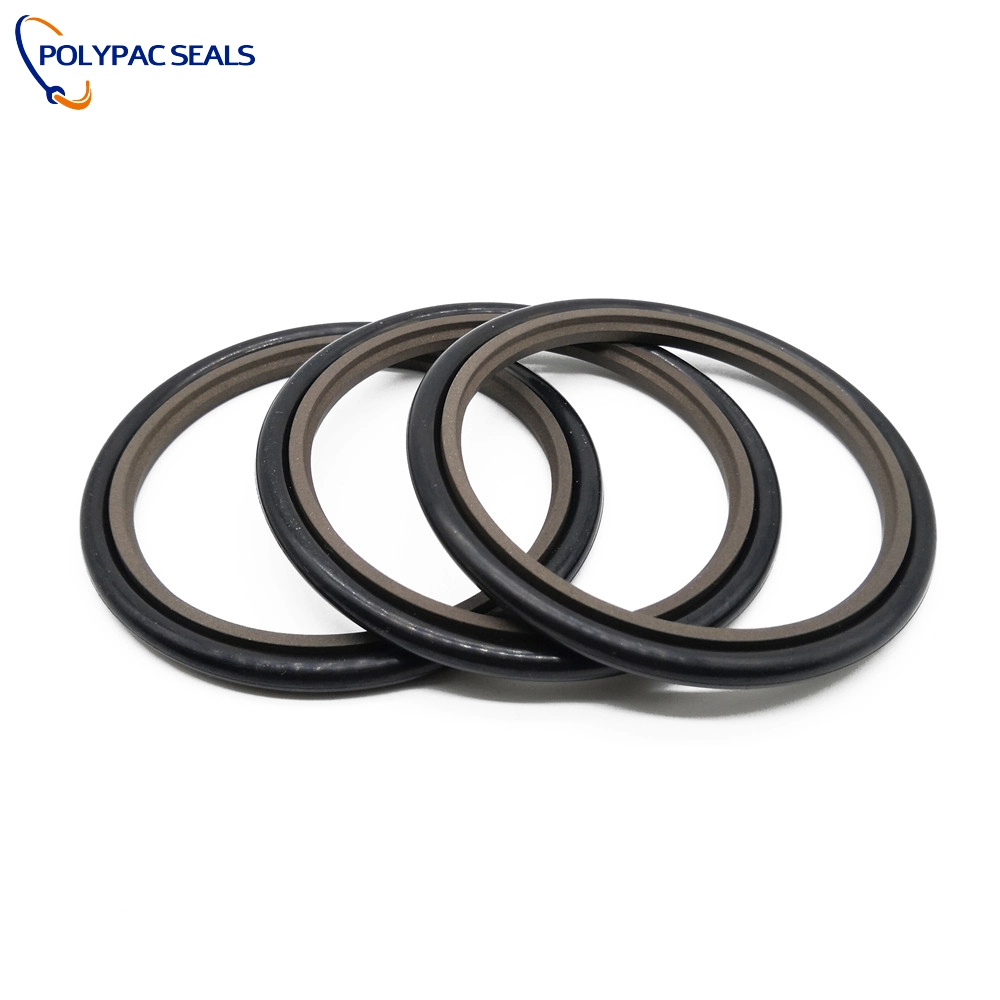
PU Rod Seals & Piston Seals: Often used in U-cup, double-acting, or step-seal profiles for hydraulic cylinders, providing robust sealing with excellent wear life.
-
PU Wiper/Scraper Seals: The material of choice for heavy-duty wipers due to its ability to aggressively scrape mud and debris while resisting wear from the rod.
-
PU Buffer Seals: Used to protect primary rod seals from pressure spikes, leveraging PU's high extrusion resistance.
-
Custom PU Molded Profiles: Engineered for specific gland geometries and unique application challenges.
Key Applications Where PU Seals Excel
PU seals are the preferred solution in industries where equipment is pushed to its limits:
-
Mobile Hydraulics (Construction, Mining, Agriculture): Seals for excavator buckets, bulldozer blades, and tractor arms that face constant abrasion from soil, sand, and rock.
-
Industrial Presses and Machinery: Where high cyclic rates and significant side loads are present.
-
Material Handling & Forestry Equipment: In harsh, contaminant-laden environments.
-
General Heavy-Duty Manufacturing: Anywhere extended seal life under mechanical stress directly reduces maintenance costs.
The Polypac Advantage: Advanced PU Technology
We don't just supply generic PU seals; we provide engineered solutions based on deep material knowledge.
1. Grade Selection and Compounding
We understand the difference between polyester and polyether PU and select the optimal base polymer for the application environment (e.g., prioritizing hydrolysis resistance for wet conditions). We also work with varying hardness levels (Shore A) to balance sealing force, wear resistance, and low-friction properties.
2. Precision Manufacturing
High-quality PU requires precise processing during molding and curing. Our controlled manufacturing ensures consistent density, flawless geometry, and optimal physical properties in every seal, eliminating weaknesses that lead to premature failure.
3. Design Integration
Our engineering team can recommend or design seal profiles that fully utilize PU's strengths—such as incorporating integrated anti-extrusion features or optimizing lip angles for specific dynamic conditions.
Conclusion
PU seals represent a strategic upgrade from standard rubber seals in applications dominated by mechanical wear and high load. They are a performance-driven choice, offering longer service life, greater reliability, and better protection for expensive hydraulic components. While they come at a premium compared to NBR, their extended lifespan and reduction in unplanned downtime typically deliver a significantly lower total cost of ownership.
When your equipment faces the daily grind of a tough job, specifying PU seals from Polypac ensures the sealing system is the most durable link in the chain.
Is wear and tear causing frequent seal failures in your equipment? Upgrade to the durability of PU. Contact the Polypac technical team today to evaluate your application and specify high-performance polyurethane sealing solutions.


Products
How can I prevent seal damage during installation?
What is the purpose of the metal spring in a rotary shaft seal?
What is the difference between a static seal and a dynamic seal?
What is the difference between NBR and FKM materials?
How important is surface finish on the metal parts that contact the seal?
Stay Updated with Industry Insights
Subscribe to our articles and receive the latest news, expert guidance, and technical updates directly in your E-mail.
Rest assured that your privacy is important to us, and all information provided will be handled with the utmost confidentiality.

Polypac is a trusted global supplier of high-performance sealing solutions, providing OEM & ODM services for industries worldwide.
E-mail:
Phone/WhatsApp:
© 2025 Polypac Seals. All Rights Reserved.
dms
DMS
DMS