












Protection and Efficiency: The Critical Role of Rod Scraper Seals in Hydraulic Systems
Did you know that hydraulic cylinder contamination control is the single most effective way to prevent equipment downtime? According to industry research, approximately 75% of hydraulic system failures are directly attributed to contaminated fluid. The first line of defense against this silent killer is not the expensive filter bank but the humble rod scraper seal.
Key Takeaways: The Unsung Heroes of Hydraulics
- Primary Defense: Rod scraper seals prevent external debris from entering the system, directly impacting cylinder longevity.
- Material Science: Selecting the wrong material (e.g., standard NBR in sub-zero ice) causes immediate lip fracture and system ingress.
- Tribology Balance: Effective sealing requires a precise balance between aggressive scraping and allowing a microscopic oil film for lubrication.
What is the primary function of a rod scraper seal?
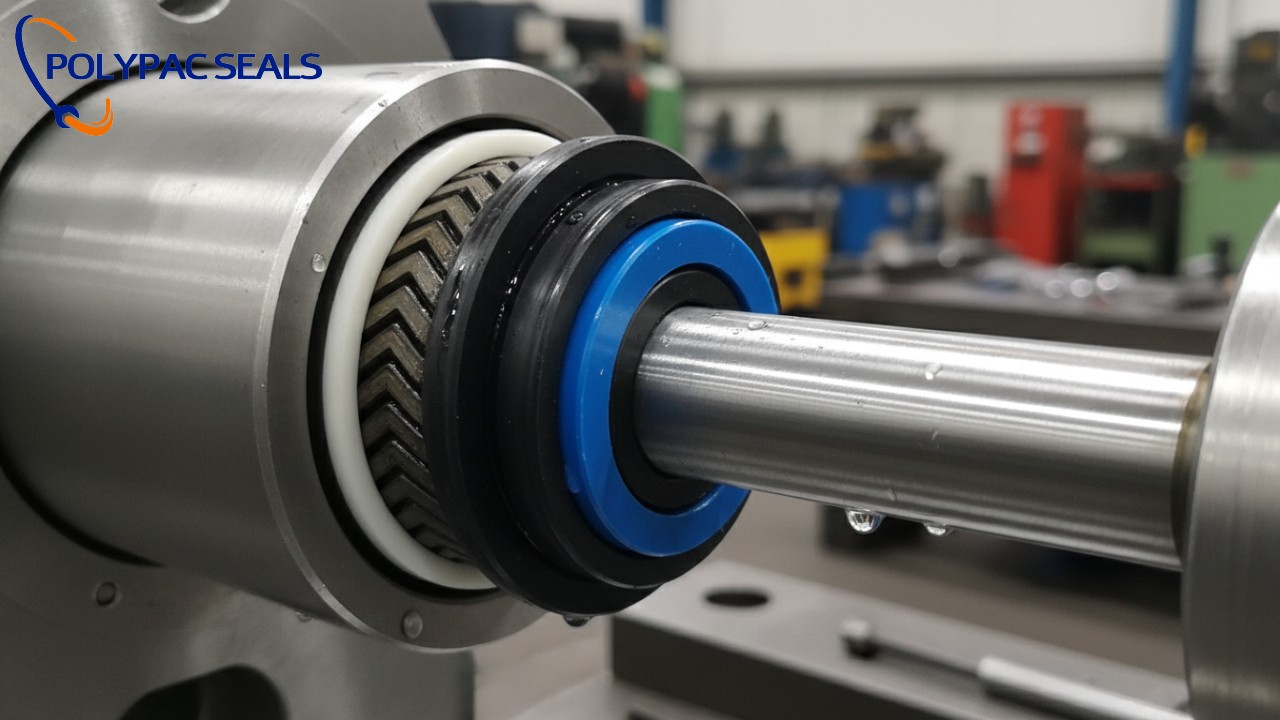
A rod scraper seal, often called a wiper, is a dynamic sealing component installed in the cylinder gland to physically remove external contaminants from the piston rod during its retraction stroke. Unlike internal seals that contain pressure, the scraper's sole purpose is exclusion.
By preventing the ingress of dust, mud, ice, and metal chips, the scraper protects the sensitive primary rod seal and guide bushings from abrasive damage. If a scraper fails, the entire hydraulic system becomes vulnerable to particle contamination, which acts like a lapping compound inside pumps and valves. According to the International Organization for Standardization, standards such as ISO 6195 define the specific housing dimensions required to ensure these wipers maintain the correct interference fit without being ejected.
Core Functions
- Exclusion: Removes solid debris and moisture.
- Protection: Shields the rod seal from abrasive wear.
- Retention: Some double-lip designs also capture residual oil film.
Scraper Seals vs. Rod Seals: Understanding the Distinction
The fundamental difference between a rod wiper and a scraper seal lies in their orientation and pressure-handling capabilities: the rod seal faces the pressurized fluid to prevent leaks, while the scraper faces the environment to prevent ingress. While often used interchangeably, "wiper" generally refers to light-duty elastomers, whereas "scraper" implies a heavy-duty, often metal-cased component designed for ice or dried sludge.
In a tandem sealing system, these two components work in unison. The rod seal relies on the scraper to provide a clean surface; without it, the rod seal would be destroyed by debris in a matter of hours. Conversely, the scraper relies on the rod seal to manage the high-pressure fluid so it doesn't have to.
Comparison Breakdown
- Orientation: Rod seals face inward (pressure); scrapers face outward (atmosphere).
- Pressure: Rod seals handle up to 400 bar; scrapers typically handle zero pressure.
- Material: Rod seals prioritize extrusion resistance; scrapers prioritize abrasion resistance.
The Efficiency Equation: Tribology in Hydraulic Sealing
Tribology in hydraulic sealing is the science of friction, wear, and lubrication interacting at the rod surface. A scraper seal presents a unique engineering paradox: it must be aggressive enough to scrape off microscopic dirt particles but pliable enough to allow a thin oil film to pass through to lubricate the rod seal.
If a scraper is too efficient (scraping the rod perfectly dry), it induces high friction and heat generation, leading to "stick-slip" motion and premature seal wear. Conversely, if it allows too much oil to pass (to reduce friction), it creates external leakage. Modern sealing geometry focuses on hydrodynamic pumping, where the seal lip angle is designed to pump the residual oil film back into the system during the extension stroke.
Tribological Factors
- Oil Film Thickness: Ideally between 0.1 and 1.0 microns to prevent metal-to-seal contact.
- Contact Pressure: Optimized to spike at the sealing edge for maximum scraping force.
- Surface Finish: The rod must be polished (Ra 0.1–0.3 µm) to prevent lip abrasion.
Material Selection Matrix: Polyurethane vs NBR Scraper Seals
Choosing between polyurethane and NBR scraper seals depends entirely on the operating environment and the fluid type. While NBR (Nitrile) is cost-effective and chemically compatible with most mineral oils, polyurethane (PU) offers superior mechanical strength.
At Polypac Industrial Technology, we have observed that high-performance PU formulations are essential for earthmoving equipment where abrasive dust is constant. However, for applications involving extreme heat or aggressive chemical washdowns, specialized materials like FKM or our proprietary filled-PTFE blends are necessary.
Material Guide
- Polyurethane (PU): Best for abrasion. High tear strength, ideal for construction and mining. Standard PU can be brittle below -20°C.
- Nitrile Rubber (NBR): Best for General Use. Excellent wide-temperature range and compatibility with standard hydraulic fluids.
- Filled PTFE: Best for Low Friction. Used in high-speed applications; often reinforced with bronze or carbon for durability.
- Metal-Cased: Provides a rigid interference fit for scraping heavy ice and mud.
Expert Tips: Hydraulic Seal Failure Analysis
Conducting a thorough hydraulic seal failure analysis on worn scrapers can reveal systemic issues before they cause catastrophic cylinder failure. The condition of the old scraper tells a story about the health of the entire system.
For instance, if you find the scraper lip is inverted (blown out), it indicates that the primary rod seal is leaking, causing pressure to build up between the seals—a phenomenon known as a "pressure trap." According to research highlighted on ResearchGate, contamination remains the leading cause of hydraulic component wear, making the visual inspection of wipers a critical maintenance step.
Common Failure Modes
- Lip Rounding: Caused by abrasive wear; indicates the material is too soft for the environment.
- Axial Cracking: Caused by high-frequency short strokes or thermal hardening.
- Lip Inversion: Caused by back-pressure from a failing main rod seal.
- Extrusion: Rare for wipers, but occurs if the gland clearance is too large.
Future Trends: Sealing Innovations for 2026 and Beyond
As we look toward 2026, the hydraulic industry is shifting toward zero-leakage mandates and biodegradable fluids. This evolution requires new elastomer formulations that resist the aggressive nature of vegetable-based oils, which can soften traditional PU seals.
Furthermore, "smart sealing" is emerging, where microscopic sensors are embedded within the gland to detect wear particles or moisture ingress in real-time. This predictive maintenance capability allows operators to replace scrapers before contamination enters the system.
Upcoming Innovations
- Bio-Polymers: Enhanced resistance to EALs (Environmentally Acceptable Lubricants).
- Nano-Coatings: Low-friction rod treatments requiring softer, compliant wiper lips.
- Integrated Venting: Wipers with built-in relief channels to prevent pressure traps.
Conclusion
Rod scraper seals are critical for maintaining hydraulic efficiency and preventing costly downtime caused by contamination. Balancing material hardness with tribological design ensures the perfect compromise between aggressive exclusion and smooth operation.
With over 10,000 square meters of production space and advanced testing capabilities, Polypac specializes in developing customized sealing solutions, including bronze-filled PTFE and high-performance PU wipers.
Contact Polypac Industrial Technology today to discuss your specific needs.


Products
What does "AS568" mean?
Why did my O-ring fail prematurely?
How important is surface finish on the metal parts that contact the seal?
How can I prevent seal damage during installation?
What is the purpose of the metal spring in a rotary shaft seal?
Stay Updated with Industry Insights
Subscribe to our articles and receive the latest news, expert guidance, and technical updates directly in your E-mail.
Rest assured that your privacy is important to us, and all information provided will be handled with the utmost confidentiality.
Polypac is a trusted global supplier of high-performance sealing solutions, providing OEM & ODM services for industries worldwide.
E-mail:
Phone/WhatsApp:
© 2025 Polypac Seals. All Rights Reserved.
dms
DMS
DMS