












The Ultimate Guide to Rod Seals: Types, Selection, Failures, & Future Trends in 2026
A comprehensive guide for engineers and maintenance professionals on rod seals. Covers types, material selection, failure analysis, installation best practices according to ISO standards, and future industry trends.
Introduction
In the high-stakes world of fluid power systems, the humble rod seal plays a pivotal role that belies its size. Whether in a massive excavator lifting tons of earth or a precision industrial robot, the hydraulic rod seal is the primary barrier preventing pressurized fluid from escaping the cylinder. According to Wikipedia, a rod seal is a dynamic seal installed on the piston rod of a hydraulic cylinder, critical for maintaining system pressure and preventing environmental contamination. Failure in this component does not just mean a leak; it means system pressure loss, environmental hazards, and costly downtime.
For engineers and maintenance professionals, understanding the nuances of cylinder rod seal selection is not optional—it is a requirement for operational excellence. This guide serves as a "Skyscraper" resource, going beyond basic definitions to explore the complex interaction of materials, tribology, and fluid dynamics. We will dissect rod seal types, analyze failure modes with forensic precision, and look ahead to the smart sealing technologies defining 2026.
What is a Rod Seal? The Essential Component of Fluid Power Systems
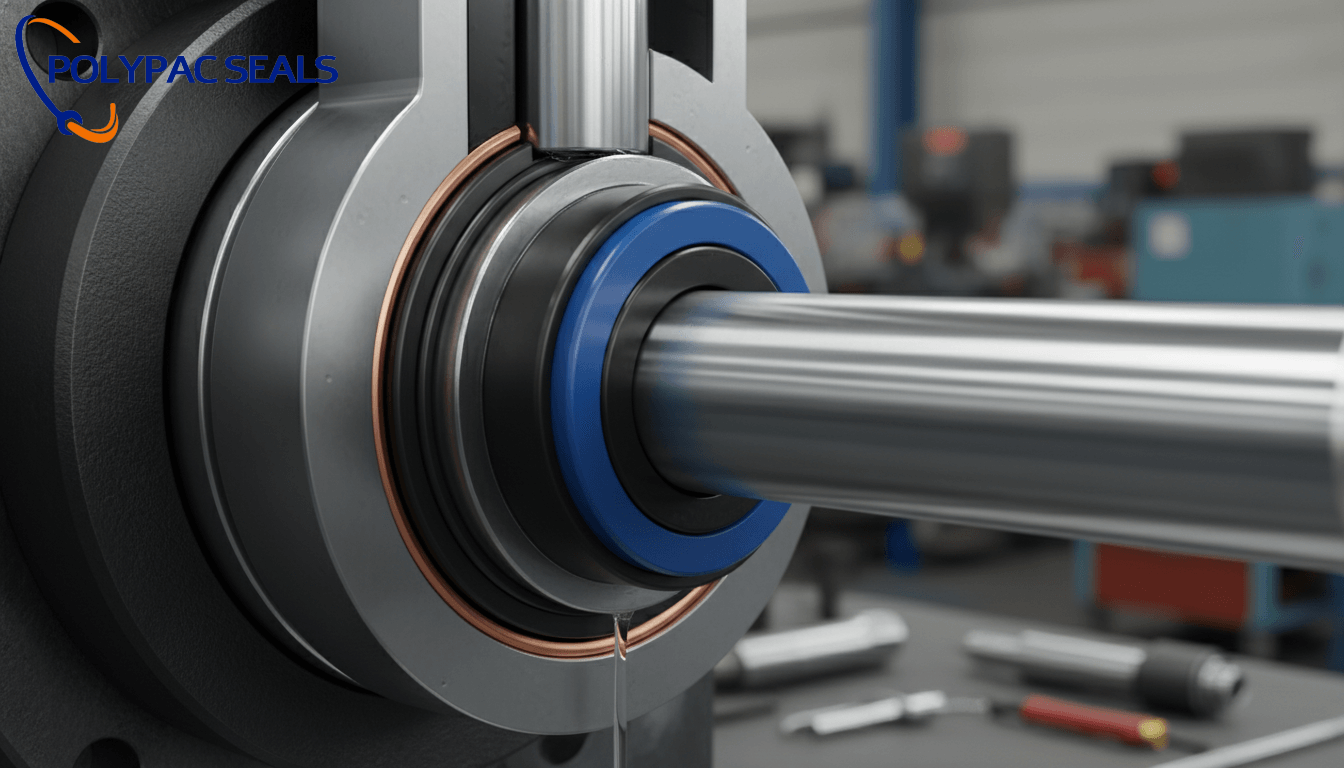
A rod seal is a dynamic sealing device typically housed in the cylinder head (gland). Its primary function is to seal the hydraulic fluid within the cylinder as the rod cycles back and forth. Unlike piston seals, which seal against the cylinder bore to create movement, the rod seal acts against the moving rod itself.
While the hydraulic rod seal is designed to withstand high-pressure fluid, the pneumatic rod seal operates in air-driven systems, often requiring different lubrication and friction characteristics. In both cases, the seal must work in tandem with a wiper seal (scraper) to form a complete sealing system: the rod seal keeps the fluid in, and the wiper keeps contaminants out.
How Rod Seals Work: Principles of Dynamic Sealing
Dynamic hydraulic seals operate on a principle of controlled leakage. A completely leak-free dynamic seal would fail almost instantly due to friction and heat generation. Instead, a properly functioning rod seal allows a microscopic film of fluid to ride out on the rod asperities, lubricating the seal lip, and then retracts that film on the return stroke.
Single-Acting vs. Double-Acting Rod Seals
Understanding the directionality of pressure is fundamental:
· Single-Acting Rod Seals: These are designed to seal pressure from one direction only (typically from within the cylinder). As noted by Forever Seals, they are cost-effective and simple but rely on the rod surface being dry on the atmospheric side.
· Double-Acting Rod Seals: These can handle pressure from both sides or alternating pressure cycles. While less common for primary rod sealing (usually a buffer seal handles the pressure spikes), they are critical in specific applications where back-pressure is a factor.
Exploring Types and Profiles of Rod Seals
The geometry of a seal, known as its profile, dictates its performance. Common rod seal types include:
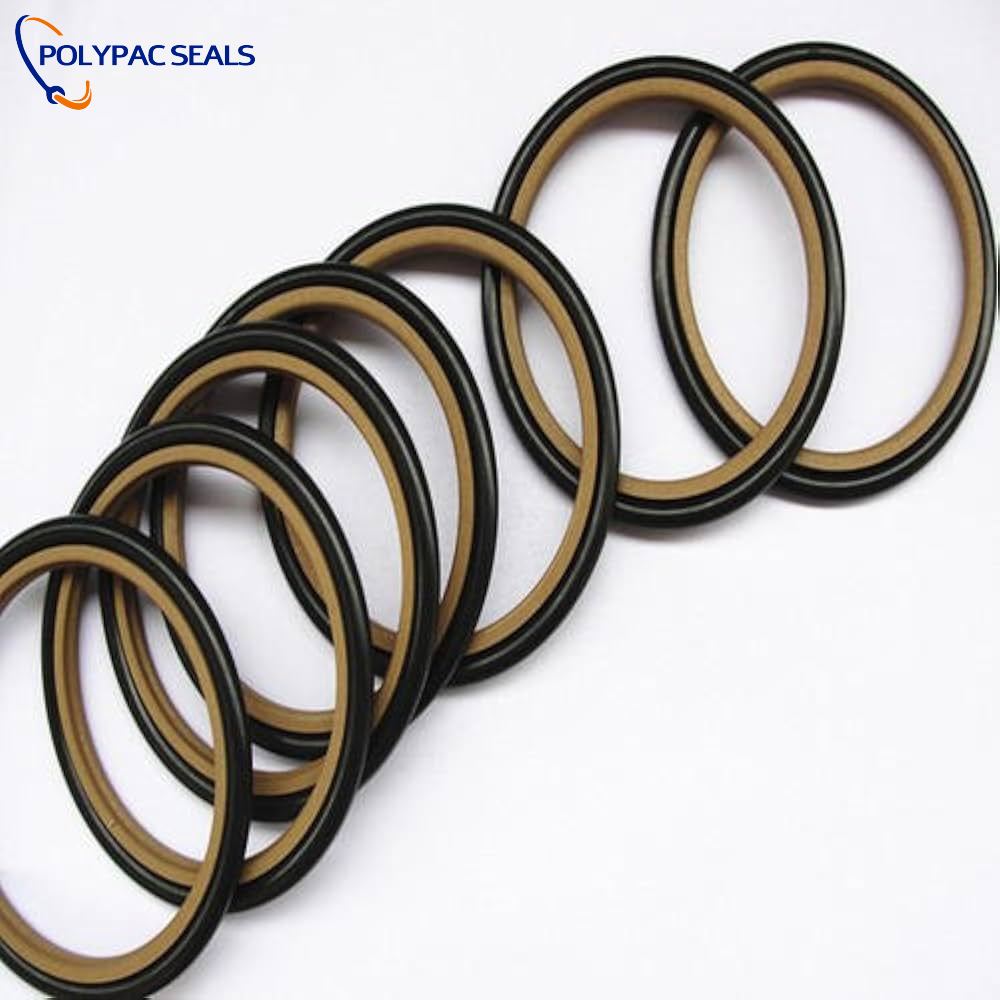
· U-Cup Seals: The industry workhorse. Asymmetrical U-cups have a shorter inner lip (dynamic) and a longer outer lip (static). The pressure energizes the seal, pushing the lips against the housing and rod.
· Chevron (V-Packing) Seals: A multi-lip assembly used in heavy-duty applications. They are robust and adjustable but generate higher friction.
· Buffer Seals: Installed upstream of the primary rod seal, these absorb pressure spikes and shock loads, protecting the main seal from extrusion.
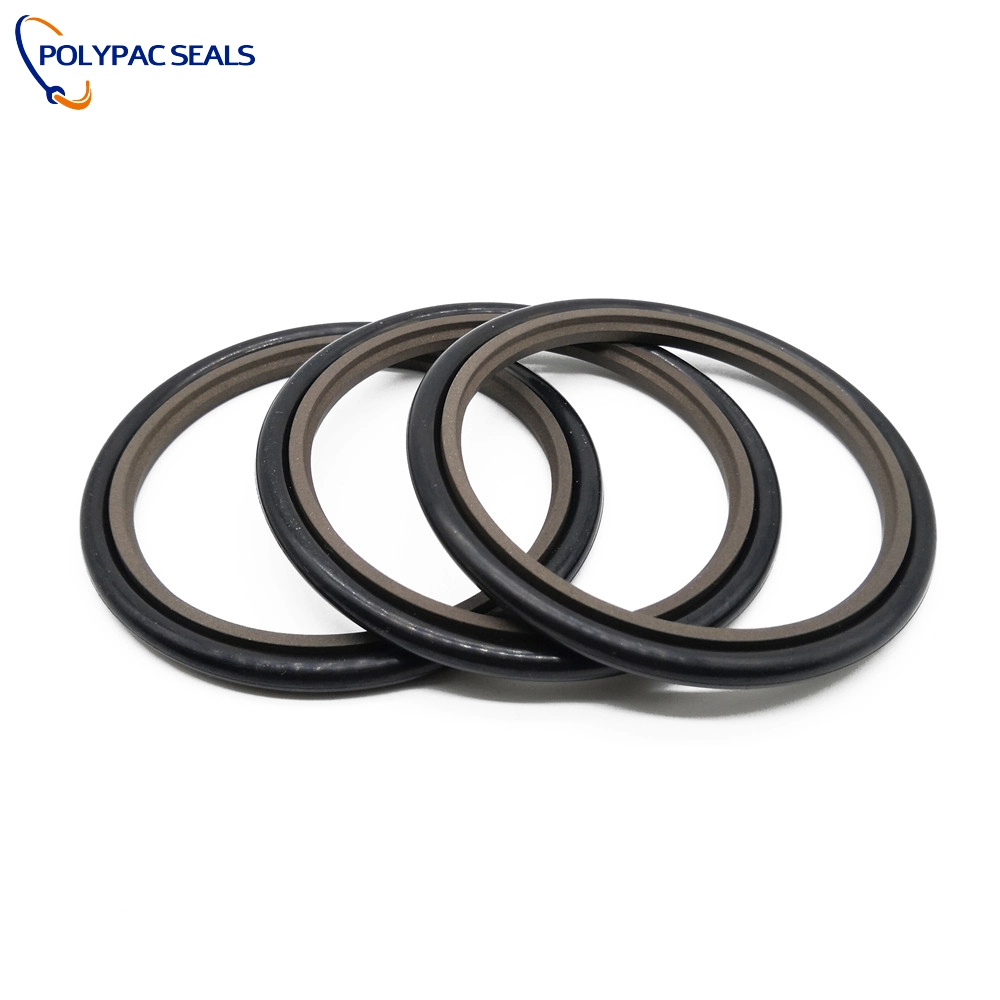
· PTFE Cap Seals: A PTFE ring energized by an O-ring (often called a glide ring). These offer ultra-low friction and no stick-slip, ideal for high-speed applications.
Choosing the Right Material for Your Rod Seal Application
Rod seal materials define the limits of performance. The choice is a trade-off between elasticity, wear resistance, and chemical compatibility.
· Polyurethane (PU): The gold standard for modern hydraulics. PU offers exceptional abrasion resistance and high tensile strength. Sources like XHH Seals highlight that PU is superior for heavy-duty cylinders (up to 400 bar) compared to rubber.
· Nitrile Butadiene Rubber (NBR): The economical choice for general-purpose applications. It has a good temperature range (-30°C to +100°C) but lower abrasion resistance than PU.
· Polytetrafluoroethylene (PTFE): Known chemically for its inertness. According to Parjet Seals, PTFE has the lowest coefficient of friction and can withstand extreme temperatures (-200°C to +260°C). However, it has "plastic memory" issues and is susceptible to creep if not properly filled (e.g., with bronze or glass).
· Fluoroelastomer (FKM/Viton): Essential for high-temperature applications and aggressive fluids like phosphate esters.
Key Factors for Optimal Rod Seal Selection: A Decision-Making Guide
When conducting cylinder rod seal selection, engineers must evaluate the application parameters against industry standards like ISO 5597 (housing dimensions). Consider these factors:
1. Operating Pressure: High pressure requires harder materials (like 95 Shore A PU) or anti-extrusion rings.
2. Temperature Range: Cold causes brittleness (cracking), while heat causes softening (extrusion) and aging. Check the Glass Transition Temperature (Tg) of the material.
3. Rod Speed: High speeds (>0.5 m/s) generate frictional heat. PTFE profiles are preferred here.
4. Fluid Compatibility: Bio-oils and water-glycol fluids attack standard PU. Specialized hydrolysis-resistant PU or FKM is required.
Common Rod Seal Failures: Causes, Symptoms, and Advanced Troubleshooting
Effective rod seal failure analysis prevents recurring issues. Most failures leave forensic evidence on the seal itself.
1. Extrusion (Gaping)
· Cause: The gap between the rod and the housing is too large, or pressure is too high. The seal material is forced into the clearance gap.
· Symptom: The seal looks "nibbled" or shaved on the non-pressure side (heel).
· Solution: Use anti-extrusion (backup) rings or tighten the machining tolerances (refer to ISO H8/f7 fits).
2. Abrasion
· Cause: Rough rod surface or external contamination.
· Symptom: The sealing lip is worn flat or has vertical scratches.
· Solution: Improve rod surface finish and upgrade the wiper seal.
3. Thermal Degradation
· Cause: Excessive friction or high fluid temperature.
· Symptom: The seal is hard, brittle, and cracked (checking). It may crumble upon removal.
· Solution: Switch to FKM or PTFE materials; improve lubrication.
4. Chemical Attack
· Cause: Incompatible fluid causes the polymer chain to break down.
· Symptom: Swelling (soft and gummy) or shrinking.
· Solution: Verify material compatibility matrices against the specific hydraulic fluid.
Installation and Maintenance Best Practices
A rod seal installation guide is critical, as many seals fail before the machine even starts due to installation damage.
· Surface Finish: According to Seal and Cylinder Solutions and ISO 4287, the rod surface roughness should ideally be between Ra 0.1 and 0.3 µm. Too smooth (<0.1 µm) leads to lubrication starvation; too rough (>0.4 µm) acts like a file.
· Tools: Use specialized installation tools (cones and sleeves) to stretch the seal over the rod without nicks. Never use sharp screwdrivers.
· Chamfers: Ensure the cylinder housing has a lead-in chamfer (typically 15-20 degrees) to prevent slicing the seal lip during insertion.
· Lubrication: Always lubricate the seal and the groove with the system fluid before installation.
Advanced Rod Seal Technologies & Future Trends in 2026
The future of sealing is intelligent and sustainable. As reported by Whyps and Technavio, key trends for 2026 include:
· Smart Seals: Integration of IoT sensors directly into the seal housing to monitor temperature, pressure, and wear in real-time. This enables predictive maintenance, alerting operators before a leak occurs.
· Low-Friction Designs: To meet global energy efficiency standards, manufacturers are developing distinct seal profiles that reduce stick-slip and friction, lowering the power consumption of hydraulic pumps.
· Bio-Based Materials: As environmental regulations tighten, new biodegradable elastomers are being developed that offer the performance of fossil-fuel-based polymers without the ecological footprint.
The Economic Benefits and ROI of Optimal Rod Seal Selection
Investing in high-quality rod seal troubleshooting and selection yields measurable ROI. A cheap seal costing $5 can cause a $5,000 shutdown. Optimized sealing systems extend the Mean Time Between Failures (MTBF), reduce hydraulic fluid consumption (top-ups), and ensure compliance with environmental laws regarding leakage. The Total Cost of Ownership (TCO) analysis always favors the superior, application-specific seal over the generic replacement.
Frequently Asked Questions
What is the primary function of a rod seal in a hydraulic cylinder?
The primary function is to prevent pressurized hydraulic fluid from leaking out of the cylinder along the piston rod. It acts as the main pressure barrier while ensuring a thin lubrication film remains on the rod to reduce friction.
How do single-acting and double-acting rod seals differ?
Single-acting rod seals seal pressure from one direction (usually internal) and are the most common type for rod glands. Double-acting rod seals can handle pressure from both directions, which is necessary for specific applications like cylinders submerged in fluid or those with back-pressure requirements.
Why is material selection critical for rod seals?
Material selection dictates the seal's survival. Factors like temperature (FKM for heat), pressure (PU for high load), and fluid compatibility (NBR for oil, EPDM for brake fluid) must be matched. Incorrect selection leads to rapid chemical degradation or thermal failure.
What is the role of a wiper seal in conjunction with a rod seal?
A wiper seal (scraper) is the rod seal's first line of defense. It physically scrapes mud, ice, and dust off the retracting rod, preventing these contaminants from damaging the primary rod seal and entering the hydraulic system.
What are the most common causes of rod seal failure?
The most common causes are extrusion (due to high pressure gaps), abrasion (contamination), heat hardening (friction), and installation damage (nicks/cuts). Detailed rod seal failure analysis usually points to one of these physical or chemical stressors.
Can rod seals be used in pneumatic systems?
Yes, but pneumatic rod seals differ from hydraulic ones. They operate at lower pressures and often require materials with lower friction and different lubrication requirements (since air is not a lubricant like hydraulic oil).
What are anti-extrusion rings, and why are they important?
Anti-extrusion rings (or backup rings) are hard rings (often Acetal or PTFE) placed behind the rod seal. They close the extrusion gap, preventing the softer seal material from being pushed into the clearance between the rod and the housing under high pressure.
How does surface finish of the piston rod affect seal performance?
Surface finish is critical. A rod that is too rough (high Ra) abrades the seal like sandpaper. A rod that is too smooth (very low Ra) wipes the rod completely dry, causing friction, heat, and stick-slip. ISO standards recommend a specific range (Ra 0.1-0.3 µm) for optimal life.


Products
What is the difference between a static seal and a dynamic seal?
How important is surface finish on the metal parts that contact the seal?
How can I prevent seal damage during installation?
What is the difference between NBR and FKM materials?
How do I choose the right material for my sealing application?
Stay Updated with Industry Insights
Subscribe to our articles and receive the latest news, expert guidance, and technical updates directly in your E-mail.
Rest assured that your privacy is important to us, and all information provided will be handled with the utmost confidentiality.
Polypac is a trusted global supplier of high-performance sealing solutions, providing OEM & ODM services for industries worldwide.
E-mail:
Phone/WhatsApp:
© 2025 Polypac Seals. All Rights Reserved.
dms
DMS
DMS