












Rubber Seals: The Indispensable Guide to Materials, Applications, and Performance Optimization
Saturday, January 24, 2026
Discover Polypac’s comprehensive guide to Rubber Seals and Elastomeric Seals, detailing top-quality sealing solutions designed for durability and performance. Enhance your applications with expert insights on selecting the right elastomeric sealing products.
Recommended for you

Top 5 Piston Seal Ring Materials Compared: Which One Actually Stops Leaks?

O-Ring Working Principle: The Science Behind Simple, Reliable Sealing

Reducing Maintenance Downtime: Why a High-Quality Large O-Ring Kit is Your Best Investment

Enhance sealing efficiency: Select O-ring kits suitable for high-pressure environments
FAQ
Products
What does "AS568" mean?
AS568 is the Aerospace Standard that defines the dimensions for over 360 standard O-ring sizes. It is the most widely accepted sizing system in North America and globally. An AS568 number (e.g., AS568-214) specifies a precise inside diameter and cross-section.
When should I use a spring-energized seal instead of a standard elastomeric seal?
Consider a spring-energized seal (e.g., GSF, SPN types) for demanding applications involving:
Extreme Temperatures (below -30°C or above +200°C)
Aggressive Chemicals that elastomers can't handle
Very Low Leakage or "Zero Leakage" requirements
Poor Lubricity or dry running conditions
The internal spring maintains constant sealing force, compensating for wear and system variables.
Why did my O-ring fail prematurely?
Common causes of O-ring failure include:
Chemical Incompatibility: Swelling, softening, or cracking due to fluid exposure.
Improper Sizing: Using an incorrect size leads to over-compression or inadequate sealing force.
Abrasion: Wear and tear from rough surface finishes or contaminated fluid.
Extrusion: The seal is forced into the gap between metal parts under high pressure.
Installation Damage: Nicks, cuts, or twists during assembly.
How do I choose the right material for my sealing application?
Material selection depends on four key factors:
Media: What fluid or gas will the seal contact? (e.g., petroleum oil, water, chemicals, steam)
Temperature: What is the minimum and maximum operating temperature?
Pressure: What is the system's operating pressure? Are there pressure spikes?
Application: Is it a static, dynamic, or rotary seal?
Example: NBR (Buna-N) is excellent for standard hydraulic oil, while FKM (Viton®) is needed for high temperatures or aggressive chemicals.
How can I prevent seal damage during installation?
Use Tools: Always use dedicated installation tools (e.g., picks, cones, guides).
Lubricate: Always lubricate the seal and the contact surface.
Protect Sharp Edges: Cover sharp threads and edges with tape or use an installation sleeve.
Check the Groove: Ensure the installation groove is clean, deburred, and undamaged.
You may also like
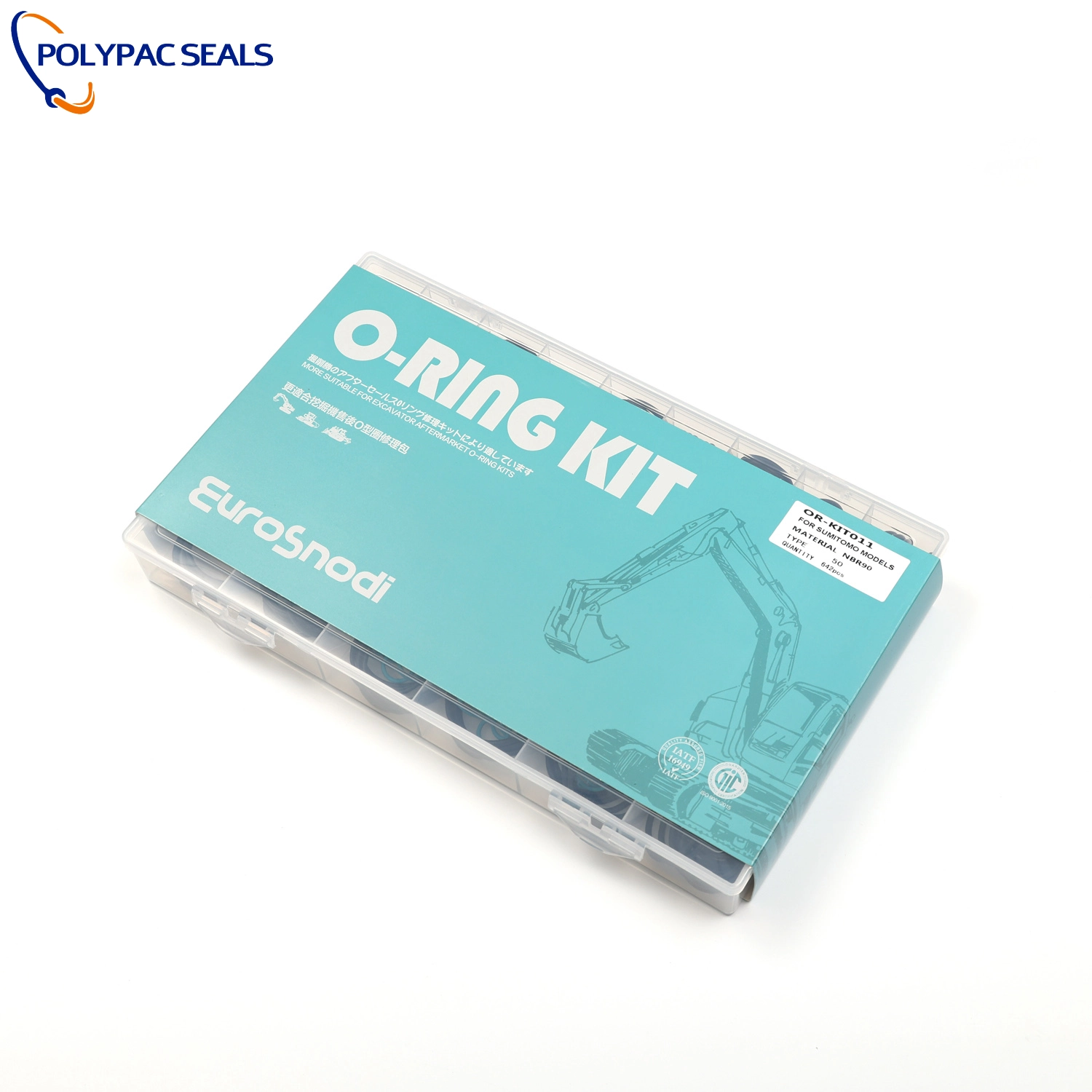
Mini O-Ring Kits-011 SUMITOM | Compact Assortments for Electronics, RC Models & Small Appliances
Polypac Mini O-Ring Kits-011 SUMITOM offer compact assortments of high temperature, chemical resistant O-rings. Ideal for electronics, RC models, and small appliances, these durable kits ensure reliable sealing performance in demanding environments. Perfect for precision repairs and maintenance.
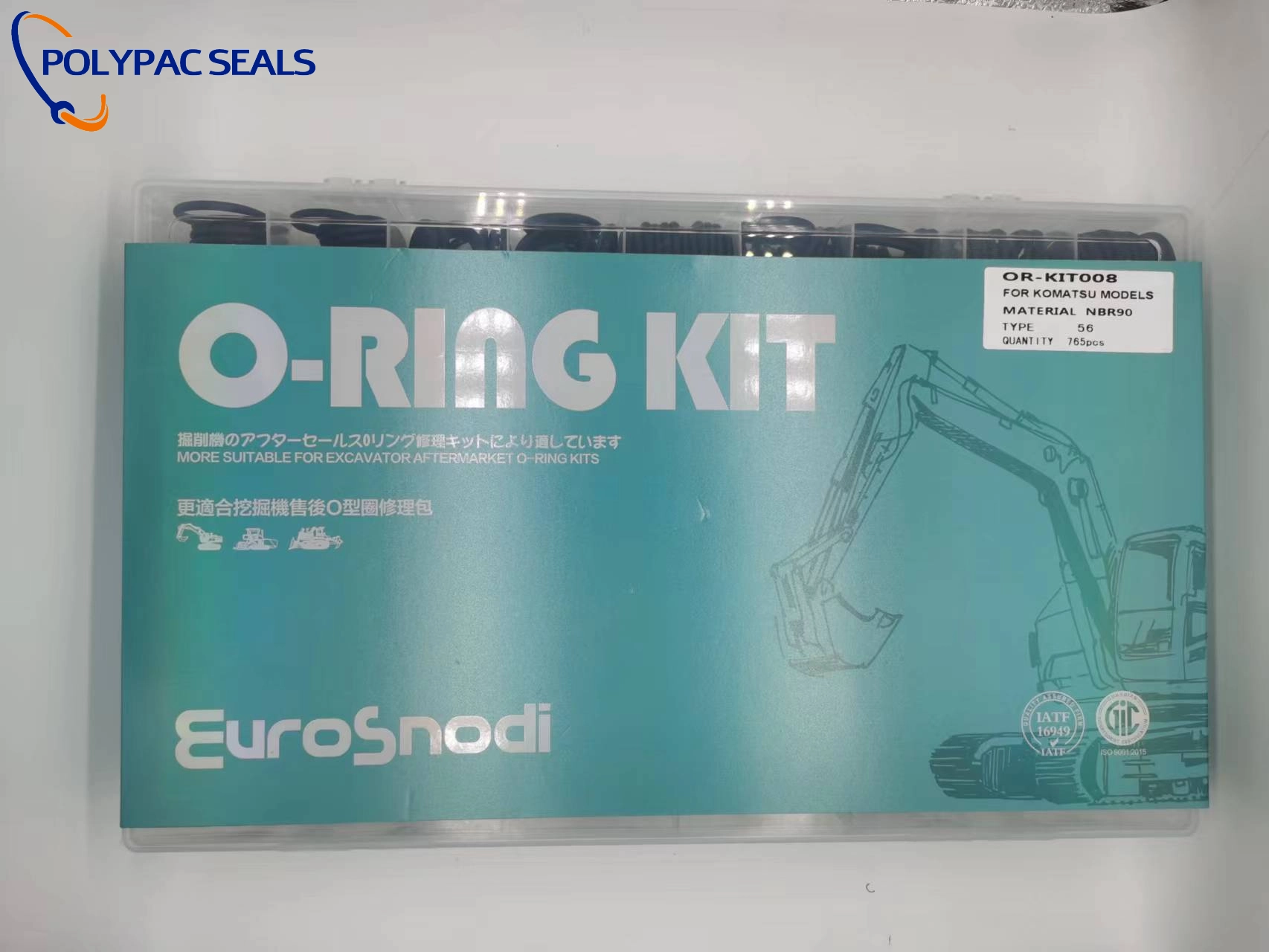
Buna-N (Nitrile) O-Ring Kits-008 KOMATSU | Oil Resistant Seal Assortments for General Purpose Use
Polypac Buna-N (Nitrile) O-Ring Kits-008 KOMATSU offer durable, oil-resistant seals ideal for hydraulic and pneumatic applications. These versatile O-ring assortments ensure reliable sealing performance for general-purpose use, enhancing equipment efficiency and longevity.
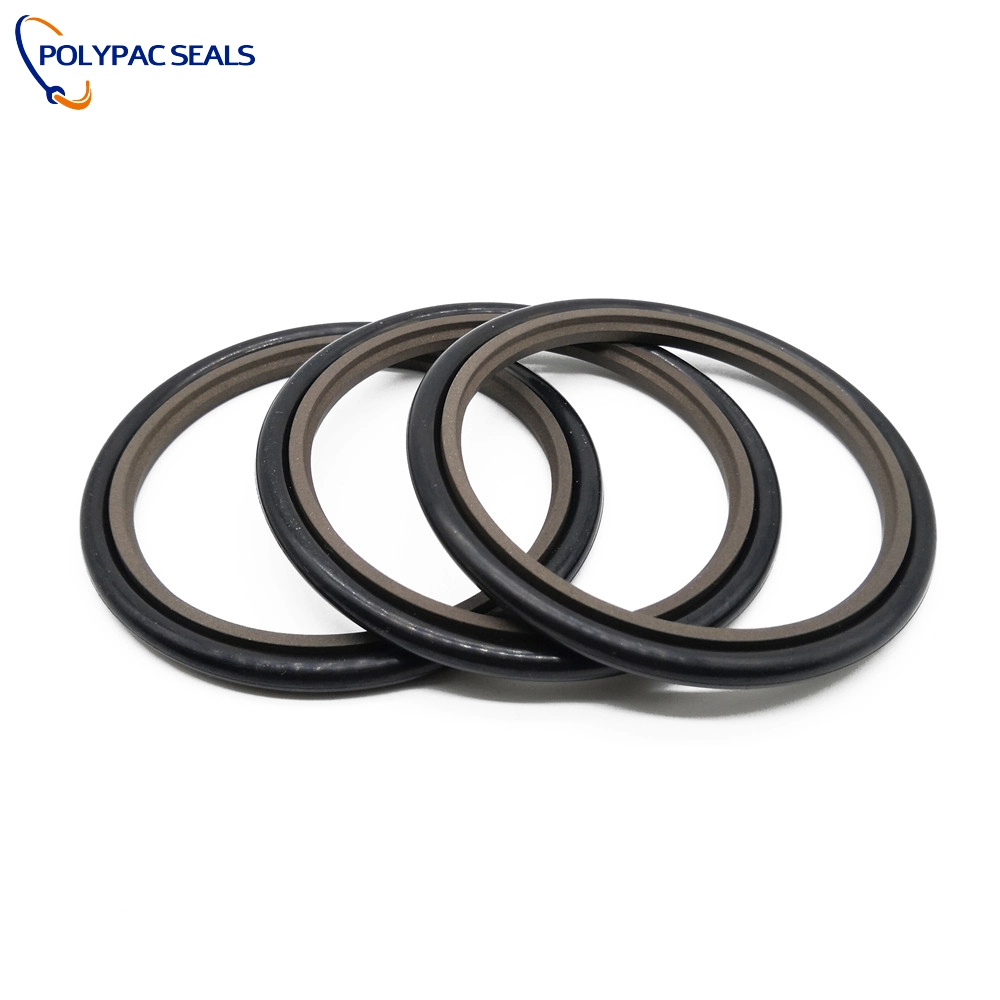
GSJ-801 Rod Seal | High-Performance Piston Rod Seal for Exact OEM Replacement
The Polypac GSJ-801 Rod Seal is a high-performance piston rod seal designed for exact OEM replacement. Ideal for cylinder seal kit components and pump rod seals, it ensures superior durability and leak prevention, enhancing hydraulic system efficiency in industrial applications. Trust Polypac quality.
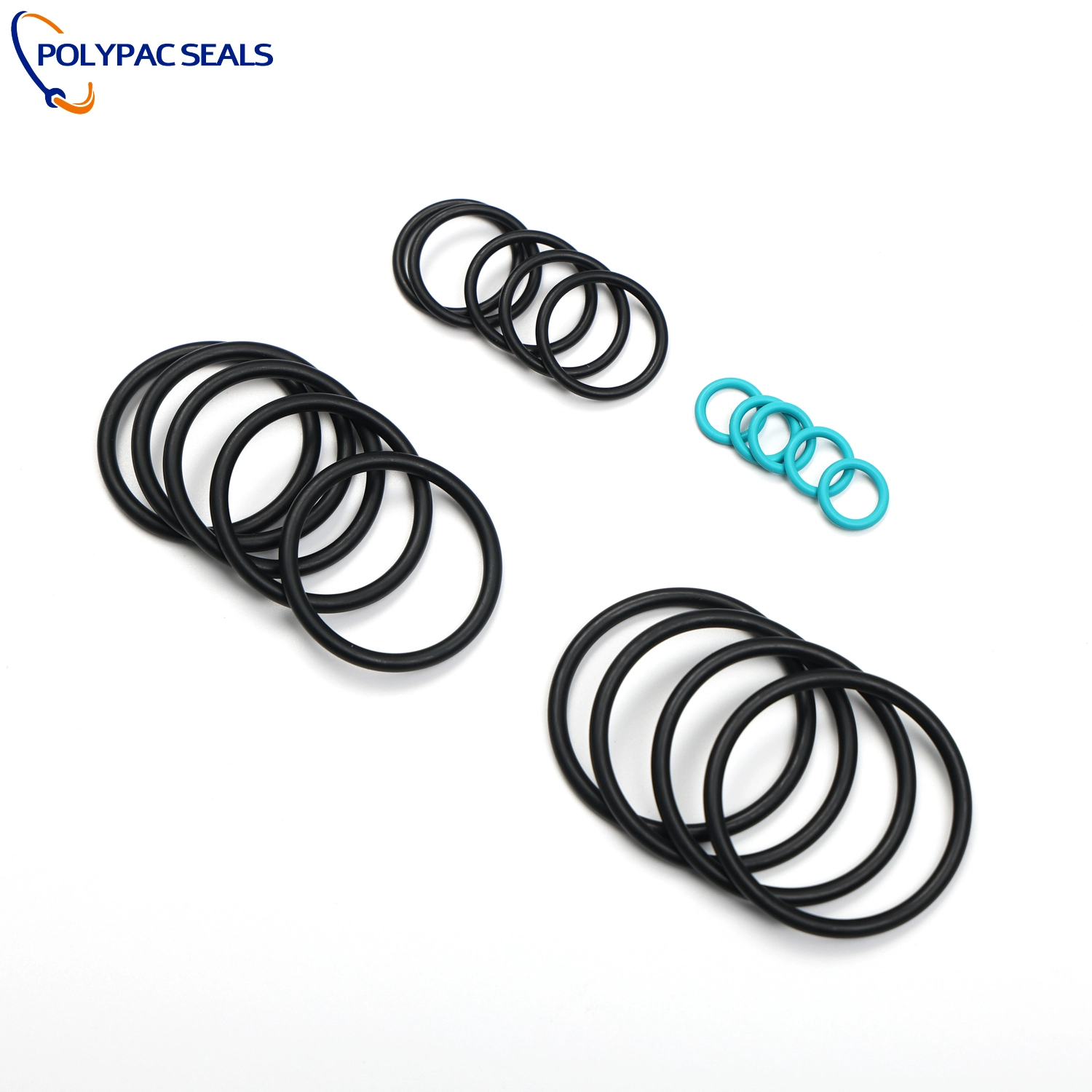
Plumbing & HVAC O-Ring Kits012 HITACHI | Assortments for Water, Refrigerant & Gas Connections
Polypac Plumbing & HVAC O-Ring Kits012 HITACHI offer High Quality vacuum and FDA-grade O-Ring assortments for water, refrigerant, and gas connections. Trusted for durability and leak-proof sealing, ideal for plumbing and HVAC systems requiring reliable, high-performance seals.
Stay Updated with Industry Insights
Subscribe to our articles and receive the latest news, expert guidance, and technical updates directly in your E-mail.
Rest assured that your privacy is important to us, and all information provided will be handled with the utmost confidentiality.

Polypac is a trusted global supplier of high-performance sealing solutions, providing OEM & ODM services for industries worldwide.
E-mail:
Phone/WhatsApp:
© 2025 Polypac Seals. All Rights Reserved.
dms
DMS
DMS