












Rubber Tubes: The Complete Guide to Flexible Fluid & Air Transfer | Polypac
Rubber Tubes: The Versatile Lifelines of Modern Industry and Machinery
From the compressed air lines in a factory to the coolant hoses in a vehicle, rubber tubes serve as the essential, flexible conduits that power, cool, and enable countless systems. Far more than simple piping, these engineered components are designed to withstand internal pressure, external abrasion, environmental extremes, and the specific demands of the media they carry. The right rubber tube is a reliable, durable partner; the wrong one can lead to leaks, downtime, and safety hazards.
At Polypac, with our ISO 9001 & IATF 16949 certified expertise in elastomer technology and industrial solutions, we understand that a rubber tube is a critical system component. This guide explores the world of rubber tubing, helping you navigate material choices and find the perfect fit for your application's pressure, temperature, and fluid compatibility needs.
What are Rubber Tubes?
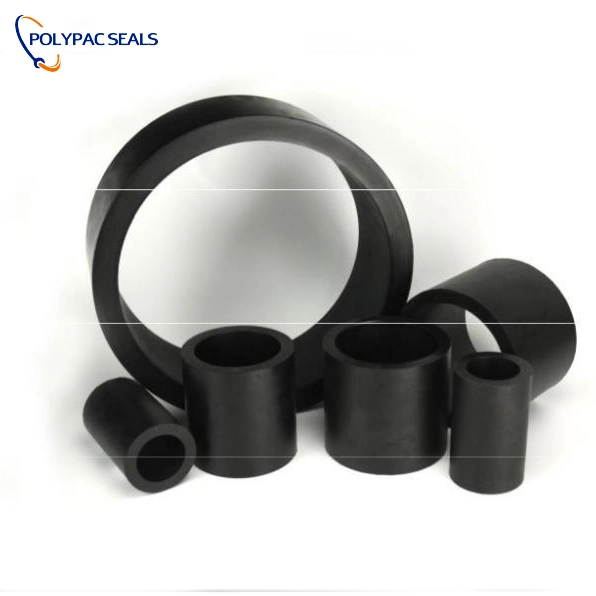
Rubber tubes (or rubber hoses) are flexible, hollow cylinders manufactured from various elastomeric compounds, often reinforced with textile braids or helical cords for strength. They are designed to convey fluids (liquids or gases) from one point to another while accommodating movement, vibration, and complex routing that rigid pipes cannot.
Their primary functions are:
-
Flexible Conduit: To transport media around obstacles and between moving components.
-
Pressure Containment: To safely contain the internal pressure of the fluid or gas being conveyed.
-
Environmental Protection: To resist external factors like abrasion, weather, ozone, and temperature.
Critical Material Selection for Rubber Tubes
The tube's material dictates its compatibility, temperature range, and durability. Choosing correctly is paramount.
1. Nitrile Rubber (NBR) Tubes
-
Key Property: Excellent resistance to oils, fuels, and greases.
-
Temperature Range: -30°C to +100°C (special grades can go higher).
-
Best For: Hydraulic lines, fuel lines, lubricant transfer, and general industrial applications involving petroleum-based fluids. The workhorse of industrial oil-resistant tubing.
2. Ethylene Propylene Diene Monomer (EPDM) Tubes
-
Key Property: Outstanding resistance to hot water, steam, weathering, ozone, and brake fluids.
-
Temperature Range: -40°C to +150°C (short-term higher).
-
Best For: Coolant and heater hoses in automotive/industrial engines, hot water lines, low-pressure steam lines, outdoor air lines, and hydraulic systems using HFC or HFD-R fire-resistant fluids.
3. Silicone (VMQ) Tubes
-
Key Property: Extreme high & low-temperature flexibility, high purity, biocompatibility.
-
Temperature Range: -60°C to +225°C.
-
Best For: Food & beverage transfer, pharmaceutical processes, medical air lines, high-temperature air ducts, and aerospace applications. Not suitable for fuels or oils.
4. Chloroprene (Neoprene) Tubes
-
Key Property: Good all-around resistance to oils, weather, ozone, and abrasion; good flexibility.
-
Temperature Range: -40°C to +100°C.
-
Best For: General-purpose industrial air and water hoses, refrigeration lines, and moderate chemical exposure.
5. Natural Rubber (NR) / Styrene-Butadiene Rubber (SBR) Tubes
-
Key Property: High elasticity and good abrasion resistance; lower oil/chemical resistance.
-
Best For: Non-critical air and water hoses, garden hoses, and general utility applications.
Key Design and Reinforcement Features
Beyond the inner liner material, the tube's construction defines its capability:
-
Reinforcement: Layers of textile (polyester, aramid) or steel wire braid/helix are embedded to provide burst strength and resist pressure-induced expansion. More plies/wires = higher pressure rating.
-
Inner Liner: The smooth, seamless inner layer provides fluid compatibility and minimizes friction loss.
-
Cover: The tough outer layer protects against abrasion, weather, and mechanical damage.
-
Static Conductivity: Some tubes are manufactured with carbon black or other additives to dissipate static electricity, which is critical for fuel handling and solvent transfer to prevent ignition.
The Polypac Advantage: Engineered Tubing Solutions
We provide more than just off-the-shelf hose; we offer solutions tailored to your system's demands.
-
Material Expertise: Our knowledge of elastomer compounding allows us to recommend or source the exact tube material for your specific media—be it hot oil, glycol-based coolant, or a specialty chemical.
-
Application-Focused Selection: We consider all factors:
-
Media: Exact fluid/gas and its temperature.
-
Pressure: Working pressure and any surge/pulse pressures.
-
Environment: Indoor/outdoor, exposure to UV, chemicals, or abrasion.
-
Movement: Whether the tube is stationary, flexing, or in constant motion.
-
-
Quality and Consistency: We partner with manufacturers who maintain strict quality control, ensuring the tube's dimensions, reinforcement, and material properties are consistent for reliable, long-term performance.
Common Applications Across Industries
-
Industrial Machinery: Hydraulic and pneumatic power lines, coolant and lubrication lines.
-
Automotive & Mobile Equipment: Fuel, oil, coolant, turbocharger, and air brake hoses.
-
Manufacturing & Processing: Transfer lines for water, air, chemicals, and food-grade products.
-
Construction & Agriculture: Air and water hoses for tools and irrigation; hydraulic lines on heavy equipment.
Installation and Maintenance Best Practices
-
Avoid Sharp Bends: Do not exceed the manufacturer's stated minimum bend radius to prevent kinking and internal damage.
-
Protect from Abrasion: Use hose guards or proper routing to prevent the outer cover from rubbing against surfaces.
-
Use Correct Fittings: Ensure hose ends are properly cut (square) and that fittings are correctly specified and installed to prevent leaks at the connection points.
-
Inspect Regularly: Look for signs of cracking, blistering, softening, or abrasion on the cover. Check fittings for leaks.
Conclusion
Rubber tubes are the flexible arteries of industry, enabling function and mobility. Selecting the correct tube is a critical engineering decision that impacts safety, efficiency, and equipment longevity. It requires careful consideration of the fluid, pressure, temperature, and environment.
By understanding material properties and partnering with a knowledgeable supplier like Polypac, you can ensure your systems are equipped with tubing that provides reliable, leak-free performance for the long haul.
Need the right hose for oil, air, water, or a specialty fluid? Don't let your system fail at the line. Contact Polypac's fluid conveyance specialists today for expert tubing selection and solutions.


Products
How do I choose the right material for my sealing application?
What is the difference between a static seal and a dynamic seal?
What is the difference between NBR and FKM materials?
What is the purpose of the metal spring in a rotary shaft seal?
When should I use a spring-energized seal instead of a standard elastomeric seal?
Stay Updated with Industry Insights
Subscribe to our articles and receive the latest news, expert guidance, and technical updates directly in your E-mail.
Rest assured that your privacy is important to us, and all information provided will be handled with the utmost confidentiality.

Polypac is a trusted global supplier of high-performance sealing solutions, providing OEM & ODM services for industries worldwide.
E-mail:
Phone/WhatsApp:
© 2025 Polypac Seals. All Rights Reserved.
dms
DMS
DMS