












Sealing Gaskets: A Complete Guide to Static Sealing Solutions | Polypac
Sealing Gaskets: The Fundamental Technology for Leak-Free Static Connections
In the intricate network of pipes, tanks, engines, and machinery that power our world, there exists a critical component that works silently to create secure, leak-proof barriers between stationary surfaces: the sealing gasket. Far more than a simple spacer, a gasket is an engineered sealing element that compensates for surface imperfections, accommodates thermal expansion, and withstands pressure and chemical attack. From the delicate seal in a medical device to the massive gasket in a chemical reactor, this technology is fundamental to safety, efficiency, and environmental protection across all industries.
At Polypac, with our ISO 9001 & IATF 16949 certified expertise in sealing solutions, we engineer and supply sealing gaskets that meet the precise demands of static applications. This guide will navigate the essential types, materials, and engineering principles behind reliable gasket performance.
What is a Sealing Gasket?
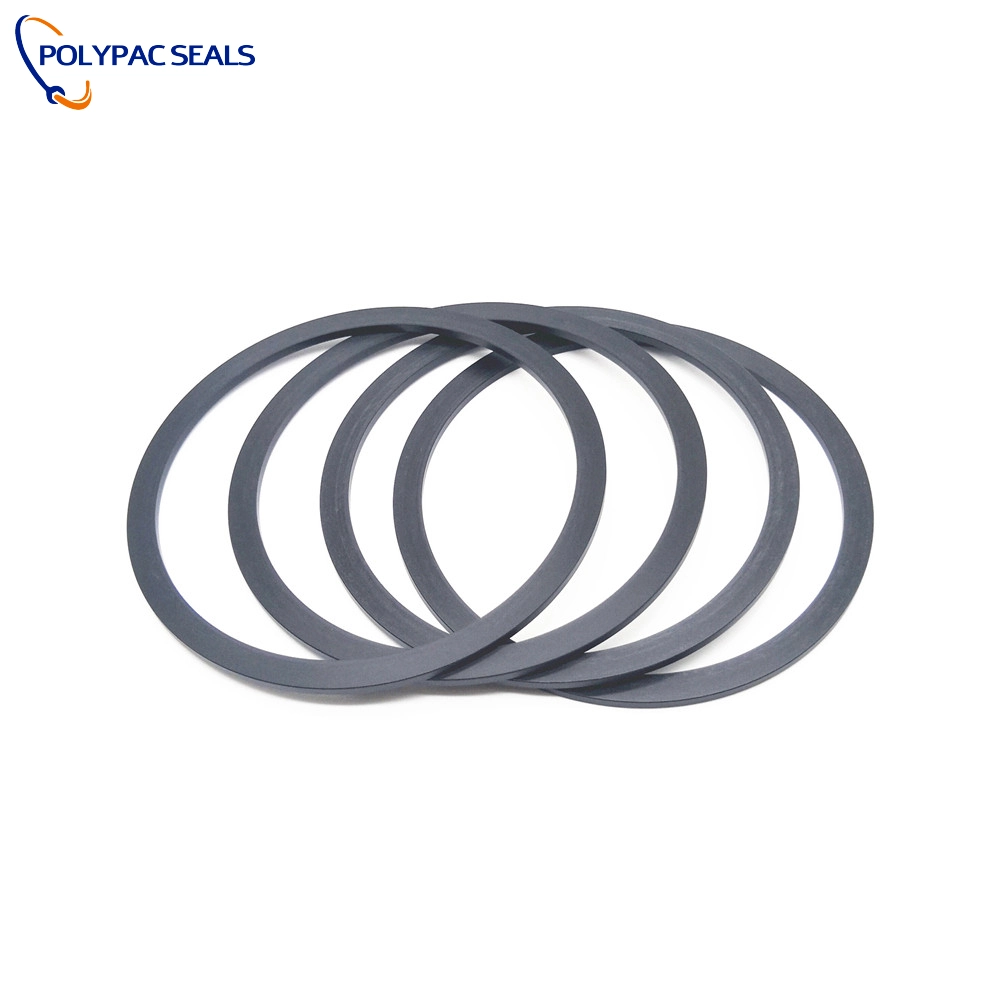
A sealing gasket is a manufactured material or combination of materials placed between two or more mating surfaces—typically flanges—to create a static seal. Its primary function is to prevent the leakage or ingress of fluids (liquids or gases) under a range of pressures and temperatures.
Gaskets achieve this by filling the microscopic voids and irregularities on flange surfaces that would otherwise be leakage paths. They are compressed during assembly, flowing into these imperfections to form a tight barrier.
Core Functions of a Reliable Gasket
An effective sealing gasket must perform several critical roles:
-
Sealing Function: The primary role—creating a leak-tight barrier between stationary flanges or housings.
-
Compensating for Surface Irregularities: Filling in machining marks, scratches, or slight distortions to achieve full-face contact.
-
Accommodating Movement: Allowing for thermal expansion/contraction, vibration, or slight flange movement without losing seal integrity.
-
Chemical & Thermal Resistance: Withstanding the specific fluid (corrosive, caustic, oily) and operating temperature range of the application.
-
Pressure Containment: Resisting blow-out or extrusion under system pressure, especially in high-pressure applications.
Main Types of Sealing Gaskets
Selecting the right gasket type is crucial and depends on pressure, temperature, flange type, and media.
1. Sheet Gaskets (Cut Gaskets)
-
Description: Punched or cut from a sheet of material (rubber, compressed fiber, PTFE).
-
Common Materials: NBR, EPDM, Silicone, Compressed Non-Asbestos (CNA), PTFE.
-
Best For: Low to medium pressure/temperature applications, water, air, oil, and general industrial use. Cost-effective and versatile.
2. Spiral Wound Gaskets
-
Description: Constructed from alternating layers of pre-formed metal windings (stainless steel, special alloys) and a soft filler material (graphite, PTFE).
-
Key Advantage: Excellent resilience and recovery, making them ideal for applications with thermal cycling and high pressure. The metal provides strength; the filler provides the seal.
-
Best For: High-pressure/temperature flanges in petrochemical, power generation, and oil & gas industries (ANSI/ASME flanges).
3. Ring Type Joint (RTJ) Gaskets
-
Description: Solid metal gaskets (oval or octagonal cross-section) designed to seat in machined grooves in flanges.
-
Key Advantage: Extremely high-pressure containment, often used for sealing in wellheads and critical process piping.
-
Best For: Ultra-high pressure applications in oil & gas exploration and production.
4. Metal Jacketed Gaskets
-
Description: A soft filler material (asbestos-free, graphite) enclosed in a thin metal jacket (stainless steel, monel).
-
Key Advantage: Good for uneven flange surfaces and corrosive services. The jacket protects the filler.
-
Best For: Heat exchangers, reactors, and corrosive chemical services.
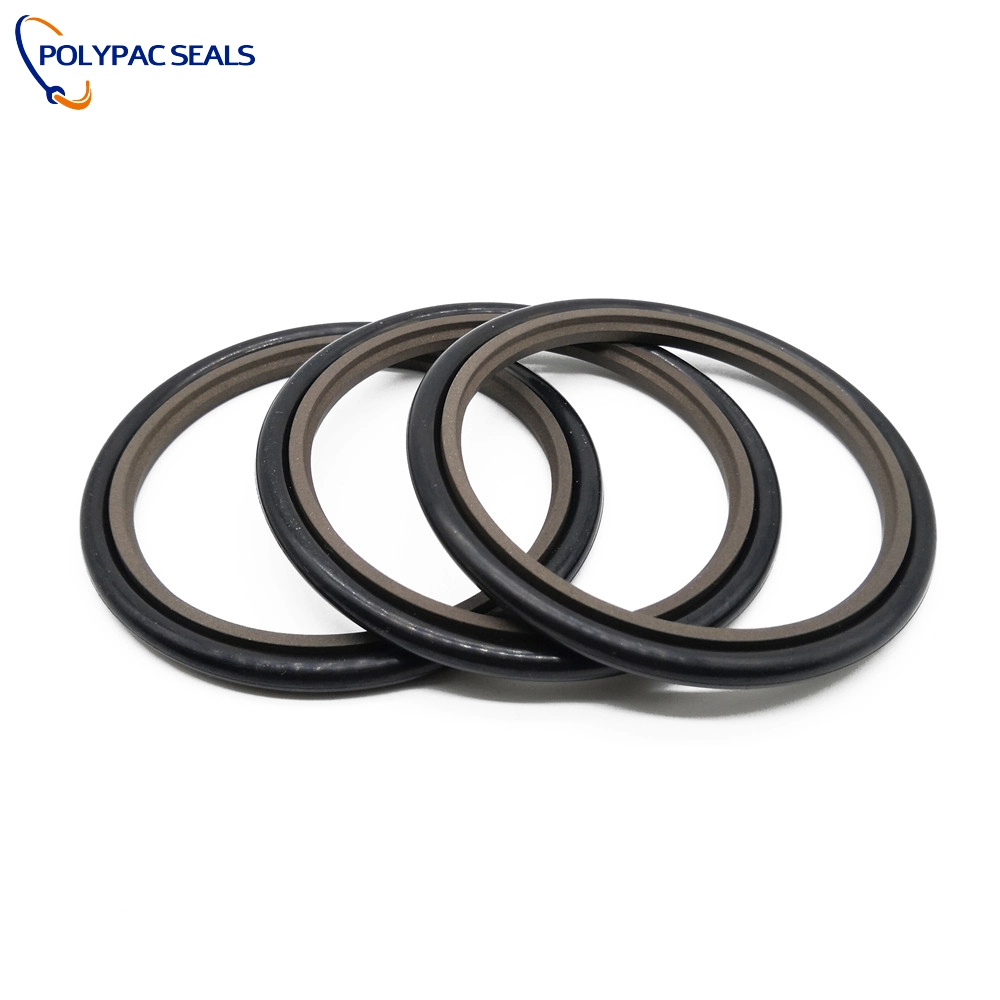
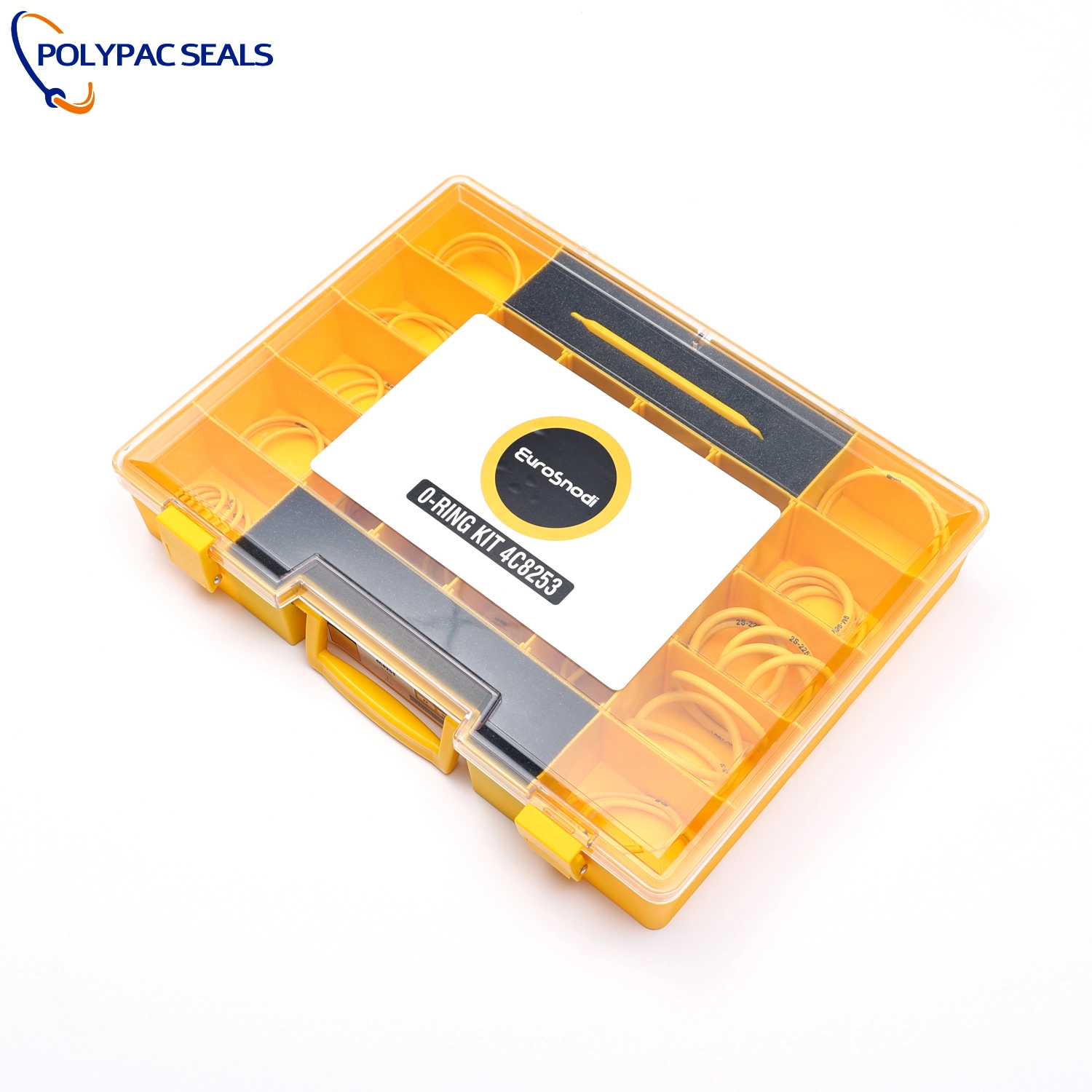
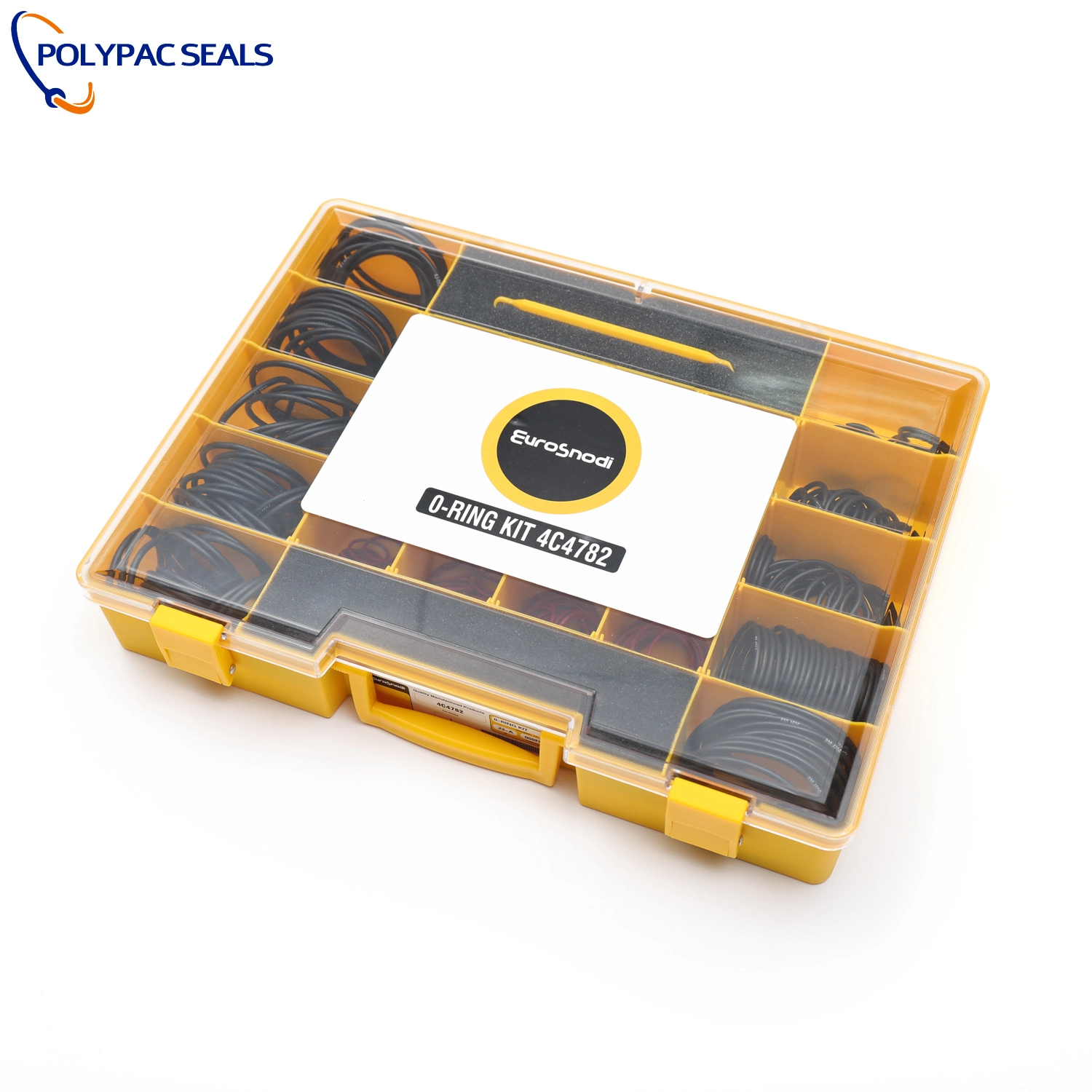
5. Rubber O-Rings & Molded Seals
-
Description: While often considered dynamic seals, O-rings and custom-molded profiles are extensively used as static sealing gaskets in groove applications (e.g., flanges, lids, covers).
-
Key Advantage: Reliable, predictable sealing with minimal flange load. Excellent for hydraulic/pneumatic manifolds and enclosed housings.
-
Best For: Hydraulic systems, fluid power, enclosures, and precision equipment.
Critical Material Selection Guide
The gasket material must be compatible with the process fluid and environment.
| Material | Key Properties | Typical Applications |
|---|---|---|
| Nitrile Rubber (NBR) | Excellent oil/fuel resistance, good mechanical properties. | Hydraulic oil, fuel, water, air. |
| EPDM Rubber | Outstanding weather, ozone, steam & hot water resistance. | Cooling systems, brake fluids, outdoor applications. |
| Silicone (VMQ) | Extreme temperature flexibility, physiologically inert. | Food, medical, high/low temp air. |
| Fluorocarbon (FKM) | Superior high-temp & chemical resistance. | Aggressive chemicals, high-temp oils. |
| Compressed Non-Asbestos (CNA) | General-purpose, inexpensive, handles moderate temps/pressure. | Water, air, mild chemicals, exhausts. |
| Expanded PTFE | Virtually universal chemical resistance, excellent creep resistance. | Corrosive chemicals, pharmaceutical, food-grade. |
| Flexible Graphite | Extreme temperature resistance, excellent chemical resistance (except strong oxidizers). | High-temperature flanges, heat exchangers. |
The Polypac Advantage: Engineered Gasket Solutions
We go beyond supplying standard materials to providing application-engineered solutions.
-
Material Sourcing & Fabrication: We source high-grade raw materials and fabricate gaskets with precision cutting, molding, and punching to ensure dimensional accuracy.
-
Custom Design & Prototyping: For complex or non-standard flange configurations, we can design and prototype custom gasket profiles, including multi-material composites.
-
Technical Support for Selection: Our experts can help you navigate material selection, considering not just compatibility but also flange load, bolt torque, and safety factors.
-
Quality Assurance: Consistent material properties and dimensions are verified to meet industry standards and your specific drawings.
Key Application Industries
-
Oil, Gas & Petrochemical: Spiral wound and RTJ gaskets for critical high-P/T flanges.
-
Power Generation: Gaskets for turbines, heat exchangers, and piping.
-
Food & Pharmaceutical: FDA-compliant silicone, EPDM, and PTFE gaskets for sanitary processes.
-
General Manufacturing & Hydraulics: Sheet gaskets and O-rings for machinery, pumps, and enclosures.
Conclusion
A sealing gasket is a deceptively simple component that performs a complex and critical engineering function. Its failure can lead to safety hazards, environmental incidents, production losses, and costly clean-up. Therefore, viewing a gasket as a commodity item is a significant risk.
The correct gasket is a system-engineered component, carefully selected for its material properties, geometry, and compatibility with the entire flange assembly. It is an investment in leak-free, reliable, and safe operation.
Need a reliable static seal? Don't guess on gasket selection. Contact the sealing experts at Polypac for technical support in choosing or manufacturing the perfect sealing gasket for your application.


Products
What is the difference between a static seal and a dynamic seal?
How important is surface finish on the metal parts that contact the seal?
Can I reuse a seal?
How can I prevent seal damage during installation?
What is the difference between NBR and FKM materials?
Stay Updated with Industry Insights
Subscribe to our articles and receive the latest news, expert guidance, and technical updates directly in your E-mail.
Rest assured that your privacy is important to us, and all information provided will be handled with the utmost confidentiality.

Polypac is a trusted global supplier of high-performance sealing solutions, providing OEM & ODM services for industries worldwide.
E-mail:
Phone/WhatsApp:
© 2025 Polypac Seals. All Rights Reserved.
dms
DMS
DMS