












Split Wear Rings: A Guide to Installation, Function & Applications | Polypac
Split Wear Rings: The Essential, Serviceable Backbone of Large Hydraulic Systems
In the realm of heavy machinery and large-bore hydraulic cylinders, certain components must be engineered for both performance and practical serviceability. The split wear ring exemplifies this principle perfectly. While solid wear rings are common, the split design is a critical innovation that solves a major maintenance challenge in large-scale industrial applications. These components are not seals themselves, but they are fundamental to ensuring seals function correctly and cylinders achieve their maximum service life.
At Polypac, with our deep expertise in engineered polymer components for demanding conditions, we understand the critical role of split wear rings. This guide explores their unique purpose, advantages, and why they are an indispensable part of reliable, maintainable hydraulic system design.
What is a Split Wear Ring?
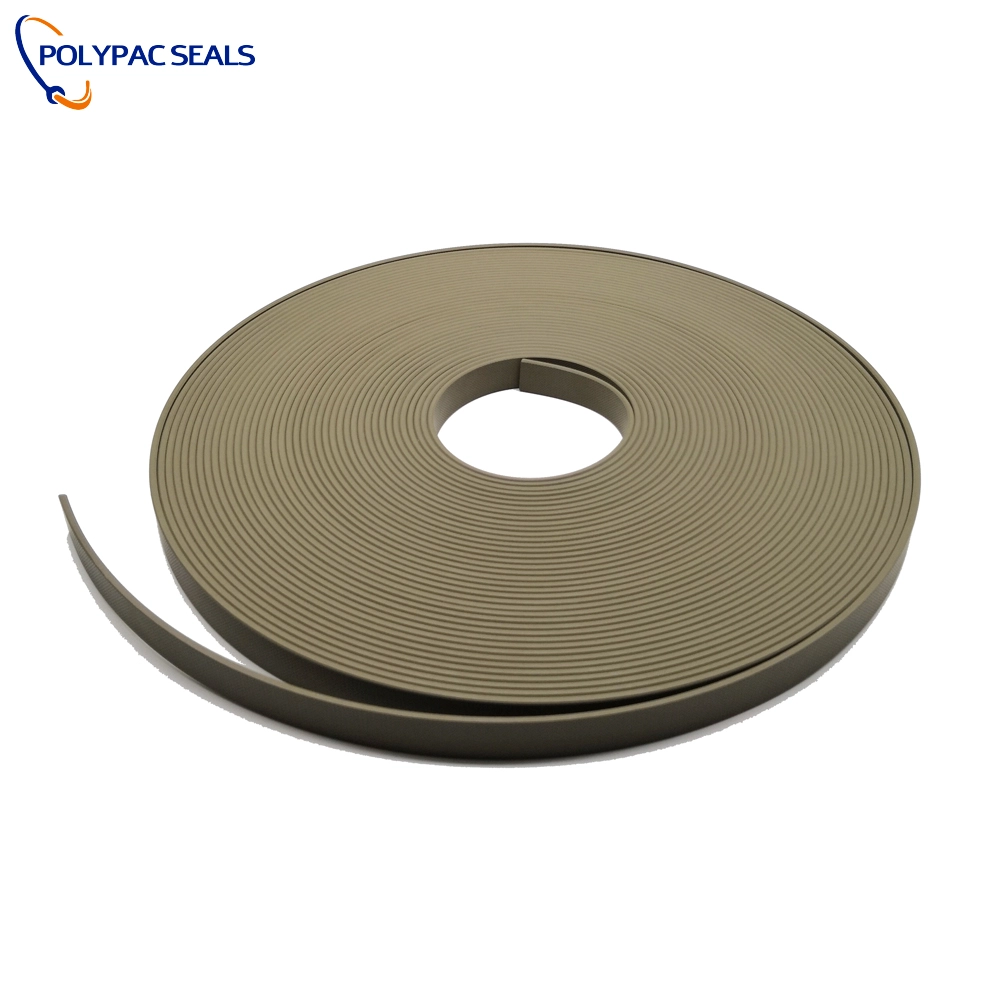
A split wear ring (also known as a split guide ring or split bearing ring) is a radially segmented polymer or composite ring designed to guide and support a piston or rod within a hydraulic or pneumatic cylinder. Unlike a solid, one-piece ring, it features a single cut (split) along its circumference, allowing it to be installed or removed without requiring complete disassembly of the cylinder or the need to slide it over the end of a piston or rod.
Its primary functions are:
-
Radial Load Support: It absorbs side loads and forces, preventing the metal piston or rod from contacting the metal cylinder bore.
-
Alignment & Guidance: It keeps the piston and rod centered, ensuring even load distribution and preventing uneven seal wear.
-
Wear Surface: It provides a low-friction, wear-resistant surface, sacrificing itself to protect the more expensive, precision-machined metal components.
The Critical Advantage: Why "Split"?
The split design is not a compromise; it's a targeted solution for a specific set of challenges:
-
Problem: Installing or replacing a solid wear ring on a large piston (e.g., in a mill cylinder or marine hydraulic system) requires the piston to be completely removed from the rod—a time-consuming, labor-intensive, and often crane-dependent process.
-
Solution: A split wear ring can be opened at its split, snapped into the piston groove in situ, and then closed. This allows for wear ring replacement during a standard seal change, without the massive undertaking of full piston disassembly.
-
Benefit: Drastically reduced maintenance time, lower labor costs, and minimized risk of damage during reassembly.
Key Materials for Split Wear Rings
The material choice dictates performance in terms of wear, friction, and load capacity. Polypac offers rings in advanced engineered polymers:
-
Filled PTFE (Teflon®): The gold standard for low friction and excellent chemical resistance. Fillers like bronze, glass, or carbon graphite enhance its load capacity and wear resistance.
-
Thermoplastic Polyesters (e.g., PETP): Materials like our engineered thermoplastics offer an outstanding balance of high mechanical strength, low moisture absorption, excellent dimensional stability, and good wear resistance. They are a robust and popular choice for heavy-duty applications.
-
Fabric-Reinforced Phenolics: Exceptionally high load-bearing capacity and resistance to deformation under extreme pressure, ideal for the most demanding applications like steel mill equipment.
Applications Where Split Wear Rings Are Essential
Split wear rings are the preferred choice in applications where size and serviceability are key factors:
-
Large-Bore Industrial Cylinders: In steel mills, paper machines, and hydraulic presses where piston diameters can exceed one meter.
-
Marine and Offshore Hydraulics: On deck machinery, winches, and steering gears where maintenance must often be performed in place.
-
Mining Equipment: On large shovels, crushers, and roof support cylinders where minimizing downtime is critical.
-
Heavy Mobile Machinery: Where field servicing of large cylinders is necessary.
Installation and Function: How They Work with the System
A split wear ring works in concert with other cylinder components:
-
In the Groove: It is installed into a dedicated groove on the piston (or sometimes in the cylinder gland for rod guidance).
-
Load Absorption: During cylinder operation, any side force is transferred from the piston to the wear ring, and from the ring to the cylinder bore.
-
Seal Protection: By maintaining perfect alignment and preventing metal-to-metal contact, the wear ring ensures that the adjacent piston seal or rod seal operates under ideal conditions, free from the skewing and uneven wear that lead to premature leakage.
The Polypac Advantage: Precision for Performance
While the concept is simple, execution is everything. A poorly made split wear ring can pop out of its groove or fail prematurely.
-
Precision Machining: We machine our split wear rings to exacting tolerances. The split is clean and precise, and the ring's geometry ensures a secure fit in the groove without excessive play.
-
Material Consistency: Our advanced polymers are formulated and processed for consistent density and mechanical properties, ensuring predictable performance and wear life.
-
Engineering Support: We can help specify the correct material and clearance for your specific pressure, speed, and temperature conditions.
Conclusion
The split wear ring is a brilliant example of practical engineering—a component designed not just to work, but to make everything else work better and longer, while also simplifying maintenance. It protects critical metal surfaces, extends seal life, and enables efficient servicing of large, capital-intensive equipment.
In heavy industry, the ability to perform maintenance efficiently is as important as the performance of the components themselves. The split wear ring addresses both needs perfectly.
Designing a new large cylinder or planning a rebuild? Specify Polypac split wear rings for a combination of superior performance and unmatched serviceability. Contact our engineering team for application support.


Products
When should I use a spring-energized seal instead of a standard elastomeric seal?
How important is surface finish on the metal parts that contact the seal?
How do I choose the right material for my sealing application?
What is the difference between NBR and FKM materials?
What is the purpose of the metal spring in a rotary shaft seal?
Stay Updated with Industry Insights
Subscribe to our articles and receive the latest news, expert guidance, and technical updates directly in your E-mail.
Rest assured that your privacy is important to us, and all information provided will be handled with the utmost confidentiality.
Polypac is a trusted global supplier of high-performance sealing solutions, providing OEM & ODM services for industries worldwide.
E-mail:
Phone/WhatsApp:
© 2025 Polypac Seals. All Rights Reserved.
dms
DMS
DMS