












Straight Cylinder Seals: The Complete System Guide for Hydraulic & Pneumatic Cylinders | Polypac
Straight Cylinder Seals: The Complete Sealing System for Reliable Linear Motion
The hydraulic or pneumatic cylinder is a masterpiece of linear force generation, found everywhere from industrial robots to construction giants. Its reliability and efficiency, however, depend entirely on an integrated system of components working in perfect harmony: the straight cylinder seals. This is not a single part, but a carefully engineered sealing system designed to contain pressure, exclude contamination, and ensure smooth, precise motion over millions of cycles. Understanding this system is key to maximizing performance, preventing failure, and reducing costly downtime.
At Polypac, with our ISO 9001 & IATF 16949 certified specialization in sealing solutions for demanding conditions, we engineer and supply complete straight cylinder sealing systems. This guide provides a comprehensive overview of each component's role and how they combine to form the backbone of cylinder reliability.
What is a Straight Cylinder Sealing System?
A straight cylinder sealing system refers to the assembly of specialized seals and wear components installed in a typical single-rod, linear hydraulic or pneumatic cylinder. Each component has a distinct, critical function, and together they manage fluid dynamics, mechanical loads, and environmental protection.
The system's objectives are:
-
Contain Fluid & Pressure: Prevent internal and external leakage to maintain force and efficiency.
-
Exclude Contaminants: Keep abrasive particles out to protect internal components.
-
Manage Friction & Wear: Ensure smooth movement and protect metal surfaces.
-
Maintain Alignment: Keep the piston and rod centered for even seal loading and long life.
The Components of a Straight Cylinder Sealing System
1. Rod Seals (The Primary Pressure Seal)
-
Function: The most critical seal in the cylinder. It is located in the cylinder head and has the dual role of containing system pressure as the rod retracts and controlling a thin film of oil on the rod for lubrication.
-
Consequences of Failure: External hydraulic fluid leakage, loss of system pressure, and inefficient operation.
-
Common Types: Single-acting lip seals, double-acting symmetrical seals, U-cups, and advanced polyurethane or PTFE composite seals.
2. Wiper Seals (Scraper Seals / Dust Seals)
-
Function: The first line of defense. Mounted on the external side of the cylinder head, its job is to scrape dirt, mud, ice, and other contaminants from the rod surface as it retracts, preventing them from entering the cylinder.
-
Consequences of Failure: Abrasive contamination enters, scoring the rod and destroying the rod seal. This is a leading cause of cylinder failure.
-
Common Types: Single-lipped wipers, double-lipped wiper/scrapers, and heavy-duty metal-inserted scrapers for extreme conditions.
3. Piston Seals
-
Function: Installed on the piston, these seals separate the two pressure chambers (cap end and rod end) of a double-acting cylinder. They prevent internal leakage across the piston, ensuring that hydraulic force is efficiently converted into linear motion.
-
Consequences of Failure: Internal leakage leads to "cylinder creep" (uncontrolled movement under load), loss of force, and poor positional control.
-
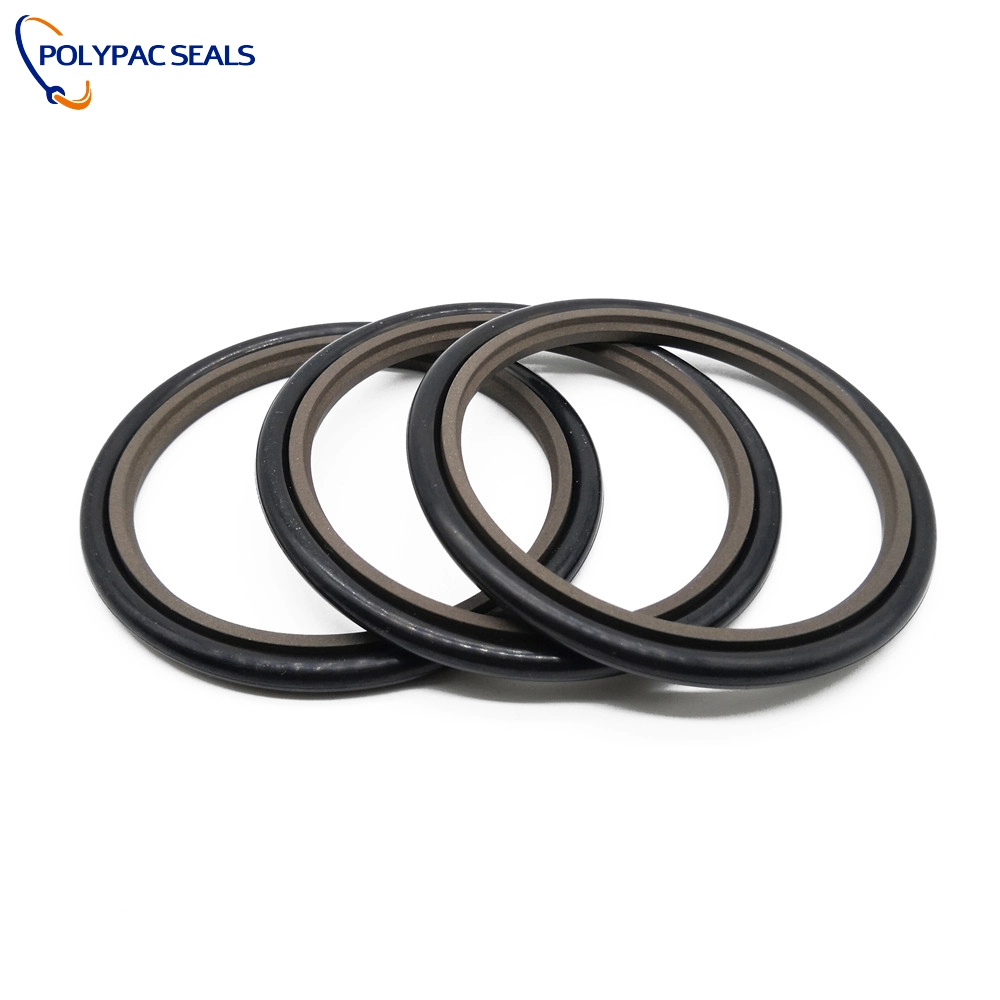
Common Types: Bidirectional seals like symmetrical U-cups, double-acting piston rings, and Glyd rings (PTFE-based seals).
4. Guide Rings / Wear Bands (Not Seals, But Critical)
-
Function: These are low-friction bearing components, typically made from engineered plastics like filled PTFE or polyamide. They are installed on the piston and sometimes in the rod gland.
-
Absorb radial side loads, preventing metal-to-metal contact.
-
Center and guide the piston and rod, ensuring perfect alignment.
-
Protect the seals from uneven, off-center wear.
-
-
Consequences of Omission: Misalignment causes rapid, asymmetric seal wear, scoring of the cylinder tube and rod, and ultimately seal blow-out or a seized cylinder.
5. Static Seals (O-Rings, Gaskets)
-
Function: Seal the static interfaces between non-moving parts, such as between the cylinder head/tube, end cap/tube, and port connections.
-
Common Materials: NBR, FKM, or EPDM O-rings and gaskets, selected for fluid and temperature compatibility.
The Polypac Advantage: A Systems Approach to Sealing
We don't just sell individual seals; we provide optimized sealing systems.
-
Component Compatibility: We ensure all components in a system—the wiper, rod seal, guide ring, and piston seal—are designed to work together. The hardness of the guide ring, the lip angle of the rod seal, and the aggressiveness of the wiper are all harmonized.
-
Material Science Expertise: We select advanced materials for each role: ultra-tough polyurethane for wipers and rod seals in abrasive environments, low-friction PTFE composites for guide rings and high-speed pistons, and chemical-resistant FKM for static seals in aggressive fluids.
-
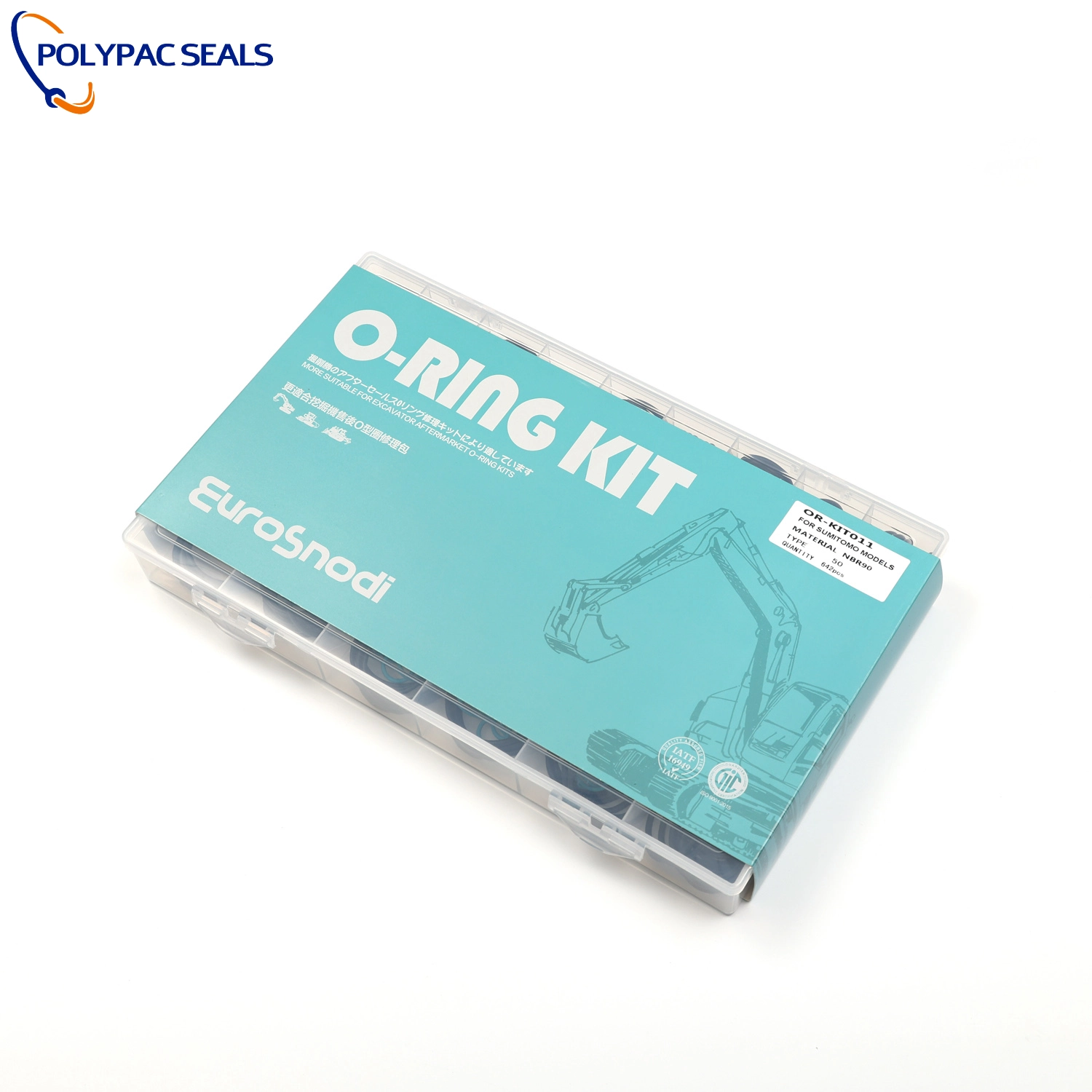
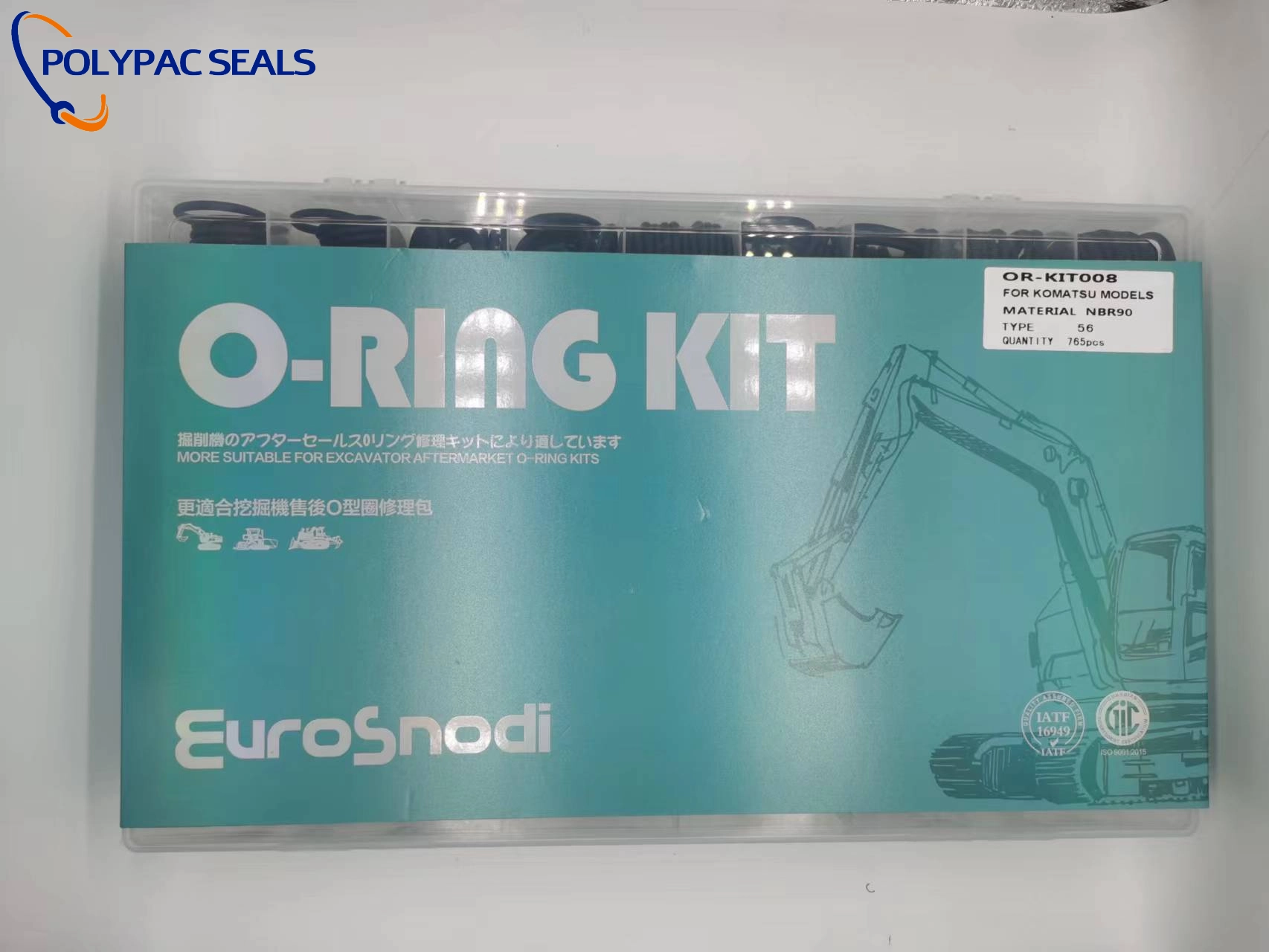
Complete Sealing Kits: For cylinder repair and maintenance, we offer comprehensive kits that include every seal, O-ring, wiper, and wear band needed. This guarantees compatibility, simplifies procurement, and ensures a successful rebuild.
Common Failure Modes and System Thinking
Failure is rarely isolated. A systems view helps diagnose root causes:
-
Failed Rod Seal? Check the wiper seal first—contamination ingress is the top killer of rod seals.
-
Excessive Leakage & Wear? Inspect the guide rings. Worn or missing guide rings cause misalignment, leading to uneven seal wear and leakage.
-
Cylinder Creep? The likely culprit is a worn piston seal allowing internal bypass.


Products
Can I reuse a seal?
How important is surface finish on the metal parts that contact the seal?
When should I use a spring-energized seal instead of a standard elastomeric seal?
Why did my O-ring fail prematurely?
What is the difference between a static seal and a dynamic seal?

Stay Updated with Industry Insights
Subscribe to our articles and receive the latest news, expert guidance, and technical updates directly in your E-mail.
Rest assured that your privacy is important to us, and all information provided will be handled with the utmost confidentiality.
Polypac is a trusted global supplier of high-performance sealing solutions, providing OEM & ODM services for industries worldwide.
E-mail:
Phone/WhatsApp:
© 2025 Polypac Seals. All Rights Reserved.
dms
DMS
DMS