












The Definitive Guide to O-Ring Replacement: Master Leak-Free Seals by 2026
A comprehensive 'Skyscraper' guide to O-ring replacement for professionals and DIYers. Covers failure analysis, AS568 sizing, material selection (Nitrile vs. Viton vs. EPDM), installation best practices, and troubleshooting post-installation leaks, backed by industry standards like SAE ARP5316.
Introduction: The Critical Role of O-Rings in Sealing
Although they appear simple, O-rings are the unsung heroes of modern machinery. Defined as a torus (doughnut-shaped) mechanical gasket, an O-ring sits in a groove and is compressed during assembly to create a seal at the interface. From massive industrial hydraulic systems to the faucet in your kitchen, these components ensure system integrity, efficiency, and safety.
However, even the most robust seals degrade over time. Neglecting o-ring maintenance tips can lead to catastrophic leaks, environmental hazards, and costly downtime. This definitive guide moves beyond surface-level advice, offering a deep dive into the engineering principles of sealing, how to replace o-rings correctly, and the critical standards that govern their selection and storage.
Recognizing the Need: Signs Your O-Ring Needs Replacement
Identifying when a seal has reached the end of its service life is the first step in leak prevention. According to the industry-standard Parker O-Ring Handbook (ORD 5700), failure analysis is crucial for preventing recurrence. Look for these signs of o-ring failure:
· Compression Set: The O-ring appears flattened on the sides that were under load, losing its round cross-section. This permanent deformation prevents the seal from rebounding to fill the gap.
· Extrusion and Nibbling: The seal edges look chewed, chipped, or frilly. This often occurs in high-pressure dynamic applications where the O-ring is forced into the clearance gap.
· Hardening (Embrittlement): The material feels brittle or cracks when bent, often due to high-temperature exposure or oxidative degradation.
· Chemical Attack: The O-ring appears swollen, blistered, or spongy. This indicates the material is incompatible with the system fluid.
· Explosive Decompression: In high-pressure gas applications, you may see surface pits or pocks caused by gas trapped inside the elastomer expanding rapidly.
Before You Begin: Your Ultimate O-Ring Replacement Checklist
Preparation is the difference between a quick repair and a damaged system. Follow this protocol:
1. System Depressurization & Safety: Never attempt to service a pressurized system. Lockout/Tagout (LOTO) power sources and depressurize hydraulics or pneumatics completely.
2. Identifying the Old O-Ring: Do not rely solely on measuring the old ring, as it may be stretched or compressed. Instead, measure the groove dimensions or consult the equipment manual.
3. Tools & Materials:
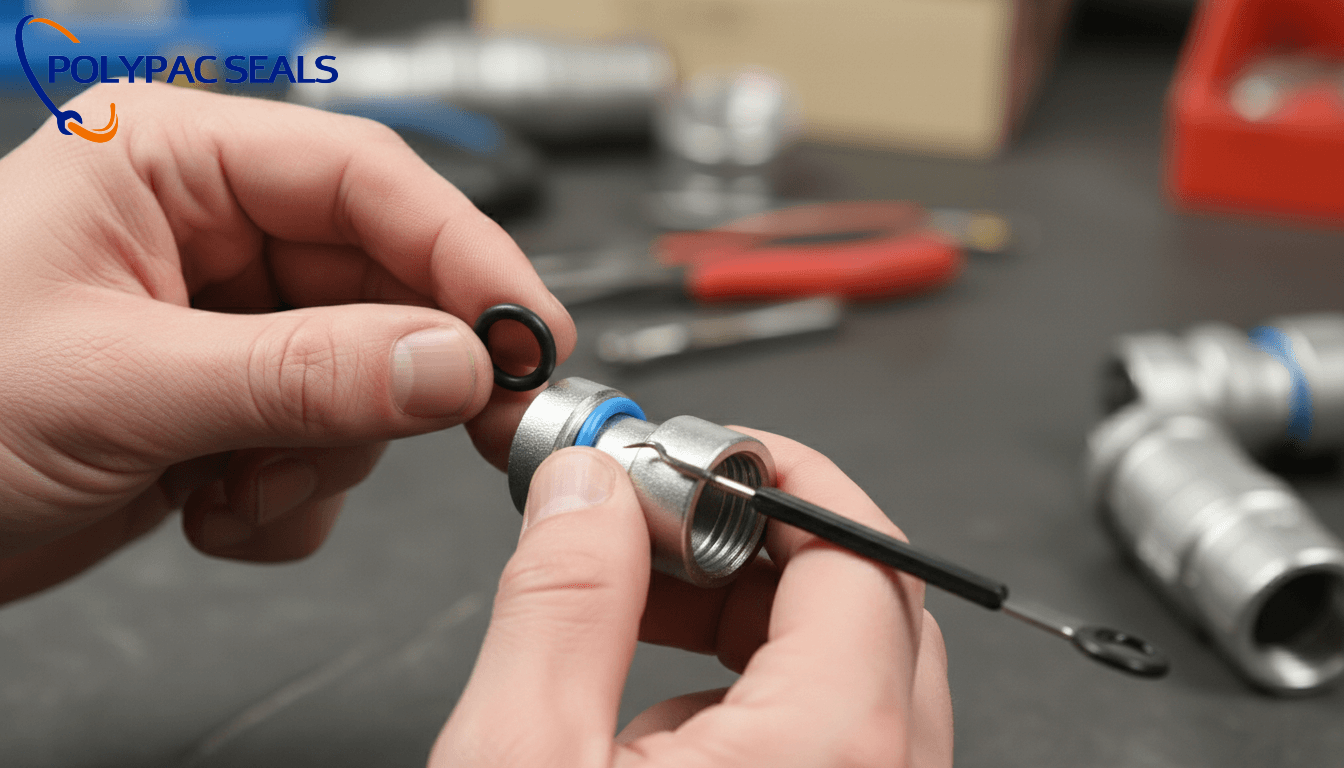
o Soft-faced O-ring pick set (brass or plastic) to avoid scratching metal surfaces.
o Calipers for precise measurement.
o Lint-free cloths.
o Compatible lubricant (see Installation section).
4. Work Area: Ensure the environment is clean. Even microscopic grit can compromise a high-pressure seal.
Step-by-Step Guide: How to Properly Remove an O-Ring
Removing an O-ring requires finesse. A scratched groove provides a path for fluid to bypass the seal, rendering even a new O-ring useless.
1. Access the Housing: Disassemble the component carefully. Keep fasteners organized.
2. Extract the Seal: Using your non-marring pick tool, hook the O-ring and lift it out of the groove. Avoid using metal screwdrivers, which can easily gouge the gland.
3. Inspect the Groove: Once the ring is removed, clean the groove with a lint-free cloth. Inspect for burrs, corrosion, or scratches. If the groove is damaged, the housing may need machining or replacement before a new seal can be installed.
Choosing the Perfect Replacement O-Ring: Beyond Size & Material
Successful replacement relies on o-ring material selection and correct o-ring sizing. Using a "close enough" seal is a recipe for failure.
Size & Fit (AS568 Standard)
In the United States, the AS568 standard (Aerospace Standard) maintained by the Society of Automotive Engineers (SAE) is the universal sizing chart. An O-ring is defined by two dimensions:
· Inside Diameter (ID)
· Cross-Section (CS) (Thickness)
Ensure you measure the CS correctly; a slight variance (e.g., 0.070" vs 0.103") significantly affects compression.
Material Compatibility
Select a material that can withstand your specific operating environment. Referencing data from chemical compatibility guides:
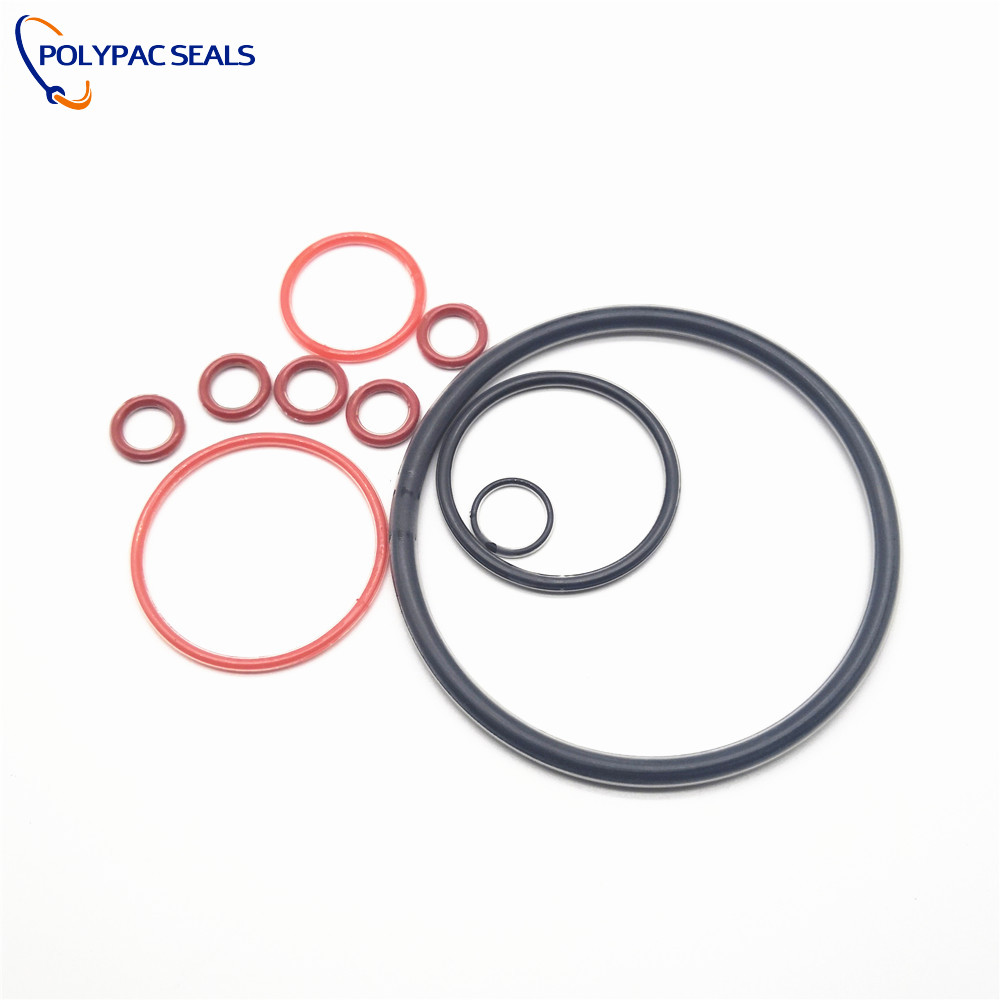
· Nitrile (Buna-N/NBR): The workhorse of the industry. Excellent resistance to petroleum-based oils and fuels. Poor resistance to ozone, UV light, and weathering.
· Viton (FKM): Superior resistance to high temperatures (up to 400°F/204°C) and harsh chemicals. Ideal for engines and aerospace.
· EPDM: Exceptional for hot water, steam, and brake fluids. Critical Warning: EPDM degrades rapidly if exposed to petroleum oils or fuels.
· Silicone: Great for temperature extremes (high and low) and food-grade applications, but has poor tear strength and is not recommended for dynamic sealing.
Durometer (Hardness)
Measured on the Shore A scale, hardness determines resistance to extrusion. Standard O-rings are typically 70 Durometer. For high-pressure systems (>1500 PSI), upgrade to 90 Durometer to prevent the O-ring from extruding into the clearance gap.
Flawless Installation: Techniques to Avoid Common O-Ring Mistakes
This o-ring installation guide ensures your selected seal performs as designed.
1. Thorough Cleaning: Debris is the enemy. Clean the groove and mating surfaces with a compatible solvent.
2. Lubricating O-Rings: Dry installation causes abrasion and twisting. Apply a thin film of lubricant. Crucial: The lubricant must be compatible with the O-ring. Use silicone grease for EPDM and Nitrile, but never use silicone grease on Silicone O-rings (like dissolves like).
3. Handling: Do not roll the O-ring down a shaft; this induces a spiral failure mode. Stretch it gently just enough to pass over threads or shoulders. If passing over sharp threads, use a protective sleeve or tape.
4. Seating: Ensure the O-ring sits naturally in the groove without twists. A twisted O-ring will leak immediately.
Post-Replacement Checks & Troubleshooting: What If It Still Leaks?
Even with a new seal, issues can arise. Effective o-ring troubleshooting involves systematic checking:
· Visual Leak Test: Pressurize the system slowly and check for drips.
· Soap Bubble Test: For gas systems, apply a soapy water solution; bubbles indicate a leak.
Common Post-Installation Issues:
· Immediate Leakage: Often caused by a twisted O-ring, wrong size (CS too small), or a cut sustained during installation over sharp threads.
· Seeping: Could indicate a damaged groove surface or insufficient compression.
Preventing O-ring leaks long-term requires addressing the root cause, not just swapping parts. If a seal fails repeatedly, evaluate if the operating temperature or pressure exceeds the design limits.
Extending O-Ring Lifespan: Maintenance & Storage Best Practices
Proper storage is vital. According to SAE ARP5316 (Aerospace Recommended Practice), elastomers have a defined shelf life based on their material properties:
· 15 Years: Nitrile (NBR), HNBR.
· Unlimited: Silicone, Viton (FKM), EPDM.
Store spares in relaxed conditions (no tension/hanging), away from UV light, ozone (electric motors), and extreme heat. For systems in operation, establish a regular inspection schedule to catch common o-ring applications failures before they become critical.
O-Rings in Action: Specific Application Considerations
· Hydraulic Systems: High pressure demands 90 durometer Nitrile or Viton seals. Backup rings are often required to prevent extrusion.
· Faucets & Plumbing: EPDM is the standard here due to its chloramine resistance and flexibility in water. Standard Nitrile often hardens in hot water applications.
· Automotive: Fuel injectors require Viton to resist ethanol blends and engine heat. Using general-purpose rubber here will lead to dangerous fuel leaks.
· Pressure Washers: Frequent disassembly of quick-connect fittings requires hard (90 durometer) O-rings to resist abrasion.
When to Call a Professional: DIY vs. Expert O-Ring Replacement
While many replacements are DIY-friendly, recognize your limits. Complex hydraulic pumps, high-pressure gas cylinders, or aerospace components often require specialized tooling and certification. If incorrect assembly poses a safety risk or could void a warranty, professional service is mandatory.
Frequently Asked Questions
How often should O-rings be replaced?
Replacement frequency varies by application. In critical aerospace or heavy industrial systems, replacement is often scheduled based on operating hours or cycles. For general maintenance, replace O-rings whenever the equipment is disassembled or if inspection reveals flattening (compression set) or cracking.
What are the most common O-ring materials and their uses?
The "Big Three" are Nitrile (Buna-N) for general oil/fuel use, EPDM for water/steam/brake fluid, and Viton (FKM) for high heat and aggressive chemicals. Choosing the wrong one is the most common cause of chemical failure.
Can I use any lubricant for O-rings?
No. You must match the lubricant to the O-ring material. Petroleum jelly (Vaseline) damages EPDM and natural rubber. Silicone grease is generally safe for Nitrile and EPDM but will damage Silicone O-rings. When in doubt, use the system fluid itself (e.g., hydraulic fluid) as a lubricant.
How do I measure an O-ring for replacement?
Use calipers to measure the Inside Diameter (ID) and the Cross-Section (CS) (thickness). Do not measure the Outside Diameter (OD) as the primary reference, as ID and CS are the standard defining dimensions in the AS568 system.
What happens if I install the wrong size O-ring?
An O-ring with a cross-section that is too thin will not compress enough to seal, causing immediate leaks. One that is too thick will be pinched or extruded, leading to premature physical damage. An incorrect ID can cause the ring to stretch excessively (thinning it out) or buckle in the groove.
Why do O-rings fail prematurely?
Premature failure is usually due to improper application: wrong material for the chemical environment, excessive heat causing hardening, or high pressure causing extrusion. Poor installation practices, such as nicking the seal or failing to lubricate, also cause early failure.
What tools are essential for O-ring replacement?
You need a non-marring pick set (plastic or brass) to remove old seals without scratching the metal groove, calipers for sizing, lint-free rags, and the correct lubricant.
How can I prevent O-ring leaks after replacement?
Ensure the groove is perfectly clean and free of scratches. lubricate the new O-ring adequately, do not twist it during installation, and double-check that you are using the correct size and material for the specific pressure and fluid.


Products
Can I reuse a seal?
How do I choose the right material for my sealing application?
Why did my O-ring fail prematurely?
What is the difference between a static seal and a dynamic seal?
What is the difference between NBR and FKM materials?
Stay Updated with Industry Insights
Subscribe to our articles and receive the latest news, expert guidance, and technical updates directly in your E-mail.
Rest assured that your privacy is important to us, and all information provided will be handled with the utmost confidentiality.

Polypac is a trusted global supplier of high-performance sealing solutions, providing OEM & ODM services for industries worldwide.
E-mail:
Phone/WhatsApp:
© 2025 Polypac Seals. All Rights Reserved.
dms
DMS
DMS