












How to Select the Perfect Hydraulic Rotary Seal: A Data-Driven Decision Matrix
A comprehensive guide for engineers on selecting hydraulic rotary seals using the S.T.A.M.P. matrix. Covers PV factor calculation, material compatibility, and hardware specifications for 2026.
Selecting the correct hydraulic rotary seals is often the difference between a high-efficiency system and catastrophic machine failure. Unlike linear components, rotary interfaces generate continuous frictional heat that degrades standard elastomers rapidly.
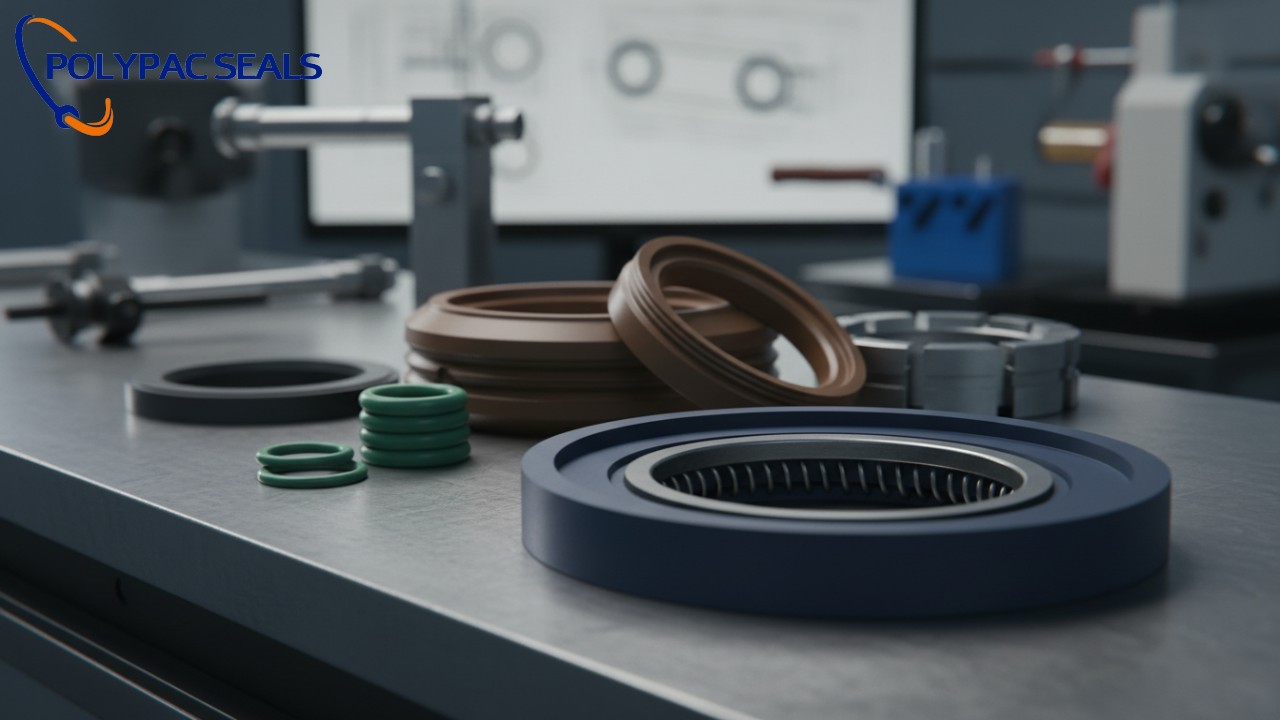
At Polypac Industrial Technology, we have spent over 15 years—since our founding in 2008—perfecting dynamic sealing solutions. From our 10,000-square-meter facility, we engineer custom-filled PTFE and polymer seals designed to withstand these rigorous demands. This guide condenses that expertise into a practical, data-driven selection framework.
Quick Summary: Key Takeaways for Engineers
What defines a successful rotary seal application? Success relies on balancing heat generation (PV factor) with material thermal stability and hardware surface finish.
- Heat Management: Rotary sealing requires managing unique frictional heat generation that static seals do not face.
- The Critical Metric: The Pressure-Velocity (PV) value is the single most critical data point for selection.
- Hardware Specs: Shaft hardness (typically >45 HRC) and surface finish (Ra 0.2-0.8 µm) dictate seal longevity.
- Material Balance: Selection must balance fluid compatibility with thermal expansion rates.
What is a hydraulic rotary seal, and why is selection critical?
A hydraulic rotary seal is a dynamic component designed to retain pressurized fluid and exclude contaminants within a system featuring a rotating shaft or bore. While O-rings may suffice for static needs, rotary seals must withstand constant shear stress and the "PV effect" (Pressure x Velocity).
Why standard selection methods fail: Engineers often treat rotary applications like linear ones, ignoring the localized heat spike at the sealing lip. According to Cleveland State University, tribology—the study of friction, wear, and lubrication—is critical because incorrect lubrication regimes lead to immediate seal scoring and leakage. Proper selection prevents leakage, shaft damage, and fluid contamination.
The Data-Driven Decision Matrix: The S.T.A.M.P. Method
To simplify rotary shaft seal selection, we utilize the S.T.A.M.P. acronym. This framework ensures no critical variable is overlooked during the design phase.
- S - Speed (Velocity): Calculate the surface speed (m/s) relative to the shaft diameter to determine friction limits. Higher speeds require materials with lower coefficients of friction.
- T - Temperature: Analyze both ambient and "under-lip" temperatures. Friction can raise the contact point temperature by 20°C above the bulk fluid temperature.
- A - Application: Define the motion type (continuous vs. oscillating) and external environment (dust, mud, water).
- M - Media: Verify chemical compatibility with hydraulic fluids (mineral oils, biodegradable esters, or fire-resistant fluids).
- P - Pressure: Identify system pressure spikes and ensure the seal profile has adequate extrusion resistance.
Calculating the PV Limit: The Math Behind the Seal
What is the PV factor? The PV factor is the product of operating pressure (P) and surface velocity (V), representing the energy intensity at the sealing interface.
PV Factor Calculation Formula:
$$PV = Pressure (Bar/MPa) \times Velocity (m/s)$$
PV factor calculation is essential because every material has a thermal limit. If your application's PV value exceeds the material's capability, the seal will experience rapid thermal degradation and lip hardening.
- Standard Zones: Low PV values allow for standard NBR or PU seals.
- High-Performance Zones: When PV values rise, specialized filled-PTFE or custom polymer blends are required to dissipate heat.
- Predictive Modeling: Polypac's engineering team uses advanced modeling to calculate safety margins for high-load applications, ensuring dynamic sealing solutions hold up under stress.
Hardware Interface: Shaft Hardness and Surface Finish
The seal is only as good as the surface it runs on. A shaft that is too soft or too rough will destroy even the most advanced seal materials.
- Hardness: Shafts typically require a minimum hardness of 45-60 HRC. This prevents the seal lip (especially glass-filled PTFE) from cutting grooves into the metal.
- Surface Finish (Roughness): You must hit the "Goldilocks" zone. A surface finish of Ra 0.2 to 0.8 µm holds enough oil for lubrication without causing abrasion. Research by Kalsi Engineering highlights that spiral lead (helical marks from machining) on a shaft can actively pump fluid out of the system, causing mysterious leaks.
- Runout: Manage Total Indicated Runout (TIR) to prevent gap formation.
Material Selection Guide: Matching Compound to Condition
Choosing the right compound is the core of our seal material compatibility chart. Polypac specializes in developing customized sealing solutions, including advanced filled-PTFE grades.
- NBR (Nitrile):
- Best for: Cost-effective standard applications.
- Limits: Low pressure, mineral oils, -30°C to +100°C.
- FKM (Viton):
- Best for: High heat (>200°C) and aggressive chemicals.
- Limits: Higher friction coefficient than PTFE.
- PTFE (Teflon):
- Best for: High-speed, dry-running, or high-pressure rotary applications.
- Polypac Expertise: Since 2008, we have manufactured bronze-filled, carbon-filled, and MoS₂-filled PTFE for superior wear resistance.
- Polyurethane (H-PU):
- Best for: Heavy-duty construction equipment requiring hydrolysis resistance.
2026 Trends: The Future of Rotary Sealing
As we move toward 2026, the industry is shifting toward smarter, more sustainable components.
- Smart Seals: Integration of embedded sensors to monitor wear and temperature in real time.
- Eco-Friendly Materials: A shift toward bio-based polymers compatible with biodegradable hydraulic fluids.
- 3D Printed Prototypes: Rapid manufacturing of custom rotary profiles for testing before mass production.
- Surface Texturing: Micro-dimpling seal lips to improve hydrodynamic lubrication layers.
Expert Tips: Common Mistakes to Avoid
Even with the right data, installation and maintenance errors can lead to failure.
- Ignoring Installation Tools: Failure to use a mounting sleeve often damages the sealing lip on shaft splines or keyways before operation begins.
- Overlooking 'Under-Lip' Temperature: Relying solely on bulk fluid temperature instead of the localized heat at the contact point is a fatal error.
- Reusing Seals: Never reinstall a rotary seal once removed; microscopic deformation renders it compromised.
- Neglecting Storage: Storing seals in sunlight (UV) or near ozone sources (electric motors) degrades elastomers before use.
Frequently Asked Questions (FAQ)
How do I calculate the PV limit for a hydraulic rotary seal?
Multiply the system pressure (in bar or MPa) by the shaft surface velocity (in m/s). Compare this result against the material's specific PV limit. If the calculated PV exceeds the limit, upgrade to high-performance PTFE or specialized composites.
What is the difference between rotary and reciprocating hydraulic seals?
Rotary seals handle continuous friction and heat concentration at a single band on the shaft, whereas reciprocating seals distribute wear over a longer stroke. Rotary seals require specific lip geometries to pump lubricant back toward the fluid side.
Which material is best for high-speed rotary hydraulic seals?
Filled PTFE is typically the best choice for high speeds due to its extremely low coefficient of friction. While FKM handles heat well, it creates more friction. Avoid standard NBR for very high speeds due to heat generation.
How does shaft surface finish affect rotary seal life?
The ideal range is Ra 0.2 to 0.8 µm. A surface that is too rough acts like a file, while a surface that is too smooth cannot retain the microscopic oil film needed for lubrication, leading to dry running.
What causes premature failure in hydraulic rotary seals?
The most common causes are excessive heat generation (under-lip temperature), incompatible fluids causing swelling, improper installation damaging the lip, or shaft runout exceeding the seal's flexibility.
Conclusion & Call to Action
Selecting the perfect hydraulic rotary seal is a delicate balance of tribology, material science, and precise hardware specifications. By using the S.T.A.M.P. matrix and calculating PV limits, engineers can predict longevity and prevent costly downtime. At Polypac, our collaborations with universities and research institutions ensure our filled-PTFE and custom rubber seals meet the highest industry standards.
Contact Polypac Industrial Technology today to discuss your specific needs and request a free consultation.


Products
Why did my O-ring fail prematurely?
When should I use a spring-energized seal instead of a standard elastomeric seal?
What is the purpose of the metal spring in a rotary shaft seal?
How can I prevent seal damage during installation?
What is the difference between a static seal and a dynamic seal?
Stay Updated with Industry Insights
Subscribe to our articles and receive the latest news, expert guidance, and technical updates directly in your E-mail.
Rest assured that your privacy is important to us, and all information provided will be handled with the utmost confidentiality.

Polypac is a trusted global supplier of high-performance sealing solutions, providing OEM & ODM services for industries worldwide.
E-mail:
Phone/WhatsApp:
© 2025 Polypac Seals. All Rights Reserved.
dms
DMS
DMS