












How to ensure piston guide rings match your cylinder specs?
1. What are the primary functions of piston guide rings in hydraulic and pneumatic cylinders?
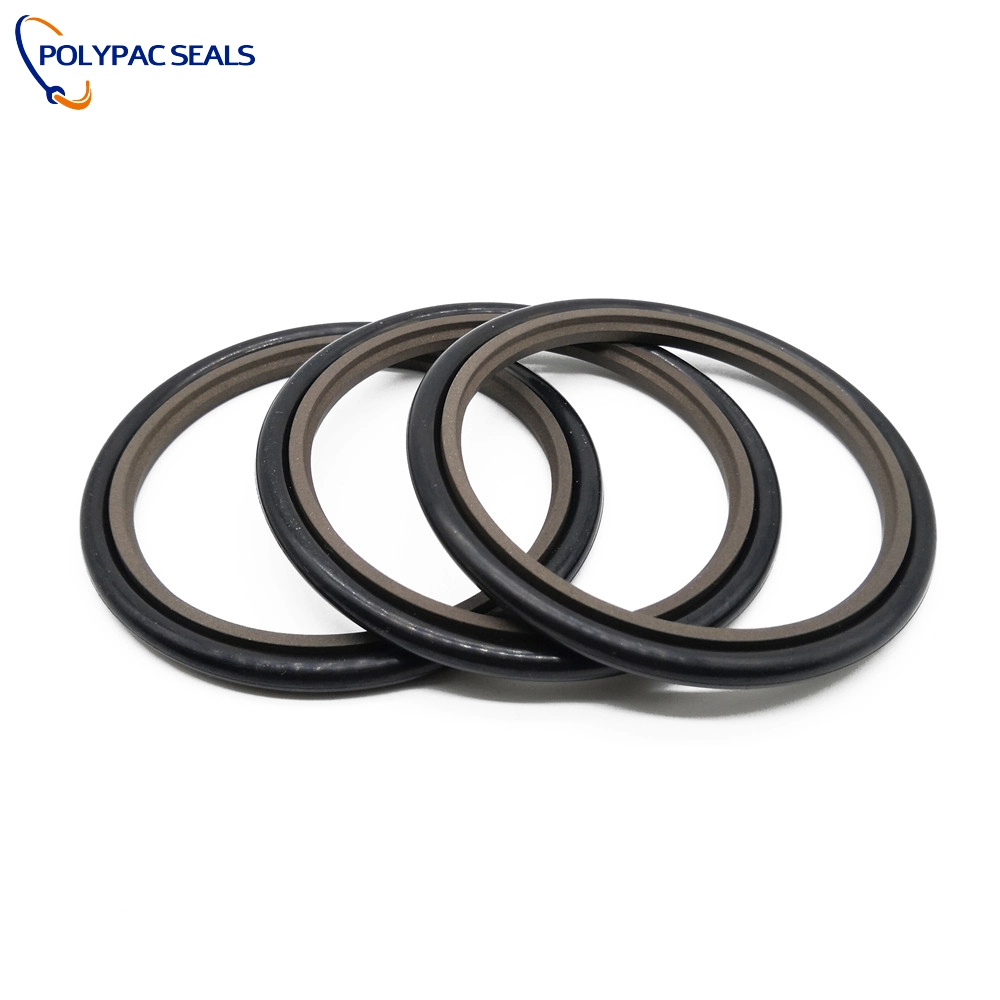
Piston guide rings, also known as wear rings or bearing rings, serve several critical functions in hydraulic and pneumatic cylinders:
Prevent Metal-to-Metal Contact: They create a barrier between the piston and cylinder wall, eliminating direct contact and reducing wear and tear.
Guide Piston Movement: They ensure smooth and stable movement of the piston, maintaining concentricity within the cylinder.
Absorb Transverse Forces: They dissipate lateral forces, preventing misalignment and potential damage to the cylinder components.
Reduce Friction: By minimizing friction between moving parts, they enhance system efficiency and extend the service life of the cylinder.
Extend Cylinder Life: By reducing wear and maintaining proper alignment, guide rings significantly prolong the operational lifespan of hydraulic and pneumatic cylinders.
2. How do I select the appropriate piston guide ring material for my application?
Selecting the right material for a piston guide ring is crucial for optimal performance and longevity. Consider the following factors:
Operating Conditions: Assess the temperature range, pressure, and type of fluid or gas involved. For instance, PTFE (Teflon) guide rings offer excellent chemical resistance and low friction, making them suitable for a wide range of applications.
Load-Bearing Requirements: Determine the expected load and choose materials with appropriate load-bearing capacities. Composite materials like fabric-reinforced phenolic provide high load-bearing capabilities.
Environmental Factors: Consider exposure to corrosive substances, UV radiation, or extreme temperatures. Materials like bronze-filled PTFE are known for their resistance to various chemicals and high temperatures.
Lubrication Conditions: Evaluate whether the application is lubricated or dry-running. Materials with self-lubricating properties, such as graphite-filled PTFE, are ideal for dry-running applications.
Compatibility with Cylinder Materials: Ensure the guide ring material is compatible with the cylinder's material to prevent adverse reactions or excessive wear.
3. What are the key dimensional considerations when matching piston guide rings to cylinder specifications?
Accurate dimensional matching between piston guide rings and cylinder specifications is essential for optimal performance:
Bore and Rod Diameters: Measure the internal diameter of the cylinder bore and the external diameter of the piston rod to select guide rings with matching dimensions.
Clearance and Tolerances: Maintain appropriate radial and axial clearances to allow for thermal expansion and prevent binding. Refer to industry standards for recommended tolerances.
Guide Ring Width: The width should be sufficient to support the piston and absorb transverse forces without excessive deflection. A general guideline is that the wear ring width should be at least 1.5 times the expected maximum radial load deflection.
Chamfer and Groove Dimensions: Ensure that any chamfers or grooves on the guide ring align with corresponding features in the cylinder to facilitate proper installation and function.
4. How do I determine the correct installation method for piston guide rings?
Proper installation of piston guide rings is vital for their performance and longevity:
Orientation: Install the guide ring with the chamfered or slotted side facing the piston to reduce friction and facilitate lubrication.
Assembly Sequence: Follow the manufacturer's recommended assembly sequence to prevent damage during installation.
Lubrication: Apply appropriate lubrication to the guide ring and cylinder bore to minimize friction during initial operation.
Inspection: After installation, inspect for proper fit, alignment, and freedom of movement to ensure optimal performance.
5. What are the common causes of piston guide ring failure, and how can they be prevented?
Understanding common failure modes and preventive measures can enhance the reliability of piston guide rings:
Excessive Wear: Caused by inadequate lubrication, misalignment, or using materials unsuitable for the operating conditions. Prevent by ensuring proper lubrication, correct material selection, and regular maintenance.
Scuffing and Scoring: Occurs due to insufficient lubrication or high friction. Prevent by maintaining proper lubrication levels and selecting materials with low friction coefficients.
Deformation: Resulting from high transverse forces exceeding the guide ring's load-bearing capacity. Prevent by selecting guide rings with appropriate load ratings and ensuring correct installation.
Chemical Degradation: Caused by exposure to incompatible chemicals. Prevent by choosing materials compatible with the operating environment.
6. How can I ensure piston guide rings match my cylinder specifications?
To ensure compatibility between piston guide rings and cylinder specifications:
Consult Manufacturer Specifications: Refer to the cylinder and guide ring manufacturer's guidelines for recommended dimensions and materials.
Measure Accurately: Use precise measuring instruments to determine cylinder bore and rod diameters, as well as any grooves or chamfers.
Consider Operating Conditions: Account for factors such as temperature, pressure, and the type of fluid or gas involved to select appropriate materials.
Seek Expert Advice: If uncertain, consult with sealing technology experts or engineers to assist in selecting the correct guide ring for your application.
In conclusion, selecting and matching piston guide rings to cylinder specifications is a critical aspect of maintaining the efficiency and longevity of hydraulic and pneumatic systems. By carefully considering material properties, dimensional accuracy, installation methods, and potential failure modes, you can ensure optimal performance and reduce maintenance costs. For personalized assistance and to obtain a quote tailored to your specific needs, please contact us at sales2@dmsseals.com or visit our website at www.polypacseals.com.


Products
Why did my O-ring fail prematurely?
How can I prevent seal damage during installation?
What does "AS568" mean?
How important is surface finish on the metal parts that contact the seal?
Can I reuse a seal?
Stay Updated with Industry Insights
Subscribe to our articles and receive the latest news, expert guidance, and technical updates directly in your E-mail.
Rest assured that your privacy is important to us, and all information provided will be handled with the utmost confidentiality.
Polypac is a trusted global supplier of high-performance sealing solutions, providing OEM & ODM services for industries worldwide.
E-mail:
sales2@dmsseals.com
Phone/WhatsApp:
© 2025 Polypac Seals. All Rights Reserved.
dms
DMS
DMS