












Back-Up Ring Seal vs. O-Ring: Why Your High-Pressure Application Needs Both for Maximum Safety
Quick Summary: The Critical Link Between O-Rings and Backup Rings
A back-up ring seal is not an alternative to an O-ring; it is a structural reinforcement designed to prevent the O-ring from extruding into the clearance gap under high pressure. While O-rings seal the fluid, back-up rings seal the gap to support the primary seal.
For engineers and maintenance teams, understanding this synergy is critical. It is rarely an "either/or" choice—it is about how they work together to form a high-pressure sealing solution.
- The Core Problem: Standard O-rings deform and extrude into the clearance gap under high pressure (typically >1,500 PSI).
- The Solution: Back-up rings act as a rigid retaining wall, providing zero-clearance support.
- Key Benefit: Using both creates a "Composite Sealing System" that prevents catastrophic blowout and extends equipment life.
- Immediate Takeaway: If your system pressure exceeds 100 bar (1,500 PSI), you need a backup ring to ensure safety.
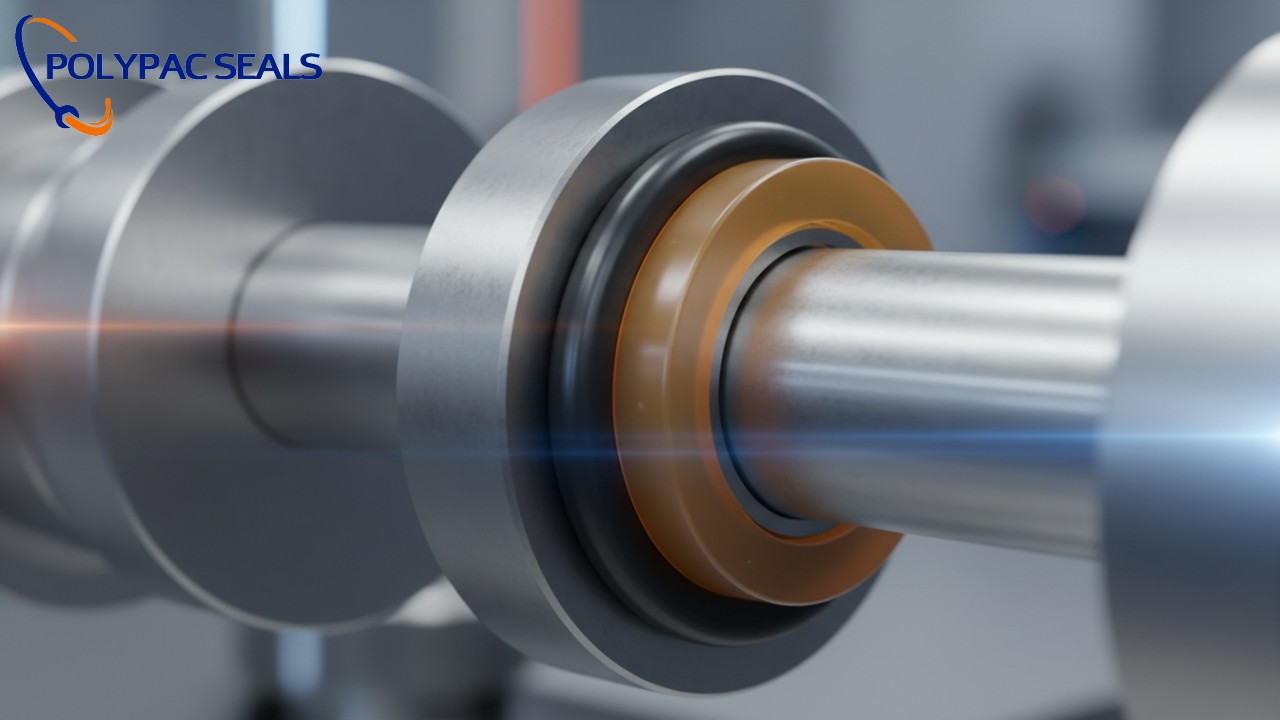
What is a backup ring seal, and how does it differ from an O-ring?
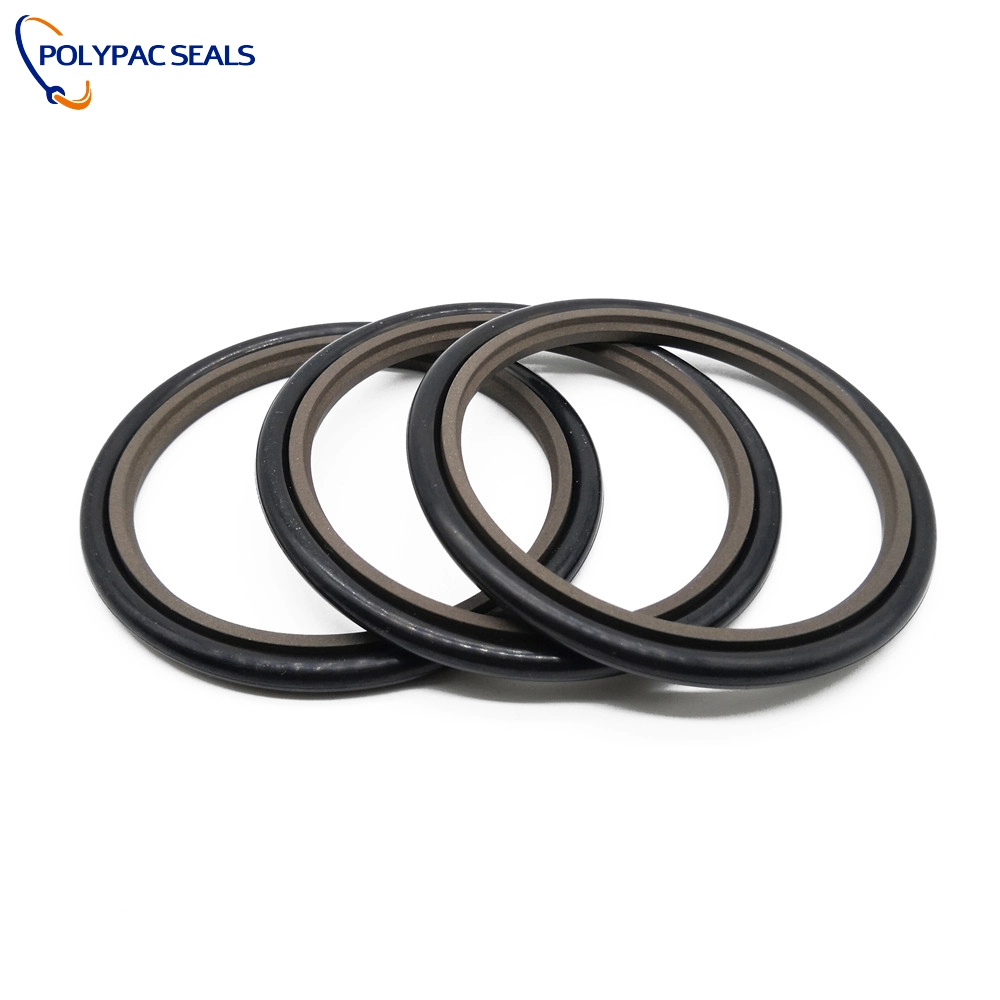
A back-up ring is a rigid, non-sealing ring used to hold an elastomeric seal in its correct shape and prevent it from extruding between mating metal parts. Unlike the O-ring, the back-up ring is not intended to block fluid passage itself.
To visualize the difference, imagine a dam. The O-ring is the water-tight clay core that stops the water, while the hydraulic cylinder backup ring is the concrete wall behind it that stops the clay from collapsing under the water's weight.
The Functional Distinction
- The O-Ring Role: Acts as the primary seal, blocking fluid or gas passage through elastic compression.
- The Back-Up Ring Role: Acts as a support element, closing the seal extrusion gap on the low-pressure side.
- Visual Difference: O-rings are typically round and soft (elastomeric); back-up rings are usually flat, rectangular, and made of harder materials like PTFE, PEEK, or hard rubber.
The Science of Seal Failure: Understanding "Extrusion Gap" Risks
Seal extrusion occurs when high system pressure forces the soft O-ring material into the microscopic clearance gap between the piston and cylinder, causing it to peel or "nibble" away. This is the leading cause of hydraulic seal failure in dynamic applications.
According to industry data cited by Global O-Ring and Seal, extrusion and nibbling become significant risks when system pressure exceeds the material's hardness rating or when clearance gaps are excessive due to wear or misalignment.
The Mechanics of Failure
- Nibbling and Shaving: As pressure spikes, the O-ring deforms. If the gap is too wide, the material shears off in thin slivers (nibbling).
- Pressure Threshold: Standard 70-durometer O-rings typically fail without support above 1,500 PSI (100 Bar). Adding a back-up ring can increase this threshold to over 3,000 PSI.
- Temperature Impact: Heat softens the elastomer. At 200°F, an O-ring might extrude at just 800 PSI without a back-up ring.
- Safety Cost: Extrusion leads to sudden pressure loss, hydraulic fluid contamination, and potential mechanical failure of the cylinder.
Back-Up Ring Configurations: Solid, Split, or Spiral?
Back-up rings are manufactured in three primary profiles—Solid (uncut), Split (scarf cut), and Spiral (turned)—each balancing ease of installation against extrusion resistance. Choosing the wrong configuration can lead to installation damage or gaps in support.
Selection Guide
- Solid (Uncut) Rings:
- Pros: Maximum extrusion resistance; no seams.
- Cons: Extremely difficult to install in closed grooves; usually requires a split housing design.
- Split (Scarf Cut) Rings:
- Pros: The industry standard. The angled cut allows the ring to open over a shaft or snap into a bore.
- Cons: A tiny gap exists at the cut, though the scarf angle minimizes this.
- Spiral (Turned) Rings:
- Pros: Multi-turn design (like a slinky) offers flexibility and minimizes the "gap" at the cut.
- Best For: Applications with significant temperature fluctuation where thermal expansion helps the spiral seal tighter.
Material Selection: Why PTFE Dominates the Back-Up Ring Market
Polytetrafluoroethylene (PTFE) is the dominant material for back-up rings due to its exceptionally low friction, chemical inertness, and ability to resist cold flow under load. While rubber back-ups exist, PTFE vs. NBR backup ring comparisons overwhelmingly favor PTFE for high-duty cycles.
At Polypac Industrial Technology, we have specialized in filled PTFE seal production since our founding in 2008. Our experience shows that virgin PTFE is often not enough for the most extreme pressures; reinforced composites are required.
Material Hierarchy
- Virgin PTFE (Teflon):
- The gold standard for low friction and broad chemical resistance.
- Limitation: Can creep (deform) under constant heavy loads.
- Filled PTFE (Glass/Carbon/Bronze):
- Polypac Specialty: We manufacture bronze-filled and glass-filled PTFE to increase compressive strength. These are essential for pressures exceeding 3,000 PSI.
- Hard Rubber (90 Durometer NBR/Viton):
- Used in lower-cost, static applications where a simple hardness differential is sufficient to prevent extrusion.
- PEEK:
- As noted by Fluorocarbon, PEEK offers superior mechanical strength compared to PTFE and is the preferred choice for structural components in ultra-high-pressure and high-temperature environments (up to 500°F).
Expert Installation Tips: Avoiding Common Mistakes
The most critical rule of installation is positioning: the back-up ring must always be installed on the low-pressure (downstream) side of the O-ring. Placing it on the pressure side renders it useless, as the O-ring will simply move away from it.
Installation Best Practices
- Uni-Directional Pressure: Install one back-up ring on the side opposite the pressure source.
- Double-Acting Systems: For cylinders where pressure shifts (extends and retracts), you must use two back-up rings, sandwiching the O-ring in the center.
- Groove Width Calculation: You cannot simply add a back-up ring to an existing standard groove. The gland width must be increased to accommodate the extra ring thickness plus the O-ring swell.
- Spiral Ring Caution: When installing spiral rings, ensure the turns do not overlap incorrectly, which can create a "step" that damages the O-ring.
Industry Gap Analysis: The Hidden ROI of Composite Sealing
Data suggests that adding a suitable backup ring can extend seal life by up to 300% in fluctuating pressure environments, providing a massive Return on Investment (ROI) relative to the part's low cost.
With Polypac's 10,000 square meter facility and advanced testing equipment, we have analyzed thousands of failed seals. The pattern is clear: systems that skipped the back-up ring to save pennies often incurred thousands of dollars in downtime.
- Cost vs. Risk: A back-up ring is a fraction of the cost of a system overhaul.
- Future-Proofing: Modern 2026+ regulatory standards increasingly demand zero-leakage systems for environmental safety. Composite sealing is the baseline for compliance.
- Custom Solutions: Polypac maintains cooperation with research institutions to develop custom backup profiles for non-standard groove dimensions, ensuring you aren't limited by catalog parts.
Conclusion
While O-rings provide the seal, back-up rings provide the structural integrity needed to survive high-pressure environments. It is not a question of a backup ring seal vs. an O-ring, but rather how to effectively pair them for maximum safety. Ensuring the correct material, such as filled PTFE or PEEK, and the correct profile match between your primary and secondary seals is vital for system reliability.
Contact Polypac Industrial Technology today to discuss your specific high-pressure sealing needs and leverage our decades of manufacturing expertise.
FAQ: Back-Up Rings & High-Pressure Safety
What is the primary purpose of a back-up ring? Its primary purpose is to prevent the O-ring (or primary seal) from extruding into the sealing gap between mating metal parts under high pressure.
At what pressure is a back-up ring required? Generally, back-up rings are recommended for pressures exceeding 1,500 PSI (100 Bar), though this depends on the clearance gap size and O-ring hardness.
Can I use a back-up ring without an O-ring? No, a back-up ring is not a sealing device itself. It typically has a split or hard surface that allows fluid to pass; it must be paired with an elastomeric seal.
Which side of the O-ring does the back-up ring go on? The back-up ring must be placed on the low-pressure (downstream) side of the O-ring to block it from being pushed into the gap.
Do I need one or two back-up rings? If pressure is uni-directional, you need one ring (on the low-pressure side). If pressure is bi-directional (double-acting), you need two rings, sandwiching the O-ring.
What is the difference between a split and a solid back-up ring? Solid rings offer superior extrusion resistance but are hard to install in closed grooves. Split (scarf-cut) rings are easier to stretch into place but have a slight seam.
What is the best material for back-up rings? PTFE (Teflon) is the most common due to its low friction and chemical resistance. For extreme pressures, PEEK or filled PTFE is used; for lower pressures, hard NBR rubber is used.
How do I calculate the groove width for a back-up ring? You must add the thickness of the back-up ring(s) to the standard O-ring groove width, ensuring there is enough room for the O-ring to swell without binding.


Products
What is the purpose of the metal spring in a rotary shaft seal?
What is the difference between NBR and FKM materials?
Can I reuse a seal?
How can I prevent seal damage during installation?
How important is surface finish on the metal parts that contact the seal?
Stay Updated with Industry Insights
Subscribe to our articles and receive the latest news, expert guidance, and technical updates directly in your E-mail.
Rest assured that your privacy is important to us, and all information provided will be handled with the utmost confidentiality.

Polypac is a trusted global supplier of high-performance sealing solutions, providing OEM & ODM services for industries worldwide.
E-mail:
sales2@dmsseals.com
Phone/WhatsApp:
© 2025 Polypac Seals. All Rights Reserved.
dms
DMS
DMS