











Piston Rod Seal Materials: PTFE vs NBR vs PU Comparison
Choosing the Right Seal Material for Piston Rods
and what this guide delivers
Engineers, maintenance managers and procurement specialists searching for piston rod seal material guidance need a clear, application-oriented comparison. This article explains how PTFE, NBR and PU behave in real hydraulic rod-seal duty: temperature limits, chemical compatibility, friction and leakage tendency, abrasion resistance, dynamic life, common failure modes and practical selection rules.
Key performance factors for piston rod seals
Piston rod seal performance is controlled by dynamic friction, extrusion resistance, wear (abrasion), chemical compatibility with hydraulic fluids, temperature tolerance, surface finish requirements, and installation/maintenance realities. Understanding trade-offs between these properties is the primary task when selecting between PTFE, NBR and PU for piston rod seal designs.
Material Profiles: PTFE, NBR and PU
PTFE — low friction, wide temperature window
Polytetrafluoroethylene (PTFE) is a fluoropolymer known for very low friction, excellent chemical inertness, and an exceptional temperature range (roughly −200°C to +260°C depending on grade). For piston rod seals, filled PTFE (bronze-, carbon-, graphite- or glass-filled) is commonly used to reduce cold flow, improve wear resistance and control friction. PTFE is ideal where low breakaway friction and minimal stick-slip are required, or where aggressive fluids/high temperatures are present.
NBR (Nitrile) — the cost-effective oil-resistant workhorse
NBR (nitrile rubber/Buna-N) is widely used in hydraulic sealing thanks to its excellent resistance to mineral oils and hydraulic fluids, good resilience, and relatively low cost. Typical working temperatures are approximately −40°C to +100°C (some special formulations extend this range). NBR provides good sealing contact with moderate friction but is less resistant to high temperatures, strong oxidizers, and some oils with aggressive additives or high aromatics content.
PU (Polyurethane) — abrasion-resistant and pressure-capable
Polyurethane (PU) elastomers offer excellent abrasion resistance, high tear strength, and good mechanical properties under high-pressure dynamic sealing. Typical temperature limits range from around −30°C to +80°C (some specialty polyurethanes reach higher). PU is often the best choice where rod abrasion (contaminants, rough finish) or extrusion under high pressure is the dominant failure mode.
Side-by-side Comparison: Practical Properties and Performance
Quick comparison table
| Property | PTFE (filled grades) | NBR (nitrile) | PU (polyurethane) |
|---|---|---|---|
| Typical temperature range | −200°C to +260°C (PTFE base) | −40°C to +100°C (standard) | −30°C to +80°C (standard) |
| Dynamic friction (typical) | Very low | Moderate | Moderate–high (depends on formulation) |
| Abrasion resistance | Poor (base PTFE) | Good | Excellent |
| Chemical resistance | Excellent (broadly inert) | Good to hydraulic fluids, poor to some solvents | Variable; many grades resist oils but can be vulnerable to certain chemicals |
| Compression set / elastic recovery | Low elastic recovery (requires spring-energized designs or filled PTFE) | Good elastic recovery | Good to very good mechanical recovery |
| Extrusion resistance (high P) | Low without backup rings | Moderate; often used with backup rings | High (good for rod seals under high pressure) |
| Typical failure modes | Wear (abrasion), cold flow under static loads | Hardening/ swelling (chemical attack), extrusion, wear | Tear from contaminants, chemical attack, thermal aging |
| Relative material cost | High (especially specialty filled grades) | Low–moderate | Moderate–high |
Interpreting the table — practical implications
For dynamic piston rod seals, the right choice depends on what problem is most likely to limit seal life: chemical attack, abrasive wear, extrusion, excessive friction/stick-slip, or temperature extremes. For example, in high-temperature housekeeping or aggressive-chemical environments, PTFE (filled) is usually preferable. Where abrasion from contaminants or high system pressures dominate, PU often outlives other materials. For general-purpose hydraulic cylinders with mineral-oil-based fluids, NBR is frequently the most cost-effective option.
Selection Guidance, Testing and Design Considerations
How to choose based on operating conditions
Follow a stepwise selection method:
- Define operating temperature, fluid type and pressure profile (including pressure spikes).
- Evaluate rod surface finish and contamination risk (dust, sand, weld spatter).
- Decide primary failure mode risk (abrasion vs chemical attack vs extrusion vs friction-induced stick-slip).
- Use the material whose strengths align with the dominant failure mode, and add design elements (backup rings, scrapers, surface treatments) to mitigate other risks.
Design and testing recommendations
To validate material choice for a given piston rod seal, perform bench and field tests that include:
- Dynamic life testing with representative stroke length, speed and pressure cycles.
- Abrasion tests with expected particles/contaminants and rod finish samples.
- Chemical exposure tests in actual hydraulic fluid at operating temperature.
- Extrusion and compression set tests including backup-ring verification.
Documented test data from suppliers and independent labs should be requested for acceptance criteria. Use industry handbooks or manufacturer datasheets as baseline references for design limits.
Polypac Sealing Solutions and How a Manufacturer Adds Value
Polypac capabilities and product fit for piston rod seal needs
Polypac is a scientific and technical hydraulic seal manufacturer and oil seal supplier specializing in seal production, sealing material development, and customized sealing solutions for special working conditions. Polypac's custom rubber ring and O-ring factory covers an area of more than 10,000 square meters, with a factory space of 8,000 square meters. Our production and testing equipment are among the most advanced in the industry. As one of the largest companies in China dedicated to the production and development of seals, we maintain long-term communication and cooperation with numerous universities and research institutions both domestically and internationally.
Polypac product range and technical strengths
Founded in 2008, Polypac began by manufacturing filled PTFE seals, including bronze-filled PTFE, carbon-filled PTFE, graphite PTFE, MoS₂-filled PTFE, and glass-filled PTFE. Today, we have expanded our product line to include O-rings made from various materials such as NBR, FKM, silicone, EPDM, and FFKM.Polypac's core piston rod seal and related product offerings include: O-Rings, Rod Seals, Piston Seals, End Face Spring Seals, Scraper Seals, Rotary Seals, Back-up Rings, Dust Rings. Key advantages are material development capability (custom compounds), advanced testing equipment, large-scale production capacity and R&D partnerships with universities — enabling tailored solutions for complex sealing challenges.
How Polypac helps you select between PTFE, NBR and PU
Polypac offers material selection support, prototyping and validation testing (dynamic life, abrasion, chemical soak and pressure extrusion). For many piston rod seal projects Polypac will recommend:
- Filled PTFE seals (with bronze/carbon/MoS₂) where chemical resistance, low friction and temperature extremes are critical.
- NBR seals for cost-sensitive, mineral-oil hydraulic systems with moderate operating conditions.
- PU seals or hybrid constructions (PU sealing lip + PTFE runner or backup) where abrasion and high-pressure extrusion are primary concerns.
Conclusions and Practical Recommendations
Summary recommendations
- Choose filled PTFE when low friction, chemical inertness and wide temperature range are essential; pair with backup rings or spring energizers to mitigate cold flow and extrusion.
- Choose NBR for general-purpose hydraulic piston rod seals where cost-efficiency and oil compatibility are primary requirements.
- Choose PU when abrasive wear and extrusion under high pressure dominate; ensure chemical compatibility with fluids and additives.
Design checklist before procurement
- Confirm fluid type (including seasonal or additive variations).
- Document peak and continuous pressure/temperature levels and speed/stroke profile.
- Inspect rod surface finish and contamination sources (select scrapers/dust rings if needed).
- Decide on required service life and acceptable maintenance intervals to inform material/cost trade-offs.
- Request supplier test data for the specific compound/filled PTFE grade and run a short validation test before full deployment.
FAQ — Common questions about piston rod seals and material choice
1. Which material gives the lowest friction for piston rod seals?
Filled PTFE formulations generally provide the lowest friction and minimal stick-slip. Use PTFE where breakaway friction or precise motion control is critical.
2. Can I use NBR for high-pressure rod seals?
NBR can be used at high pressures but often requires backup rings or special geometries to prevent extrusion. For very high pressures, PU or hybrid constructions are typically preferred.
3. How do contaminants affect material choice?
Where contamination and abrasion are present (e.g., agricultural or construction equipment), PU or designs with robust scrapers and dust rings are recommended because PU has excellent abrasion resistance.
4. Are filled PTFE seals prone to cold flow?
Unfilled PTFE has significant cold flow. Filled PTFE reduces cold flow but may still require spring energizers or rigid backup rings in static or high-temperature applications to maintain sealing force over time.
5. How important is rod surface finish for each material?
PTFE prefers very smooth finishes (low Ra) and good alignment to avoid wear. NBR and PU are more tolerant of moderate finishes but still benefit from properly ground and polished rods. For abrasive environments polishing and protective coatings can extend seal life.
6. When should I consider hybrid or composite seals?
Hybrid seals (e.g., PTFE sealing lip on an elastomer energizer, or PU seal with PTFE runner) are valuable when you need a combination of low friction, chemical resistance and abrasion/pressure performance. Use hybrids when no single material covers all application demands.
Contact, product inquiry and testing services
For application-specific recommendations, prototype seals or testing services, contact Polypac's technical team. We provide material selection guidance, sample runs and validation testing to match piston rod seal material to your operating profile. Explore Polypac's product range (O-Rings, Rod Seals, Piston Seals, End Face Spring Seals, Scraper Seals, Rotary Seals, Back-up Rings, Dust Ring) and request technical datasheets and test results to support procurement decisions.
References and Further Reading
- DuPont — PTFE (Teflon) product information. Accessed 2026-01-09: https://www.dupont.com/brands/ptfe.
- Wikipedia — Nitrile rubber (NBR). Accessed 2026-01-09: https://en.wikipedia.org/wiki/Nitrile_butadiene_rubber
- Wikipedia — Polyurethane. Accessed 2026-01-09: https://en.wikipedia.org/wiki/Polyurethane
- SKF — Sealing solutions and hydraulic seals overview. Accessed 2026-01-09: https://www.skf.com/group/products/seals
- Parker / Industry Seal Handbooks (selection of manufacturer handbooks and technical bulletins for design data). Accessed 2026-01-09: https://www.parker.com
- General guidance on seal selection, testing and standards: Hydraulics & Pneumatics technical articles. Accessed 2026-01-09: https://www.hydraulicspneumatics.com
Note: For critical applications request material datasheets and independent lab verification. Polypac can supply filled PTFE grades and engineered elastomers with test certificates on request.

PU Tube: The High-Performance, Flexible, and Durable Solution for Demanding Fluid Transfer

FKM O-Rings: The Ultimate Industrial Engineering Selection Guide for 2026

Pneumatic Seals: The Ultimate Guide to High-Efficiency, Low-Friction Sealing for Air Systems

PTFE Tubes: The Ultimate Guide to High-Performance, Chemically Inert Tubing Solutions

Scraper Seals: The Ultimate 2026 Guide to Selection, Types, and System Longevity
Products
What is the difference between a static seal and a dynamic seal?
What does "AS568" mean?
How can I prevent seal damage during installation?
What is the purpose of the metal spring in a rotary shaft seal?
How important is surface finish on the metal parts that contact the seal?
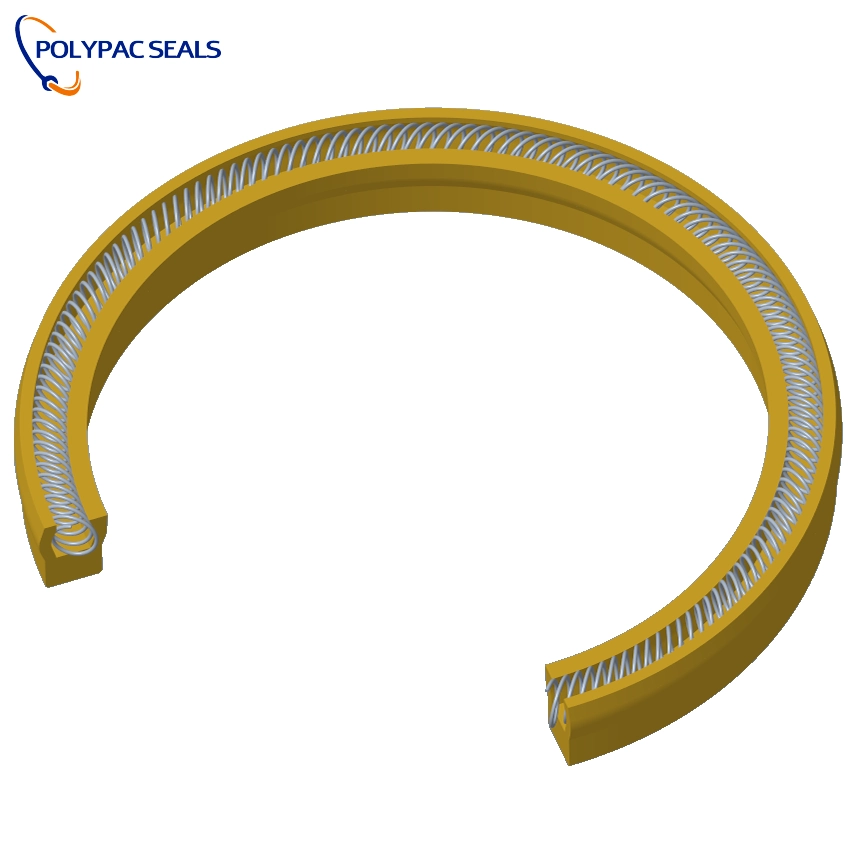

Polypac RSJ Seals: Single-acting piston rod seal designed for hydraulic systems. Featuring a durable dust lip, it ensures reliable sealing and protection against contaminants. Ideal for hydraulic applications requiring high-performance RSJ seals and piston rod sealing solutions.
Stay Updated with Industry Insights
Subscribe to our articles and receive the latest news, expert guidance, and technical updates directly in your E-mail.
Rest assured that your privacy is important to us, and all information provided will be handled with the utmost confidentiality.

Polypac is a trusted global supplier of high-performance sealing solutions, providing OEM & ODM services for industries worldwide.
E-mail:
Phone/WhatsApp:
© 2025 Polypac Seals. All Rights Reserved.
dms
DMS
DMS