












Rod Seal vs Piston Seal: Key Differences Explained
Rod Seal vs Piston Seal: Key Differences Explained — rod seals
What are rod seals? — Understanding rod seals
Rod seals are purpose-built hydraulic seals installed in the cylinder head to seal around a reciprocating rod. Their primary job is to prevent pressurized fluid from leaking out of the cylinder while allowing the piston rod to move in and out smoothly. Because rod seals see external motion and direct contact with contaminants and gland hardware, they are designed with specific lips, energizing elements, and materials that balance low friction, wear resistance, and extrusion control.
What are piston seals? — Piston seals vs rod seals
Piston seals fit into a groove on the piston and create a pressure-tight barrier between the piston and cylinder bore. Their role is to transmit hydraulic pressure across the piston face to create motion or hold load while minimizing leakage across the piston. Piston seals generally see high differential pressure but less sliding contact against contaminants compared to rod seals, so their cross-section and materials are optimized for sealing under pressure and resisting extrusion into the gap between piston and bore.
Function and pressure direction: why rod seals differ from piston seals — rod seals
The functional difference centers on which side of the seal is exposed to pressure. Rod seals resist fluid that tries to escape past the rod and are typically pressure-energized outward against the rod surface. Piston seals resist fluid bypassing the piston and are energized to press against the cylinder bore. This means:
- Rod seals must handle sliding motion with low friction and protect against contaminants entering the cylinder.
- Piston seals must provide reliable static sealing under variable pressure and avoid extrusion into the annular gap.
Materials and constructions to consider for rod seals — rod seals
Materials selection directly affects performance and longevity. Common materials and their roles include:
- NBR (Nitrile): Good general-purpose resistance to mineral oils; cost-effective for moderate temperatures.
- FKM (Viton): Higher temperature and chemical resistance for aggressive fluids.
- PTFE (including filled PTFE): Extremely low friction and excellent wear resistance; often used where minimal breakaway force and long life are required.
- Polyurethane (AU/EU): Excellent abrasion resistance and elasticity for dynamic seals but less tolerant of high temperatures and chemical attack.
Typical rod seal designs may be single-lip rubber seals, PTFE-rubber composites, or multi-component seals with energizing O-rings/back-up rings to resist extrusion. Selection should match fluid type, temperature range, surface finish of the rod, and speed.
Design and cross-section differences — rod seals
Rod seals often use asymmetric lips to maintain contact under pressure and minimize drag during extension and retraction. Piston seals may use square or U-shaped cross-sections with anti-extrusion features (back-up rings). Dimensions — including groove geometry and radial clearance — are crucial: piston seals typically seal against a stationary bore while rod seals run against a moving shaft, requiring harder or lubricious materials on the sliding surface.
Wear, friction and leakage: practical performance considerations — rod seals
In practice, rod seals are more exposed to abrasion by contaminants and require good surface finish (Ra typically 0.2–0.8 μm for rod surfaces) and adequate lubrication. Excessive friction leads to heat, accelerated wear, and increased leakage. Piston seals see more pressure cycling; their failure modes often relate to extrusion or compression set. Maintenance strategies differ accordingly:
- Rod seals: keep rod surface smooth, use scrapers/dust rings, monitor for nicks and scratches.
- Piston seals: use back-up rings for high pressure and control groove tolerances to avoid extrusion.
Comparison table: Rod Seals vs Piston Seals — rod seals
| Characteristic | Rod Seals | Piston Seals |
|---|---|---|
| Primary function | Prevent external leakage along the rod | Prevent internal leakage across the piston |
| Motion | Sliding (rod reciprocation) | Sliding with piston movement; often less exposed to contaminants |
| Typical materials | NBR, FKM, PTFE, Polyurethane | NBR, FKM, PTFE, combinations with back-up rings |
| Primary failure modes | Abrasion, extrusion, lip wear | Extrusion, compression set, wear |
| Surface finish sensitivity | High — rod finish critical (Ra 0.2–0.8 μm) | Moderate — bore finish important but typically less critical than rod |
| Use of back-up rings | Sometimes used if extrusion risk exists | Common with high pressure to prevent extrusion |
Table data derived from industry seal handbooks and manufacturer technical notes (sources listed at the end).
Installation, groove geometry and tolerances for rod seals — rod seals
Proper groove design and installation steps strongly affect seal life. Key points:
- Maintain recommended radial and axial clearances from supplier datasheets.
- Chamfer and deburr the rod to prevent lip damage during assembly.
- For rod seals, the gland must support the seal lip and control extrusion; dust lips or scrapers should precede the rod seal to keep contaminants out.
Improper installation often causes immediate failure, so follow manufacturer guidelines and use proper tooling.
Selecting between rod seals and piston seals: application-focused checklist — rod seals
Choose based on these practical questions:
- What fluid and temperature range will the seal face?
- What are the operating pressures and cycle rates?
- How clean is the environment — is contamination likely?
- What is the rod/bore surface finish and hardness?
- Is low friction or low breakaway force critical?
For high contamination environments, favor robust rod seals with integrated scrapers or pair rod seals with separate dust rings. For high-pressure pistons, design grooves with back-up rings and consider PTFE or reinforced composite seals to resist extrusion.
Maintenance and troubleshooting for rod seals — rod seals
Common symptoms and likely causes:
- External leakage: check for damaged lip, worn rod surface, improper gland depth, or wrong material.
- High friction or stiction: inspect for incompatible material, inadequate lubrication, or swelling due to fluid compatibility issues.
- Rapid wear: likely abrasive contaminants, poor rod finish, or excessive speed without suitable materials.
Routine inspections, correct installation, and maintaining a clean environment are the best preventive measures.
Polypac support for rod seals and piston seals — rod seals
Polypac is a scientific and technical hydraulic seal manufacturer and oil seal supplier specializing in seal production, sealing material development, and customized sealing solutions for special working conditions. Founded in 2008, Polypac began with filled PTFE seals (bronze-filled, carbon-filled, graphite PTFE, MoS₂-filled PTFE, glass-filled PTFE) and has expanded its product line to include O-rings made from materials such as NBR, FKM, silicone, EPDM, and FFKM.
Polypac's custom rubber ring and O-ring factory covers an area of more than 10,000 square meters, with a factory space of 8,000 square meters. Production and testing equipment are among the most advanced in the industry. As one of China's largest companies focused on seal production and development, Polypac maintains long-term collaboration with universities and research institutions domestically and internationally.
Polypac core capabilities for rod seals and piston seals — rod seals
How Polypac can help your application:
- Custom material formulation: tailored elastomer and filled-PTFE compounds to match fluid compatibility and temperature requirements.
- Advanced manufacturing: precision molding and machining for consistent groove-fitting and seal geometry.
- Testing and validation: in-house testing to verify performance under special working conditions (temperature, pressure, contaminants).
- Research partnerships: academic and institutional cooperation accelerates material development and performance optimization.
Polypac product overview — rod seals
Main products and core strengths:
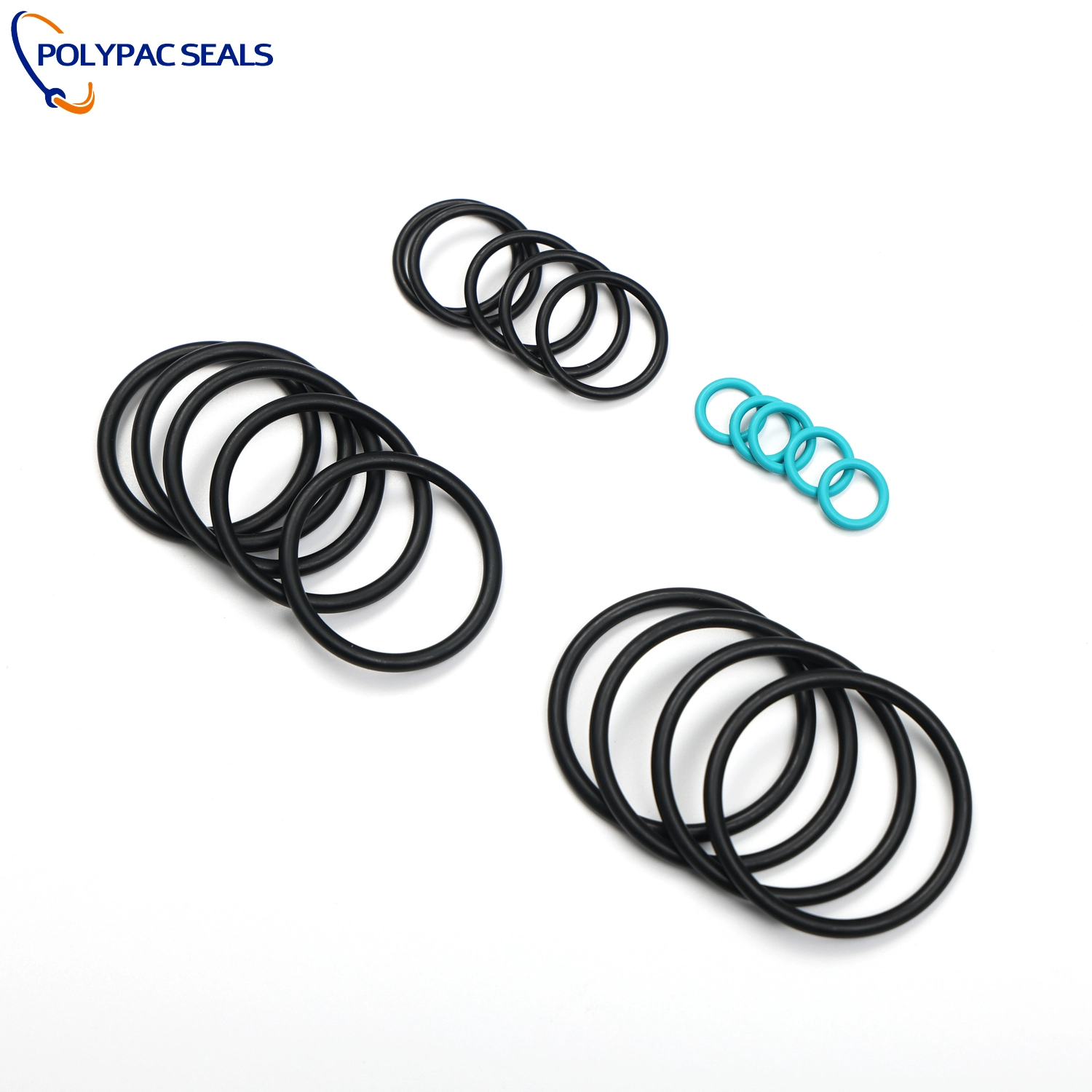
- O-Rings — stocked in various elastomers (NBR, FKM, silicone, EPDM, FFKM) for static and dynamic sealing.
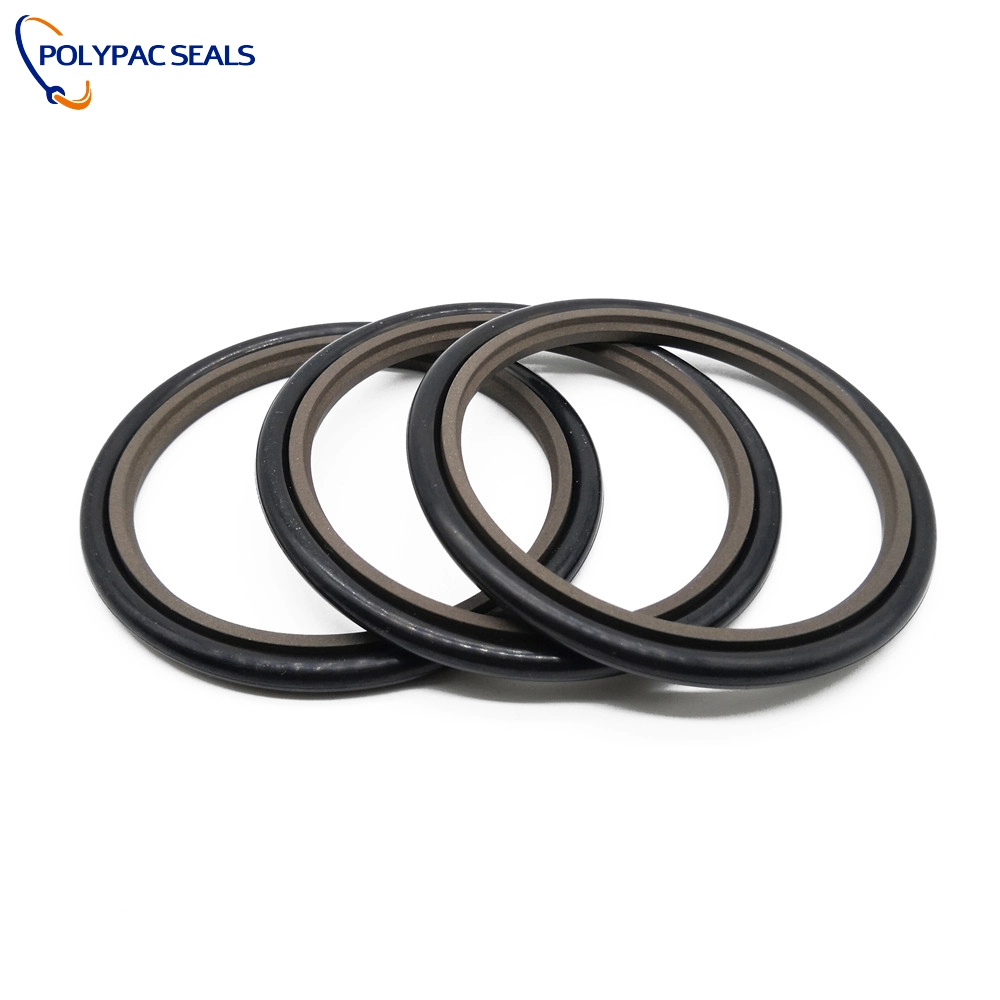
- Rod Seals — custom designs in rubber, PTFE, and composite constructions to optimize sliding performance and reduce leakage.
- Piston Seals — durable designs with options for back-up rings and filled PTFE where extrusion resistance is critical.
- End Face Spring Seals — for rotary or axial face sealing where spring-energized PTFE offers low friction.
- Scraper Seals — protect rod seals from contaminants and extend service life.
- Rotary Seals — for shafts and swivels where low friction and long life are needed.
- Back-up Rings — for high-pressure piston/rod applications to prevent extrusion.
- Dust Rings — sacrificial components that protect primary rod seals from debris.
Polypac's competitive edge lies in its material science background (PTFE-filled materials), large production capacity, advanced testing equipment, and strong R&D links with academic institutions. This combination helps deliver seals optimized for durability, low friction, and reliable performance in challenging hydraulic environments.
FAQ — Rod Seals vs Piston Seals — rod seals
Q: Can a rod seal be used as a piston seal?
A: Generally no. Rod seals are optimized for sliding against a shaft and for external leakage control; piston seals are optimized to resist internal bypass and extrusion under pressure. While some PTFE composite seals may be used in both roles in special designs, always consult the manufacturer.
Q: How do I know if a rod seal is failing?
A: Visible external leakage, increased friction, and irregular movement of the rod often indicate rod seal wear or damage. Inspect the rod surface for scoring and check the gland for correct assembly.
Q: When should I use back-up rings with piston seals?
A: Use back-up rings when operating pressures exceed the material's extrusion resistance or where groove clearances risk allowing the seal material to be forced into gaps. Consult pressure limits in manufacturer datasheets.
Q: What maintenance practices extend rod seal life?
A: Keep rods clean and properly finished, install scrapers/dust rings, perform regular inspections, choose compatible seal materials, and avoid over-pressurization or contamination ingress.
Contact us / View products
If you need custom rod seals, piston seals, or a sealing solution tailored to extreme temperature, pressure, or contamination conditions, contact Polypac for technical consultation and product options. View our product range or reach customer service to get material recommendations, engineering drawings, and sample evaluations.
References
- Parker Hannifin, O-Ring Handbook and Hydraulic Seal Technical Guides.
- SKF, Sealing Solutions and Shaft Seals technical publications.
- Manufacturer technical datasheets and application notes (industry standard practices for groove tolerances, surface finish, and back-up ring usage).

Rubber Seals: The Complete Guide to Elastomeric Sealing Solutions

PU (Polyurethane): The High-Performance Elastomer for Extreme Wear & Durability | Polypac

X-Rings (Quad Rings): The Advanced Seal for Low Friction & Reliability | Polypac

O-Ring Kits: The Essential Tool for Efficient Maintenance & Repair | Polypac

FKM: The Complete Guide to High-Temperature & Chemical-Resistant Sealing | Polypac
Products
How important is surface finish on the metal parts that contact the seal?
When should I use a spring-energized seal instead of a standard elastomeric seal?
Can I reuse a seal?
What does "AS568" mean?
Why did my O-ring fail prematurely?
Stay Updated with Industry Insights
Subscribe to our articles and receive the latest news, expert guidance, and technical updates directly in your E-mail.
Rest assured that your privacy is important to us, and all information provided will be handled with the utmost confidentiality.

Polypac is a trusted global supplier of high-performance sealing solutions, providing OEM & ODM services for industries worldwide.
E-mail:
Phone/WhatsApp:
© 2025 Polypac Seals. All Rights Reserved.
dms
DMS
DMS