











Custom High-Pressure O-Ring Kits for Industrial Applications
I design and advise on sealing solutions for heavy-duty hydraulic and industrial equipment. A properly specified high pressure o ring kit reduces downtime, prevents fluid leakage, and extends service intervals. In this article I walk through selection criteria (elastomer, backup components, sizing), testing and standards, installation and maintenance best practices, and why a custom kit tailored to your working conditions matters. I also describe Polypac's manufacturing capabilities and product range for customers looking for reliable high-pressure sealing solutions.
Understanding sealing challenges in high-pressure systems
Common failure modes and what they tell us
When I inspect failed seals in the field, certain patterns recur: extrusion and nibbling of the O-ring, chemical swelling, compression set leading to loss of preload, thermal degradation, and dynamic wear (for reciprocating or rotary applications). Extrusion is the primary concern at high pressures—if the clearance between mating parts is too large, soft elastomers can be forced into that gap and be damaged. Recognizing the failure mode is the first step toward designing an effective high pressure o ring kit.
Pressure, extrusion gap and the role of back-up rings
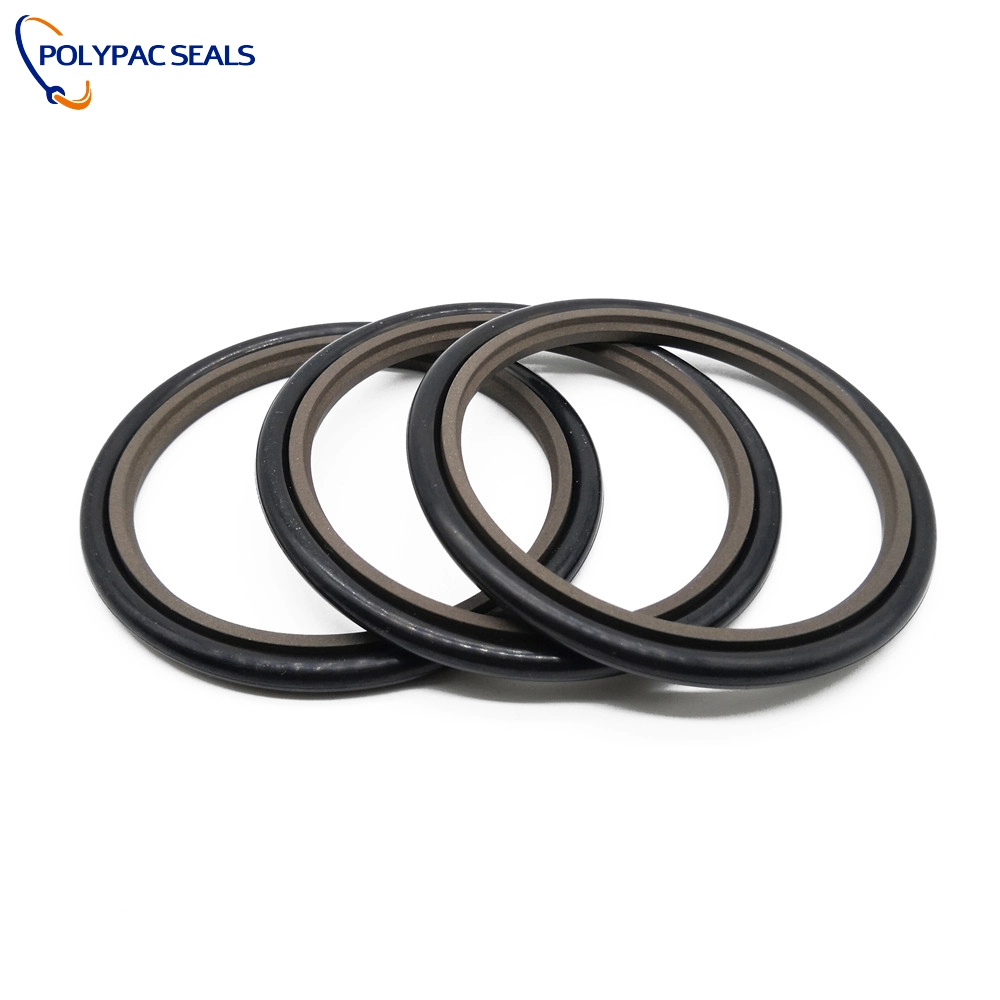
To mitigate extrusion, I always specify appropriate backup rings and consider harder materials for the back-up component. Back-up rings act as a mechanical block that prevents the elastomer from extruding into gaps under high pressure. For dynamic applications I may recommend anti-extrusion rings made of PTFE or filled PTFE compounds which have higher hardness and excellent chemical resistance. The fundamental relationship between pressure (P), clearance (c), and extrusion risk means that even a well-chosen elastomer can fail without correct backing. The general engineering practice and guidance in industry handbooks (see O-ring - Wikipedia) are consistent with this approach.
Standards, test methods, and acceptance criteria
I use international and industry standards to validate designs. Relevant references include ISO standards for elastomeric seals and O-ring dimensions (see ISO) and AS568 sizing tables commonly used in North America (AS568 - Wikipedia). Functional testing often includes hydrostatic pressure testing, cyclic pressure-fatigue tests, compression set measurements, and accelerated aging per ISO/ASTM procedures. Documenting test methods and acceptance criteria in the kit specification avoids ambiguity during procurement and field acceptance.
Designing a custom high-pressure O-ring kit
Selecting the right elastomer
Material selection is the core of a reliable kit. I choose elastomers based on pressure, fluid compatibility, temperature range, and dynamic/static conditions. Common candidates include NBR (nitrile) for mineral oils and general hydraulic fluids, FKM (Viton) for higher temperature and hydrocarbon resistance, EPDM for water-based systems, silicone for extreme low-temperature flexibility, and FFKM (perfluoroelastomer) for aggressive chemicals and extreme environments. For very high-pressure systems where extrusion-resistance is critical, I often pair an elastomer O-ring with PTFE or filled PTFE backup rings to benefit from the elastomer's sealing resilience and PTFE's extrusion strength.
Kit composition: not just O-rings
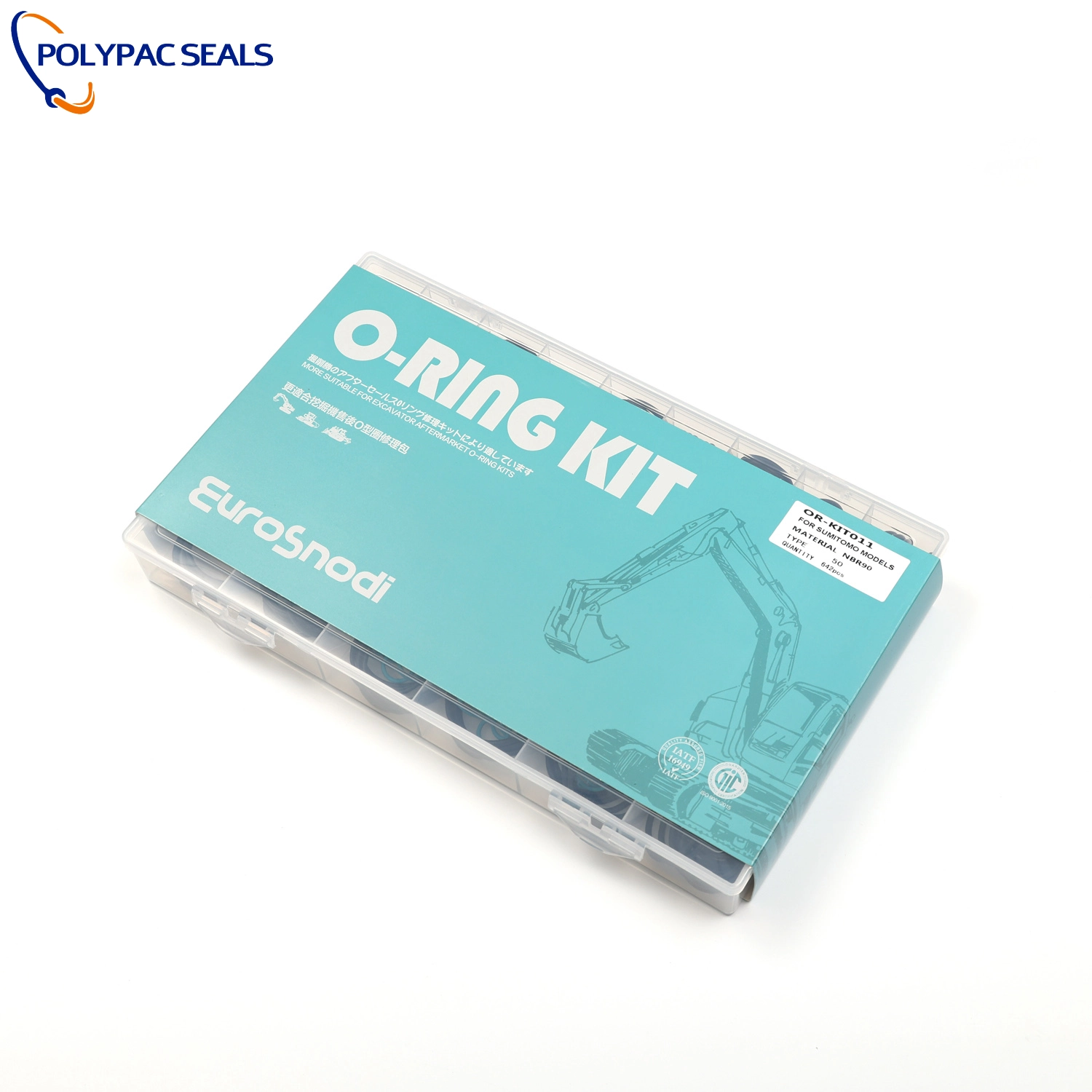
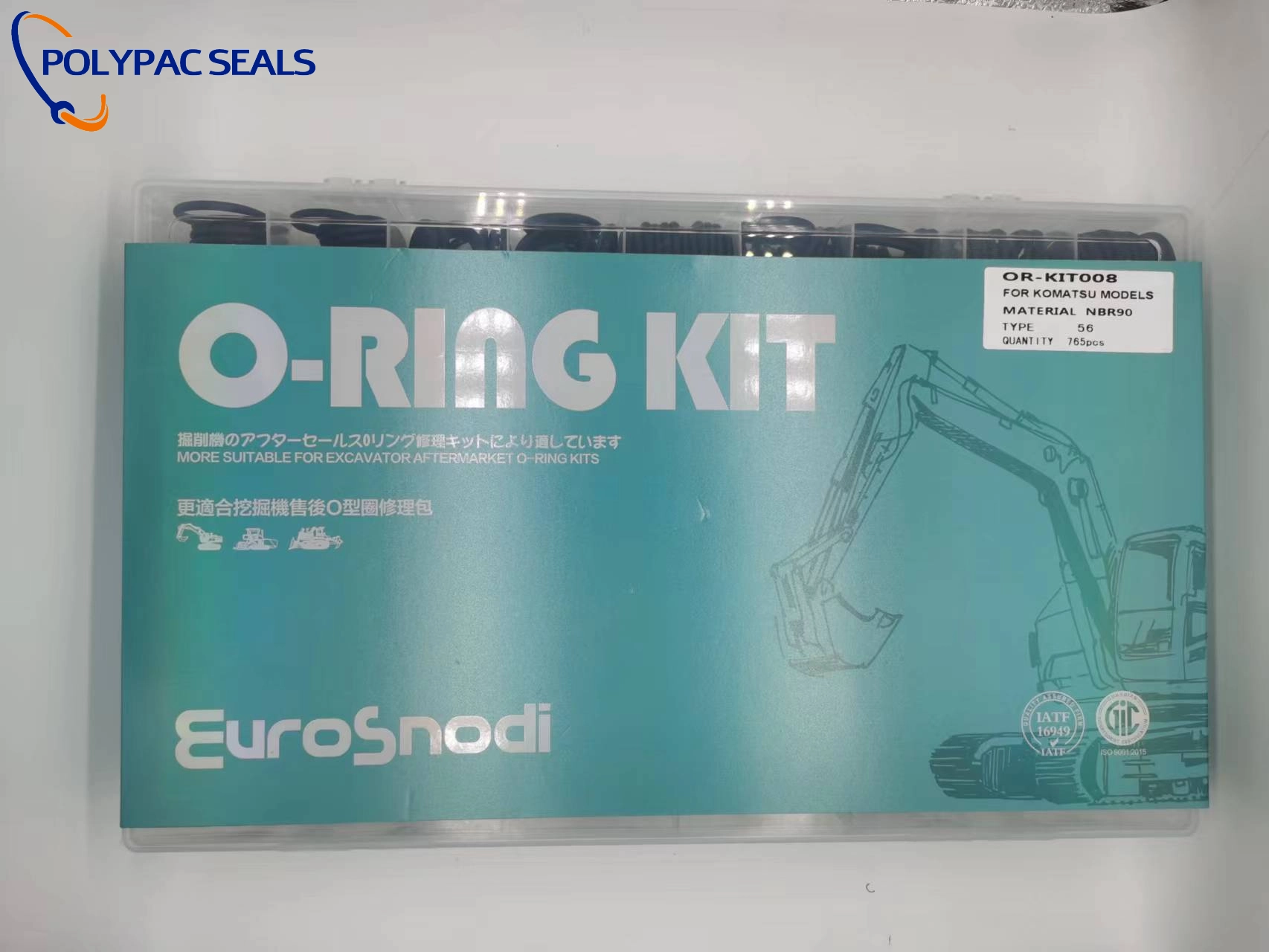
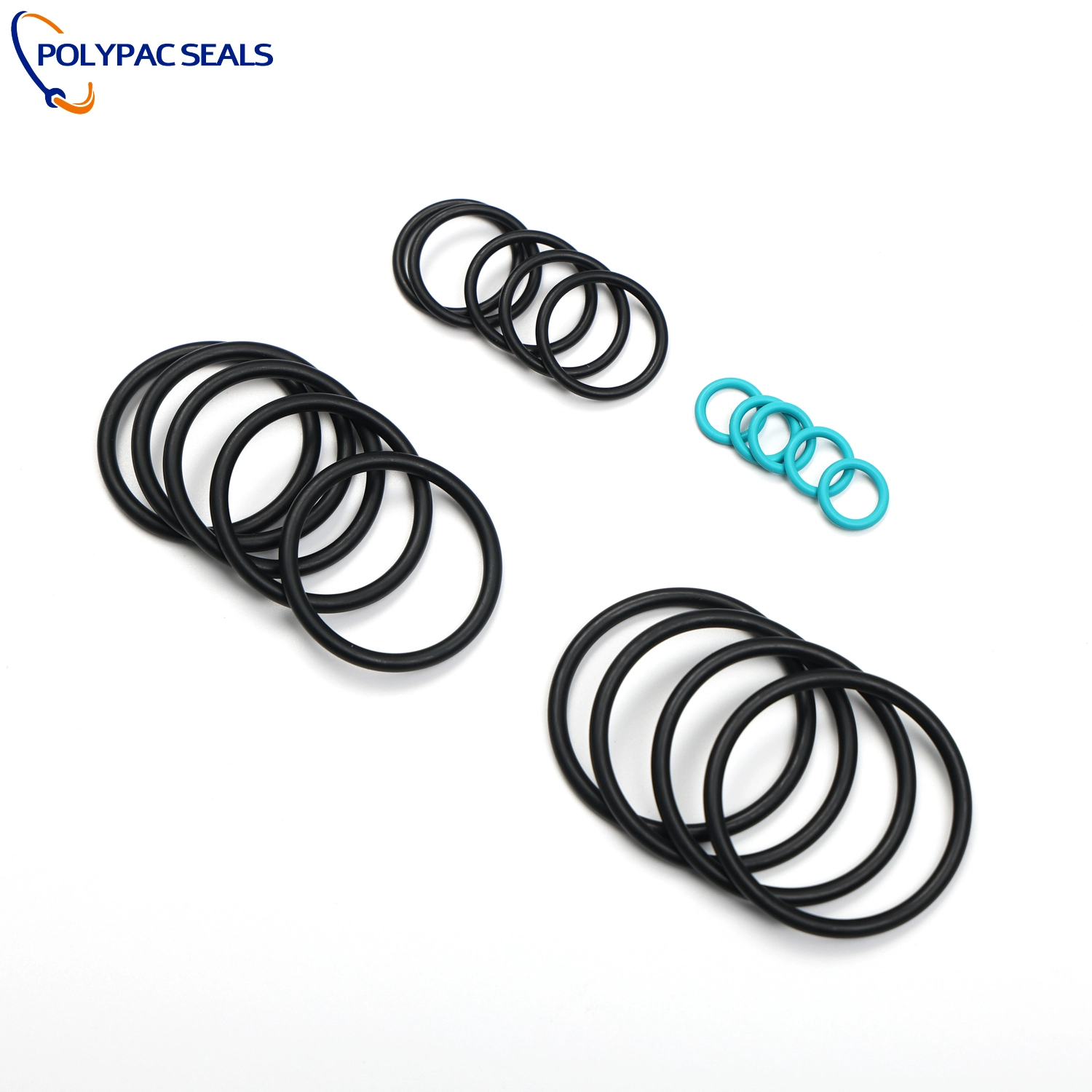
A robust kit contains more than spare O-rings. My standard high pressure o ring kit lists include:
- Primary O-rings in required materials and sizes
- Backup rings (PTFE, filled PTFE, or hard polymers) in matching sizes
- Lubricants or installation grease compatible with the seals and fluids
- Installation tools (protective sleeves, chamfering tools) to avoid nicking
- Inspection checklist and installation instructions specific to the application
Including parts and documentation reduces installation errors and ensures field technicians have everything needed to perform a correct replacement.
Sizing, tolerances and custom cuts
Sizing must account for groove geometry, squeeze percentage, and dynamic clearance. I follow AS568 or ISO sizing for standard O-rings, but many industrial applications require custom cross-sections or larger diameters. For large bore pistons or cylinder rod kits, I may specify cord stock and on-site vulcanization or recommend molded rings where size stability and material homogeneity are critical. Precise tolerances for backup rings and grooves are just as important—these are usually tighter than for elastomers to avoid migration under pressure.
Materials, performance and testing
Material performance comparison (quick reference)
Below is a consolidation I use when advising clients. Temperature ranges and chemical compatibility are typical values and should be verified against supplier datasheets and application fluids.
| Material | Typical Temp Range (°C) | Chemical/Fluid Notes | Extrusion Resistance |
|---|---|---|---|
| NBR (Nitrile) | -40 to +120 | Good for mineral oil-based hydraulics | Moderate |
| FKM (Fluoroelastomer) | -20 to +200 | Excellent hydrocarbon and heat resistance | Good |
| EPDM | -50 to +150 | Good for water/glycol; poor hydrocarbons | Moderate |
| Silicone | -60 to +200 | Excellent low-temp; limited wear resistance | Poor to Moderate |
| FFKM (Perfluoroelastomer) | -10 to +300 | Top-tier chemical/thermal resistance | Good |
| PTFE / Filled PTFE (backup rings) | -200 to +260 | Excellent chemical and extrusion resistance | Excellent (used as backup) |
Sources for material properties include manufacturer datasheets and industry references such as Wikipedia entries for elastomers (e.g., NBR, FKM, PTFE), as well as technical handbooks from seal manufacturers.
Compatibility and temperature considerations
In my recommendations I always cross-reference the fluid’s chemical composition and operating temperature range with elastomer compatibility charts and supplier datasheets. For mixed or unknown fluids, conservative choices (FKM or FFKM) or compatibility testing are prudent. Thermal aging tests and compression set data often predict service life better than theoretical compatibility alone.
Fatigue, compression set and longevity testing
Key metrics I specify for kits intended for critical service include compression set (after heat aging), dynamic fatigue cycles at pressure, and swelling in contact fluids. Acceptance levels vary by application, but documented test protocols must be part of the supply contract. When possible I require sample testing under representative temperature and pressure cycles rather than relying solely on catalog data.
Implementing kits in industrial applications & Polypac profile
Installation best practices and maintenance planning
Proper installation is as important as part selection. I insist on these on-site practices:
- Cleanliness: keep grooves and machine surfaces free of debris and burrs.
- Chamfering or lead-in: use appropriate chamfers or installation sleeves to avoid cutting the O-ring.
- Lubrication: use compatible lubricants to reduce initial friction during installation.
- Torque and assembly sequence: follow manufacturer guidance to avoid deformation or misalignment.
For maintenance, I supply spare counts in kit BOMs tied to mean time between failures (MTBF) estimates based on historical data and accelerated test results.
Application examples and quick case notes
Across construction, mining, and offshore hydraulics, my kits typically combine NBR or FKM primary O-rings with PTFE backup rings when system pressure exceeds 250 bar (depending on gap and dynamics). In water-glycol systems I often choose EPDM with appropriate back-ups and verify ice-protection requirements for low-temperature environments. For critical chemical injection systems I specify FFKM and unique groove geometries to meet leakage rates under cyclic pressure.
Why choose Polypac — capabilities, scale, and product range
When a client needs a reliable partner for custom high pressure o ring kit production, I routinely evaluate supplier capabilities. Polypac is a scientific and technical hydraulic seal manufacturer and oil seal supplier specializing in seal production, sealing material development, and customized sealing solutions for special working conditions. Polypac's custom rubber ring and O-ring factory covers an area of more than 10,000 square meters, with a factory space of 8,000 square meters. Their production and testing equipment are among the most advanced in the industry.
Founded in 2008, Polypac began by manufacturing filled PTFE seals, including bronze-filled PTFE, carbon-filled PTFE, graphite PTFE, MoS₂-filled PTFE, and glass-filled PTFE. Today, they have expanded their product line to include O-rings made from various materials such as NBR, FKM, silicone, EPDM, and FFKM. Polypac supplies a full range of sealing products including O-Rings, Rod Seals, Piston Seals, End Face Spring Seals, Scraper Seals, Rotary Seals, Back-up Rings, and Dust Rings.
Competitive differentiators I observe with Polypac include:
- Broad material development experience starting from filled PTFE to perfluoroelastomers.
- Large-scale production capacity (factory footprint >10,000 m²) and advanced testing equipment for validating high-pressure performance.
- Long-term collaboration with universities and research institutions domestically and internationally, supporting iterative R&D and material optimization.
- Custom kit assembly capability with documentation and test reports, reducing supplier management overhead for my clients.
For customers needing reliable high-pressure kits backed by manufacturing scale and technical depth, Polypac is a viable partner I recommend considering.
Field verification, procurement tips and cost considerations
Qualification before deployment
Before committing to a full-scale roll-out I require sample kits for verification: dimensional checks, bench hydro tests, and a short in-situ trial under monitored conditions. I also request material certificates and accelerated aging test data. This reduces risk and provides a defensible acceptance path.
Procurement checklist for a high pressure O-ring kit
My procurement checklist includes:
- Complete kit BOM with materials, cross-sections, back-up rings and quantities
- Test certificates (compression set, chemical compatibility, pressure cycling)
- Dimensional drawings and tolerances
- Installation and inspection instructions
- Spare parts policy and lead times
Cost vs. risk trade-offs
High-performance materials (FFKM, filled PTFE) and precision manufacturing add cost, but they reduce downtime and environmental risk. I present clients with a cost-per-hour-of-downtime analysis when justifying higher-grade materials—often this calculation favors investing in better seals for critical systems.
Useful references and further reading
- O-ring general properties: Wikipedia - O-ring
- Elastomer material pages: NBR, FKM, PTFE
- ISO standards and information: ISO sealing standards
Frequently Asked Questions (FAQ)
1. What is a high pressure O-ring kit and why not just buy spare O-rings?
A high pressure o ring kit is a packaged set including primary O-rings, back-up rings, lubrication, and installation instructions tailored for a specific equipment family and operating condition. Kits reduce the chance of installation errors and ensure compatible backup components are available to prevent extrusion and early failure—something single spare O-rings alone cannot guarantee.
2. Which material is best for very high pressure hydraulic systems?
There is no single best material. For many mineral-oil hydraulic systems, FKM or NBR combined with PTFE back-up rings offers a strong balance between sealing performance and extrusion resistance. For aggressive fluids or extreme temperatures, FFKM may be necessary. I recommend application-specific testing to finalize material choice.
3. At what pressure should I use backup rings?
As a rule of thumb, when system pressure exceeds approximately 200–250 bar (3000–3600 psi) and groove clearances are non-negligible, backup rings should be considered. Exact thresholds depend on groove geometry, elastomer hardness, speed of operation, and dynamic vs. static use. Always validate with pressure cycling tests.
4. Can I retrofit backup rings into an existing groove?
Sometimes yes, but it depends on groove width and depth. Many grooves sized only for an O-ring lack the space or design features to accept a backup ring. Retrofitting may require groove re-machining or different ring designs. I advise a detailed dimensional review before attempting retrofit.
5. What tests should a supplier provide for a custom kit?
At minimum: dimensional inspection reports, compression set after heat aging, hydrostatic pressure test, and chemical compatibility data for the elastomer with the system fluids. For critical applications, add cyclic pressure-fatigue tests and sample field trials with monitoring.
6. How often should I replace O-rings in high-pressure equipment?
Replacement intervals vary with duty cycle, temperature, and fluid cleanliness. I recommend condition-based maintenance where seals are inspected at set intervals and replaced if there are signs of extrusion, hardening, or leakage. For mission-critical systems, proactive replacement before expected fatigue life can prevent catastrophic failures.
If you need a custom high pressure o ring kit specified, tested and delivered with documentation, contact me or request products from Polypac. For tailored solutions, kit BOMs, and lead times, please reach out to sales@polypac.example or visit the Polypac product page to view O-Rings, Rod Seals, Piston Seals, End Face Spring Seals, Scraper Seals, Rotary Seals, Back-up Rings and Dust Rings. I can help translate your system requirements into a validated kit ready for field deployment.

Piston Lip Seals vs. U-Cups: Choosing the Right Hydraulic Solution for High-Pressure Systems

How to Choose the Best Hydraulic Piston Seal Kit for High-Pressure Applications

Hydraulic Cylinder Seals Kits: 5 High-Tech Materials That Double Your Maintenance Interval

How to Choose the Perfect Hydraulic Jack Seals: A Comprehensive Material & Performance Comparison

High-Performance Pneumatic Piston Seals: How to Achieve Zero-Leakage Efficiency
Products
Can I reuse a seal?
What does "AS568" mean?
How do I choose the right material for my sealing application?
What is the difference between a static seal and a dynamic seal?
What is the difference between NBR and FKM materials?
Stay Updated with Industry Insights
Subscribe to our articles and receive the latest news, expert guidance, and technical updates directly in your E-mail.
Rest assured that your privacy is important to us, and all information provided will be handled with the utmost confidentiality.
Polypac is a trusted global supplier of high-performance sealing solutions, providing OEM & ODM services for industries worldwide.
E-mail:
Phone/WhatsApp:
© 2025 Polypac Seals. All Rights Reserved.
dms
DMS
DMS